Results by title
192 books match the query 'Humor' and 21 start with h
Ha!
A Christian Philosophy of HumorPeter Kreeft
St. Augustine's Press, 2022
I started thinking: Western civilization is neither healthy, happy, nor holy. Humor is all three. Humor is not only holy, it's Heavenly. And if you are surprised to be told that humor is Heavenly, you need to read this book because you reveal your misunderstanding of both humor and Heaven. If you ask, 'Is there laughter in Heaven?' my answer is: 'You can't be serious!'"
Habeas Codfish
Reflections on Food and the LawBarry M. Levenson
University of Wisconsin Press, 2001
From the McDonald’s hot coffee case to the cattle ranchers’ beef with Oprah Winfrey, from the old English "Assize of Bread" to current nutrition labeling laws, what we eat and how we eat are shaped as much by legal regulations as by personal taste. Barry M. Levenson, the curator of the world-famous (really!) Mount Horeb Mustard Museum and a self-proclaimed "recovering lawyer," offers in Habeas Codfish an entertaining and expert overview of the frustrating, frightening, and funny intersections of food and the law.
Discover how Mr. Peanut shaped the law of trademark infringement for the entire food industry. Consider the plight of the restaurant owner besmirched by a journalist’s negative review. Find out how traditional Jewish laws of kashrut ran afoul of the First Amendment. Prison meals, butter vs. margarine, definitions of organic food, undercover ABC reporters at the Food Lion, the Massachusetts Supreme Court case that saved fish chowder, even recipes—it’s all in here, so tuck in!
Hating Jazz
A History of Its Disparagement, Mockery, and Other Forms of AbuseAndrew S. Berish
University of Chicago Press, 2025
A rock guitarist plays four notes in front of one thousand people, while a jazz guitarist plays one thousand notes in front of four people. You might laugh or groan at this jazz joke, but what is it about jazz that makes people want to disparage it in the first place?
Andrew S. Berish’s Hating Jazz listens to the voices who have denounced, disparaged, and mocked the music. By focusing on the rejection of the music, Berish says, we see more holistically jazz’s complicated place in American cultural life. Jazz is a display of Black creativity and genius, an art form that is deeply embedded in African American life. Though the explicit racial tenor of jazz jokes has become muted over time, making fun of jazz, either in a lighthearted or aggressive way, is also an engagement with the place of Blackness in America. An individual’s taste in music may seem personal, but Berish’s analysis of jazz hatred demonstrates that musical preferences and trends are a social phenomenon. Criticism of jazz has become inextricable from the ways we understand race in America, past and present. In addition to this form of criticism, Berish also considers jazz hate as a form of taste discrimination and as a conflict over genre boundaries within different jazz cultures.
Both enlightening and original, Hating Jazz shows that our response to music can be a social act, unique to our historical moment and cultural context—we react to music in certain ways because of who we are, where we are, and when we are.
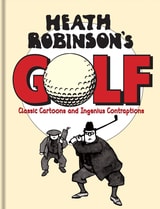
Heath Robinson's Golf
Classic Cartoons and Ingenious ContraptionsW. Heath Robinson
Bodleian Library Publishing, 2015
Heath Robinson’s Golf establishes Robinson as one of the great humorists of the “gentleman’s game.” From the origin of those peculiar shortened pants called “plus-fours” to the multiple meanings of an “awkward lie,” Robinson pokes fun at this popular sport. Among the cartoons in Golf are mechanisms like a machine for testing golf drivers or the “waterproof mashie” for keeping one’s clothes dry. And, while Robinson primarily focuses on the antics of a portly golfer and his long-suffering caddie, few will avoid the feeling that Robinson is at times speaking directly to them with contraptions like a putter fitted with a patented ball guide or a “movable bunker” to block an opponent’s progress down the fairway.
A side-splittingly funny collection from the man whose “absurd, beautiful drawings” H. G. Wells claimed “give me a peculiar pleasure of the mind like nothing else in the world,” this book make a perfect gift for anyone looking to have a laugh at our complicated and increasingly mechanical modern life.
Heath Robinson
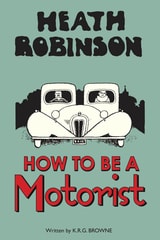
How to Be a MotoristW. Heath Robinson
Bodleian Library Publishing, 2015
For the car enthusiast, How to Be a Motorist offers a compendium of Robinson’s wonderfully inventive car-based contraptions, with innovations like a handy “zip-opening bonnet,” a rear wheel to turn the car around with one movement, and a fork attachment to help rural motorists to avoid the occasional chicken on the roadway. The days of unsolicited driving advice could be over with the realization of Robinson’s “duo car for the incompatible,” and the book also includes a parody of a production line demonstrating how cars are made.
A side-splittingly funny collection from the man whose “absurd, beautiful drawings” H. G. Wells claimed “give me a peculiar pleasure of the mind like nothing else in the world,” this book make a perfect gift for anyone looking to have a laugh at our complicated and increasingly mechanical modern life.
Heath Robinson
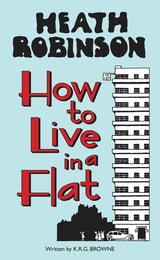
How to Live in a FlatW. Heath Robinson
Bodleian Library Publishing, 2015
How to Live in a Flat brings together a series of patently Robinsonesque space-saving solutions for city dwellers looking to make the most of modest square footage. Some of the solutions involve furniture made to serve multiple—and often opposing—purposes, like a combination bath-and-writing desk for businessmen. Others reimagine the workings of entire apartment complexes, including one cutaway explaining the use of the communal bath.
A side-splittingly funny collection from the man whose “absurd, beautiful drawings” H. G. Wells claimed “give me a peculiar pleasure of the mind like nothing else in the world,” this book make a perfect gift for anyone looking to have a laugh at our complicated and increasingly mechanical modern life.
Heath Robinson
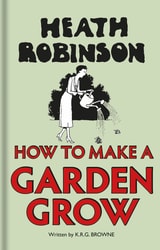
How to Make a Garden GrowW. Heath Robinson (1872-1944) is best known for his hilarious drawings of outlandish contraptions, though his work ranged across a wide variety of topics covering many aspects of British life.
Bodleian Library Publishing, 2016
Heath Robinson
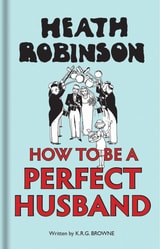
How to be a Perfect HusbandW. Heath Robinson & K.R.G. Browne
Bodleian Library Publishing, 2017
The cartoons in Heath Robinson: How to be a Perfect Husband provide sage advice for how to succeed in almost all aspects of married life—and, of course, it often features a complicated Robinsonian gadget. The perfect husband, for example, will take advantage of two simple attachments to the garden roller to tend the lawn and entertain the baby simultaneously. Likewise, he can peel onions with no fear of tears using a mirror and construct a cost-effective vacuum cleaner using items found around the house. Most importantly, he will devise a device to help him climb the stairs silently after a late night out with the boys.
A gently satirical collection, this book make a perfect gift for anyone looking to have a laugh at our complicated and increasingly mechanical modern life.
Here, Now
EssaysMichelle Suzanne Mirsky
Northwestern University Press, 2025
A deeply felt and humorous collection examining a year in the wake of extraordinary loss
In November 2010, on the morning after election day, Mirsky lost her three-year-old son, Lev. In the year that followed, she produced a profound and provocatively humorous body of work—tackling extreme loss as well as divorce, friendship, dating, sex, comedy, and art making, all while continuing her day job as a family liaison at the same children’s hospital where Lev died. Every November, the anniversary of Lev’s loss aligns with the churn of the election cycle.
A decade later, we find Mirsky in the heart of a different crisis: supervising COVID vaccine distribution in the polarized political climate of Austin, Texas. In “An Addendum,” she turns again to themes of grief and healing, this time on a societal scale, as she reckons with the tenth anniversary of Lev’s passing. Through her un-extraordinary story of extraordinary loss, Mirsky offers proof that there is an afterward to grief.
How They Linger
Stories of Unforgettable SoulsDonald Davis
Parkhurst Brothers, Inc., 2024
Although everyone has a story, not everybody has a remarkable storyteller like Donald Davis to tell theirs.
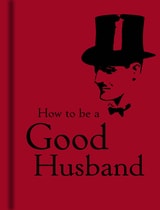
How to Be a Good Husband
Edited by the Bodleian Library
Bodleian Library Publishing, 2008
Don’t forget that very true remark that while face powder may catch a man, baking powder is the stuff to hold him.
Marriage can be a series of humorous miscommunications, a power struggle, or a diplomatic nightmare. Men and women have long struggled to figure each other out—and the misunderstandings can continue well after they’ve been joined in matrimony. But long before Men Are From Mars, Women Are From Venus, couples turned to self-help booklets such as How to Be a GoodHusband and How to Be a Good Wife, two historic advice books that are now delightfully reproduced by the Bodleian Library.
The books, originally published in the 1930s for middle-class British couples, are filled with witty and charming aphorisms on how wives and husbands should treat each other. Some advice is unquestionably outdated—“It is a wife’s duty to look her best. If you don’t tidy yourself up, don’t be surprised if your husband begins to compare you unfavorably with the typist at the office”—but many other pieces of advice are wholly applicable today. They include such insightful sayings as: “Don’t tell your wife terminological inexactitudes, which are, in plain English, lies. A woman has wonderful intuition for spotting even minor departures from the truth”; “After all is said and done, husbands are not terribly difficult to manage”; or “Don’t squeeze the tube of toothpaste from the top instead of from the bottom. This is one of the small things of life that always irritates a careful wife.”
Entertaining and charmingly illustrated, How to Be a Good Husband and How to Be a Good Wife offer enduringly useful advice for all couples, from the newly engaged to those celebrating their golden anniversary.
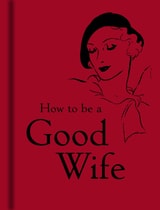
How to Be a Good Wife
Edited by the Bodleian Library
Bodleian Library Publishing, 2008
Don’t forget that very true remark that while face powder may catch a man, baking powder is the stuff to hold him.
Marriage can be a series of humorous miscommunications, a power struggle, or a diplomatic nightmare. Men and women have long struggled to figure each other out—and the misunderstandings can continue well after they’ve been joined in matrimony. But long before Men Are From Mars, Women Are From Venus, couples turned to self-help booklets such as How to Be a GoodHusband and How to Be a Good Wife, two historic advice books that are now delightfully reproduced by the Bodleian Library.
The books, originally published in the 1930s for middle-class British couples, are filled with witty and charming aphorisms on how wives and husbands should treat each other. Some advice is unquestionably outdated—“It is a wife’s duty to look her best. If you don’t tidy yourself up, don’t be surprised if your husband begins to compare you unfavorably with the typist at the office”—but many other pieces of advice are wholly applicable today. They include such insightful sayings as: “Don’t tell your wife terminological inexactitudes, which are, in plain English, lies. A woman has wonderful intuition for spotting even minor departures from the truth”; “After all is said and done, husbands are not terribly difficult to manage”; or “Don’t squeeze the tube of toothpaste from the top instead of from the bottom. This is one of the small things of life that always irritates a careful wife.”
Entertaining and charmingly illustrated, How to Be a Good Husband and How to Be a Good Wife offer enduringly useful advice for all couples, from the newly engaged to those celebrating their golden anniversary.
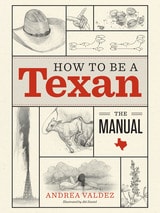
How to Be a Texan
The ManualBy Andrea Valdez
University of Texas Press, 2016
There are certain things every Texan should know how to do and say, whether your Lone Star roots reach all the way back to the 1836 Republic or you were just transplanted here yesterday. Some of these may be second nature to you, but others . . . well, maybe it wouldn’t hurt to have a few handy hints if, say, branding the herd or hosting a tamalada aren’t your usual pastimes. That’s where How to Be a Texan can help.
In a friendly, lighthearted style, Andrea Valdez offers illustrated, easy-to-follow steps for dozens of authentic Texas activities and sayings. In no time, you’ll be talking like a Texan and dressing the part; hunting, fishing, and ranching; cooking your favorite Texas dishes; and dancing cumbia and two-step. You’ll learn how to take a proper bluebonnet photo and build a Día de los Muertos altar, and you’ll have a bucket list of all the places Texans should visit in their lifetime. Not only will you know how to do all these things, you’ll finish the book with a whole new appreciation for what it means to be a Texan and even more pride in saying “I’m from Texas” anywhere you wander in the world.
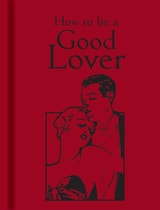
How to be a Good Lover
Edited by the Bodleian Library
Bodleian Library Publishing, 2012
Across the centuries, few experiences in life rival the excitement and emotional intensity of falling in love. Yet from the moment we set eyes on a special someone, the path to their heart seems strewn with devastating pitfalls. What if the object of our affection hates the way we wear our hair, finds our kisses lacking, or resents our talk of former loves?How does one go about successfully wooing a future husband or wife? Fortunately, there are time-honored strategies to avoid these pitfalls and help us attract and keep the paramour of our dreams.
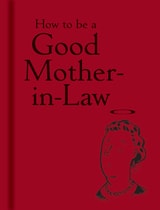
How to be a Good Mother-in-Law
Edited by the Bodleian Library
Bodleian Library Publishing, 2013
Originally published in the 1930s, How to be a Good Mother-in-Law offers advice that ranges from the amusingly old-fashioned to the surprisingly still relevant today. Among the topics discussed are how not to behave on your son or daughter’s wedding day, how to visit the couple in their new home, how to interact with the grandchildren, and what degree of independence should be granted to married sons. For mothers-in-law considering living with the married couple, a chapter presents suggestions for how to negotiate this famously fraught situation. In another chapter called “Are They as Bad as They are Painted?,” the book reproduces a selection of tabloid tragedies, including the story of a mother-in-law that surprised a hapless couple by accompanying them on their honeymoon.
Whether you’re a new mother-in-law, a veteran to this much-maligned role, or a long-suffering spouse whose partner’s parent seems impossible to please—the pithy advice on-hand in How to be a Good Mother-in-Law will be warmly welcomed.
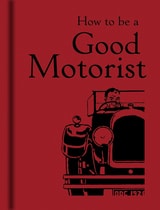
How to be a Good Motorist
Edited by the Bodleian Library
Bodleian Library Publishing, 2013
Among the practical and unusual guidelines offered are what precautions one should take when another car approaches and which parts of a car’s engine can be fixed in a pinch with emery paper, copper wire, and insulating tape. Some of the observations, like the cautionary note that, when driving, one ought to “look on all other drivers as fools” are sure to strike a chord with many motorists today. Others, like the suggestion that “a good chauffeur will save his employer a great deal of expense” evoke the style of a glamorous bygone era. The book covers such topics as unscrupulous secondhand car dealers, simple maintenance, women drivers, and “dashboard delights.” (Spoiler: For a well-equipped dashboard, don’t forget the speedometer.) For those planning a longer journey, the book also advises on how to choose the most pleasant picnic site when on the road.
How to be a Good Motorist is the perfect gift for the new driver or anyone who longs for a simpler time before rush-hour traffic reports and roundabouts.
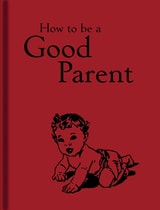
How to be a Good Parent
Compiled by Jaqueline Mitchell
Bodleian Library Publishing, 2015
The mere provision of the vegetable is not sufficient; it must be actually eaten.
If there is room enough for somersaults, the child can be satisfied.
These are just a few of the words of wisdom on offer in How to be a Good Parent, the latest in a series of delightful advice books from the Bodleian Library that also includes How to be a Good Husband and How to be a Good Wife. As developmental psychology began to show promise, beleaguered parents were drawn to the nascent discipline with the sorts of questions that will be familiar to any parent: How does one tell a toddler “no” without triggering a tantrum? Are there circumstances in which it’s acceptable to extract good behavior with bribery?
How to be a Good Parent brings together bits from the best of advice books of the 1920s and ’30s, taking readers through all the challenges involved in raising a child. Among the topics discussed are good—and bad—behavior, how to dress one’s dear son or darling daughter, mealtime, and the dreaded morning and bedtime routines. A section on taking medicine offers sage advice: “Gargling is a useful accomplishment” (while perhaps not appropriate for the dinner table). In a section on playtime, parents tasked with planning their child’s birthday will warmly welcome the book’s advice to “let the children give their own parties!”
By turns humorously old-fashioned and timeless, How to be a Good Parent is a charmingly illustrated guide to what any parent can tell you is the world's most difficult job.

Humor Me
An Anthology of Humor by Writers of ColorJohn McNally
University of Iowa Press, 2002

Humor and Comedy in Puppetry
Celebration in Popular CultureUniversity of Wisconsin Press, 1987
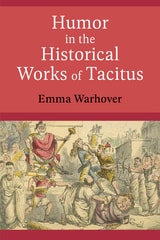
Humor in the Historical Works of Tacitus
Emma Warhover
University of Michigan Press, 2026
In serious texts like Tacitus’ historical works, humor can expose hypocrisy in the powerful, demonstrate the absurdity of imperial pronouncements, and simultaneously communicate why such offenses were allowed to stand. Warhover argues that major elements of Tacitus’ distinctive style, such as variatio, appendix sentences, and sententiae, create humor, and that Tacitus used humor deliberately to emphasize the incongruities that emerged from the principate. By employing humor, Tacitus followed Roman rhetorical traditions evident in Cicero and Quintilian, who agree that humor is an important tool for criticism. For Tacitus, humor is therefore not an amusement or decoration, but an integral part of his historiographic construction.
Humor in the Midst of Mark
Jon Carman
SBL Press, 2025