115 books match the query 'Hungary' and 6 start with h
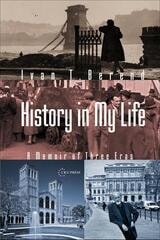
cover of History in My Life: A Memoir of Three Eras

History in My Life

A Memoir of Three Eras

Ivan T. Berend is Distinguished Research Professor at the History Department of the University of California Los Angeles.

Central European University Press, 2009

Ivan T. Berend is Distinguished Professor at the University of California Los Angeles, Director of the European Studies Program. He was one of the masterminds of regime change in Hungary. He made a career in Hungary as a university professor, Rector of the University of Economics (1973–79), and President of the Hungarian Academy of Sciences (1985–90). He was President of the International Committee of Historical Sciences (1995–2000), and Vice-President of the International Economic History Association (1986–1994). His research interests are the complex economic, social, ideological, and cultural history of Central and Eastern Europe in the 19th–20th century; economic modernization; problems of European backwardness; transition from state socialism to capitalism. He published and 26 books and more than 120 studies.

Before he became a professor at UCLA, Ivan Berend had survived five regime changes and two revolutions in Hungary, had been in prison and German concentration camp in 1944–45.

His memoir offers an interesting case study, a subjective addition to the “objective” historical works on Central and Eastern European state socialism. It describes the hard choices of intellectuals in a dictatorial state: 1. remain in isolation, concentrate on scholarly works, and exclude politics in your personal life; 2. be in opposition, criticize and unveil the regime, accept discrimination and exclusion; 3. remain within the establishment and work for reforming the country using legal possibilities to criticize the regime and to achieve changes from within.

Berend’s book raises basic historical questions and debates, compares East European and American higher education systems, and presents an eyewitness’ insights on life in the United States.
[more]
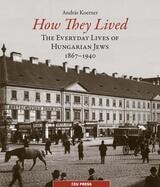
cover of How They Lived: The Everyday Lives of Hungarian Jews, 1867–1940

How They Lived

The Everyday Lives of Hungarian Jews, 1867–1940

András Koerner

Central European University Press, 2015
This book documents the physical aspects of the lives of Hungarian Jews in the late 19th and early 20th centuries: the way they looked, the kind of neighborhoods and apartments they lived in, and the places where they worked. The many historical photographs—there is at least one picture per page—and related text offers a virtual cross section of Hungarian society, a diverse group of the poor, the middle-class, and the wealthy. Regardless of whether they lived integrated within the majority society or in separate communities, whether they were assimilated Jews or Hasidim, they were an important and integral part of the nation. We have surprisingly few detailed accounts of their lifestyles—the world knows more about the circumstances of their deaths than about the way they lived. Much like piecing together an ancient sculpture from tiny shards found in an excavation, Koerner tries to reconstruct the many diverse lifestyles using fragmentary information and surviving photos.
[more]
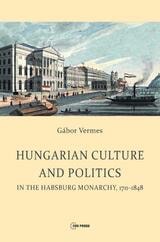
cover of Hungarian Culture and Politics in the Habsburg Monarchy 1711-1848

Hungarian Culture and Politics in the Habsburg Monarchy 1711-1848

Gábor Vermes

Central European University Press, 2014
This book describes and analyzes the critical period of 1711-1848 within Hungary from novel points of view, including close analyses of the proceedings of Hungarian diets. Contrary to conventional interpretations, the study, stressing the strong continuity of traditionalism in Hungarian thought, society, and politics, argues that Hungarian liberalism did not begin to flower in any substantial way until the 1830s and 1840s. Hungarian Culture and Politics in the Habsburg Monarchy also traces and evaluates the complex relationship between Austria and Hungary over this span of time. Past interpretations have, with only a few exceptions, tilted heavily towards the Austrian role within the Monarchy, both because its center was in Vienna and because few non-Hungarian scholars can read Hungarian. This analysis redresses this balance through the use of both Austrian and Hungarian sources, demonstrating the deep cultural differences between the two halves of the Monarchy, which were nevertheless closely linked by economic and administrative ties and by a mutual recognition that co-existence was preferable to any major rupture.
[more]
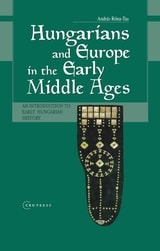
cover of Hungarians and Europe in the Early Middle Ages: An Introduction to Early Hungarian History

Hungarians and Europe in the Early Middle Ages

An Introduction to Early Hungarian History

András Róna-Tas

Central European University Press, 1999

Lavishly illustrated, the book contains seventy five historical maps and colour plates which visualize the historical background of Hungary and introduces its early history to a broader readership. The early history of Hungarians is embedded into the history of Eurasia and special attention is given to the relationship of the Hungarians with the Khazars and the Bulghar-Turks. The first part deals with methods and sources which can be used for elucidating the ancient history of the Hungarians, relying on research into linguistics, archaeology, anthropology and natural history. The second part traces how the Hungarians came into the Carpathian Basin and answers such questions as: who are the Magyars, from where did they come and how did they conquer the land? It reconstructs and examines their early political and social structure, the economy, and religion, and compares the Hungarian medieval process with the ethnogenetic processes of the Germanic, Slavic and Turkic people.
[more]
cover of Hungary and the Habsburgs, 1765-1800: An Experiment in Enlightened Absolutism

Hungary and the Habsburgs, 1765-1800

An Experiment in Enlightened Absolutism

Éva H. Balázs

Central European University Press, 1997
One of the most distinguished historians of Central Europe examines a crucial period in the coexistence of the Austrian hereditary provinces and Hungary. In a Europe torn by wars and revolutions during the last third of the eighteenth century, political, economic, and personal factors intertwined to determine the fortunes of the Austrian rulers and the subjects of the Hungarian crown who collaborated with them. Contemporary as well as modern scholars have taken extreme positions on this period. Contributing to the often heated debates, Professor Balázs shows that it was a vigorous and constructive era in the monarchy. Rejecting the commonplaces of the center-periphery approach, she demonstrates that the Habsburg monarchy was a center whose reforms during this period inspired all subsequent reform movements in Central and Eastern Europe.
[more]
cover of Hungary in the Cold War, 1945-1956: Between the United States and the Soviet Union

Hungary in the Cold War, 1945-1956

Between the United States and the Soviet Union

László Borhi

Central European University Press, 2004

Based on new archival evidence, examines Soviet Empire building in Hungary and the American response to it. Hungary was not important enough to resist the Soviets, its democratic opposition failed to win American sympathy, the US simply had no leverage over the Soviets, who sacrificed cooperation with the West for a closed sphere in Eastern Europe. The imposition of a Stalinist regime assured Hungary's unconditional loyalty to Soviet imperial needs. Unlike the GDR, Eastern Europe was never considered a bargaining chip for bettering relations with the West. The book analyzes why, given all its idealism and power, the US failed even in its minimal aims concerning the states of Eastern Europe. Eventually both powers pursued power politics: the Soviets in a naked form, the US subtly, but both with little regard for the fate of Hungarians.
[more]