Results by title
54 books match the query 'Indians in literature' and 2 start with h
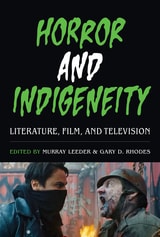
Horror and Indigeneity
Literature, Film, and TelevisionEdited by Murray Leeder and Gary D. Rhodes
University of Texas Press, 2026
A collection of essays about Indigeneity and horror in cinema, literature, and beyond.
How did Indigeneity come to be horrifying? Think of the “Indian burial ground” trope, a staple of 1970s horror cinema, not to mention decades of Western films and fictions that made “savage Indians” the face of fear in popular culture. Can horror do something else in the hands of Indigenous people? Creators such as Eden Robinson and Jeff Barnaby have self-consciously turned to horror to tell new kinds of stories, stories that question who is a monster and what constitutes the monstrous.
Horror and Indigeneity explores representations of Indigenous people in settler horror texts and in the growing corpus of horror by Indigenous writers and filmmakers. Widely spanning time periods and media, the contributors to this edited volume address themes such as cannibalism, eco-horror, historical trauma, and contemporary antiracism as they relate to classical horror cinema and recent works such as The Dead Can’t Dance, Lovecraft Country, and Stephen Graham Jones’s The Only Good Indians. Also featuring interviews with Jones and director T. J. Cuthand, Horror and Indigeneity rethinks the terror of the Other in potent and provocactive terms.
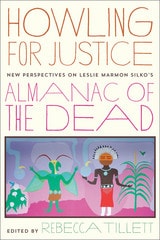
Howling for Justice
New Perspectives on Leslie Marmon Silko’s Almanac of the DeadEdited by Rebecca Tillett
University of Arizona Press, 2014
Howling for Justice actively engages with both the literary achievements and the politics of Silko’s text. It brings together essays by international scholars reacting to the novel while keeping in mind its larger concern with issues of social justice, both local and transnational. Aiming both to refocus critical attention and open the book to a broader array of readers, this collection offers fresh perspectives on its transnational vision, on its sociocultural, historical, and political ambitions, and on its continued relevance in the twenty-first century. The essays examine and explain some of the key points that readers and critics have identified as confusing, problematic, and divisive. Together, they offer new ways to approach and appreciate the text.
The book concludes with a new, never-before-published interview in which Silko reflects on the twenty years since the novel’s publication and relates the concerns of Almanac to her current work.