Results by title
944 books match the query 'Indians of North America' and 26 start with h
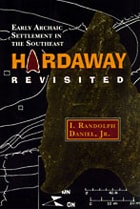
Hardaway Revisited
Early Archaic Settlement in the SoutheastI. Randolph Daniel, Jr.
University of Alabama Press, 1998
A landmark reassessment of Early Archaic settlement and adaptation in the southeastern United States.
Since the early 1970s, southeastern archaeologists have focused their attention on identifying the function of prehistoric sites and settlement practices during the Early Archaic period (ca. 9,000-10,500 B.P.). The Hardaway site in the North Carolina Piedmont, one of the most important archaeological sites in eastern North America, has not yet figured notably in this research. Daniel's reanalysis of the Hardaway artifacts provides a broad range of evidence—including stone tool morphology, intrasite distributions of artifacts, and regional distributions of stoneraw material types—that suggests that Hardaway played a unique role in Early Archaic settlement.
The Hardaway site functioned as a base camp where hunting and gathering groups lived for extended periods. From this camp they exploited nearby stone outcrops in the Uwharrie Mountains to replenish expended toolkits. Based on the results of this study, Daniel's new model proposes that settlement was conditioned less by the availability of food resources than by the limited distribution of high-quality knappable stone in the region. These results challenge the prevalent view of Early Archaic settlement that group movement was largely confined by the availability of food resources within major southeastern river valleys.
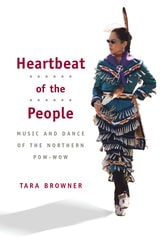
Heartbeat of the People
Music and Dance of the Northern Pow-wowTara Browner
University of Illinois Press, 2002
Hegemonies of Language and Their Discontents
The Southwest North American Region Since 1540Carlos G. Vélez-Ibáñez
University of Arizona Press, 2017
Well-regarded author Carlos G. Vélez-Ibáñez details the linguistic and cultural processes used by penetrating imperial and national states. He argues that these impositions have been not linear but hydra-headed, complex and contradictory, sometimes accommodated and sometimes forcefully imposed. Such impositions have created discontent resulting in physical and linguistic revolts, translanguage versions, and multilayered capacities of use and misuse of imposed languages—even the invention of community-created trilingual dictionaries.
Vélez-Ibáñez gives particular attention to both sides of the border, explaining the consequences of the fragile splitting of the area through geopolitical border formation. He illustrates the many ways those discontents have manifested in linguistic, cultural, educational, political, and legal forms.
From revolt to revitalization, from silent objection to expressive defiance, people in the Southwest North American Region have developed arcs of discontent from the Spanish colonial period to the present. These narratives are supported by multiple sources, including original Spanish colonial documents and new and original ethnographic studies of performance rituals like the matachines of New Mexico. This unique work discusses the most recent neurobiological studies of bilingualism and their implications for cognitive development and language as it spans multiple disciplines. Finally, it provides the most important models for dual language development and their integration to the "Funds of Knowledge" concept as creative contemporary discontents with monolingual approaches.
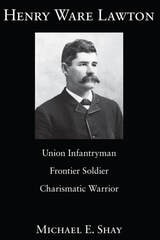
Henry Ware Lawton
Union Infantryman, Frontier Soldier, Charismatic WarriorMichael E. Shay
University of Missouri Press, 2016
Henry Ware Lawton’s nearly four decades as a professional soldier in the U.S. Army tie his story closely to that of America in the nineteenth century, from the Civil War to the settlement of the West, to the experiment with empire. Lawton served the country nearly uninterrupted from the day he enlisted at age 18—soon after Lincoln’s first call for volunteers to fight in the Civil War, where he earned a Medal of Honor—to his death at age 56, a major general in the Philippine War. In between, he fought in the Spanish-American War and the Indian Wars; during that time he rose to national prominence as the man who captured Geronimo.
Hidden Thunder
Rock Art of the Upper MidwestGeri Schrab
Wisconsin Historical Society Press, 2016
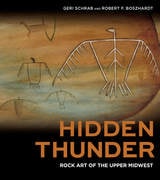
In Hidden Thunder, renowned watercolor artist Geri Schrab and archaeologist Robert "Ernie" Boszhardt give readers an up-close-and-personal look at rock art. With an eye toward preservation, Schrab and Boszhardt take you with them as they research, document, and interpret at the ancient petroglyphs and pictographs made my Native Americans in past millennia. In addition to publicly accessible sites such as Wisconsin’s Roche-a-Cri State Park and Minnesota’s Jeffers Petroglyphs, Hidden Thunder covers the artistic treasures found at several remote and inaccessible rock art sites—revealing the ancient stories through words, full-color photographs, and artistic renditions.
Offering the duo perspectives of scientist and artist, Boszhardt shares the facts that archaeologists have been able to establish about these important artifacts of our early history, while Schrab offers the artist's experience, describing her emotional and creative response upon encountering and painting these sites. Viewpoints by members of the Menominee, Ho-Chunk, Ojibwe, and other Native nations offer additional insight on the historic and cultural significance of these sites. Together these myriad voices reveal layers of meaning and cultural context that emphasize why these fragile resources—often marred by human graffiti and mishandling or damage from the elements—need to be preserved.

High Stakes
Florida Seminole Gaming and SovereigntyJessica R. Cattelino
Duke University Press, 2008
Cattelino presents a vivid ethnographic account of the history and consequences of Seminole gaming. Drawing on research conducted with tribal permission, she describes casino operations, chronicles the everyday life and history of the Seminole Tribe, and shares the insights of individual Seminoles. At the same time, she unravels the complex connections among cultural difference, economic power, and political rights. Through analyses of Seminole housing, museum and language programs, legal disputes, and everyday activities, she shows how Seminoles use gaming revenue to enact their sovereignty. They do so in part, she argues, through relations of interdependency with others. High Stakes compels rethinking of the conditions of indigeneity, the power of money, and the meaning of sovereignty.

Hinterlands and Regional Dynamics in the Ancient Southwest
Alan P. Sullivan
University of Arizona Press, 2007
Historic Indian Towns in Alabama, 1540-1838
Amos J. Wright
University of Alabama Press, 2003
Discover the lost towns that shaped Alabama’s earliest history.
This encyclopedic work is a listing of 398 ancient towns recorded within the present boundaries of the state of Alabama, containing basic information on each village's ethnic affiliation, time period, geographic location, descriptions, and (if any) movements. While publications dating back to 1901 have attempted to compile such a listing, none until now has so exhaustively harvested the 214 historic maps drawn between 1544, when Hernando de Soto's entourage first came through the southeastern territory, and 1846, when Indian removal to the Oklahoma Territory was complete. Wright combines the map data with a keen awareness of both previously published information and archival sources, such as colonial town lists, census information, and travel narratives.
The towns are listed alphabetically, and the text of each entry develops chronologically. While only a few of these towns have been accurately located by archaeologists, this volume provides a wealth of information for the future study of cultural geography, southeastern archaeology, and ethnohistory. It will be an enduring reference source for many years to come.
SAMPLE ENTRY,
ALIBAMA TOWN (Alibama)
The Alibama consisted of several towns—Mucclassa, Tawasa, Tomopa, Koarsati (Knight 1981, 27:48). Pickett ([1851] 1962:81) adds Ecanchati, Pawokti, and Autauga. The Alibama Town can also be added. Many maps show the Alibama as a group, but one map, 1796 Thomas and Andrews, locates the "Alabama Town"on the east bank of the Coosa just below Wetumpka.
Swanton ([1922] 1970a:209) wrote that the Tuskegee at the Alabama forks may have been known as the "Alabama Town"; however, this is unlikely, as Major W. Blue, a removal agent, wrote in July 1835 that Coosada, Alabama Town, and Tuskegee were ready to emigrate and they all lived adjoining each other in Macon County (ASP, Military Affairs 1861,6:731).
On 6 July 1838, some twenty-seven towns, including "Alibama" (NA M234 R225), attended the Creek council held in Indian Territory. Thomas Bibb, brother to Alabama territorial govenor William Wyatt Bibb, and others, including Nashville investors, founded the town of Alabama in 1817 at Ten Mile Bluff in Montgomery County (Moser 1980-94, 4:131). The town soon disappeared into history.
Historic Native Peoples of Texas
By William C. Foster
University of Texas Press, 2008
Several hundred tribes of Native Americans were living within or hunting and trading across the present-day borders of Texas when Cabeza de Vaca and his shipwrecked companions washed up on a Gulf Coast beach in 1528. Over the next two centuries, as Spanish and French expeditions explored the state, they recorded detailed information about the locations and lifeways of Texas's Native peoples. Using recent translations of these expedition diaries and journals, along with discoveries from ongoing archaeological investigations, William C. Foster here assembles the most complete account ever published of Texas's Native peoples during the early historic period (AD 1528 to 1722).
Foster describes the historic Native peoples of Texas by geographic regions. His chronological narrative records the interactions of Native groups with European explorers and with Native trading partners across a wide network that extended into Louisiana, the Great Plains, New Mexico, and northern Mexico. Foster provides extensive ethnohistorical information about Texas's Native peoples, as well as data on the various regions' animals, plants, and climate. Accompanying each regional account is an annotated list of named Indian tribes in that region and maps that show tribal territories and European expedition routes.
This authoritative overview of Texas's historic Native peoples reveals that these groups were far more cosmopolitan than previously known. Functioning as the central link in the continent-wide circulation of trade goods and cultural elements such as religion, architecture, and lithic technology, Texas's historic Native peoples played a crucial role in connecting the Native peoples of North America from the Pacific Coast to the Southeast woodlands.
Histories of Southeastern Archaeology
Edited by Shannon Tushingham, Jane Hill, and Charles H. McNutt
University of Alabama Press, 2002
Histories of Southeastern Archaeology originated as a symposium at the 1999 Southeastern Archaeological Conference (SEAC) organized in honor of the retirement of Charles H. McNutt following 30 years of teaching anthropology. Written for the most part by members of the first post-depression generation of southeastern archaeologists, this volume offers a window not only into the archaeological past of the United States but also into the hopes and despairs of archaeologists who worked to write that unrecorded history or to test scientific theories concerning culture.
The contributors take different approaches, each guided by experience, personality, and location, as well as by the legislation that shaped the practical conduct of archaeology in their area. Despite the state-by-state approach, there are certain common themes, such as the effect (or lack thereof) of changing theory in Americanist archaeology, the explosion of contract archaeology and its relationship to academic archaeology, goals achieved or not achieved, and the common ground of SEAC.
This book tells us how we learned what we now know about the Southeast's unwritten past. Of obvious interest to professionals and students of the field, this volume will also be sought after by historians, political scientists, amateurs, and anyone interested in the South.
Additional reviews:
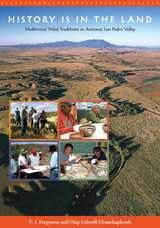
History Is in the Land
Multivocal Tribal Traditions in Arizona's San Pedro ValleyT. J. Ferguson and Chip Colwell-Chanthaphonh
University of Arizona Press, 2006
Previous research in the San Pedro Valley has focused on scientific archaeology and documentary history, with a conspicuous absence of indigenous voices, yet Native Americans maintain oral traditions that provide an anthropological context for interpreting the history and archaeology of the valley. The San Pedro Ethnohistory Project was designed to redress this situation by visiting archaeological sites, studying museum collections, and interviewing tribal members to collect traditional histories. The information it gathered is arrayed in this book along with archaeological and documentary data to interpret the histories of Native American occupation of the San Pedro Valley.
This work provides an example of the kind of interdisciplinary and politically conscious work made possible when Native Americans and archaeologists collaborate to study the past. As a methodological case study, it clearly articulates how scholars can work with Native American stakeholders to move beyond confrontations over who “owns” the past, yielding a more nuanced, multilayered, and relevant archaeology.
History's Shadow
Native Americans and Historical Consciousness in the Nineteenth CenturySteven Conn
University of Chicago Press, 2004
History's Shadow traces the struggle of Americans trying to understand the people who originally occupied the continent claimed as their own. Steven Conn considers how the question of the Indian compelled Americans to abandon older explanatory frameworks for sovereignty like the Bible and classical literature and instead develop new ones. Through their engagement with Native American language and culture, American intellectuals helped shape and define the emerging fields of archaeology, ethnology, linguistics, and art. But more important, the questions posed by the presence of the Indian in the United States forced Americans to confront the meaning of history itself, both that of Native Americans and their own: how it should be studied, what drove its processes, and where it might ultimately lead. The encounter with Native Americans, Conn argues, helped give rise to a distinctly American historical consciousness.
A work of enormous scope and intellect, History's Shadow will speak to anyone interested in Native Americans and their profound influence on our cultural imagination.
Hobomok and Other Writings on Indians
Karcher, Carolyn L
Rutgers University Press, 1986
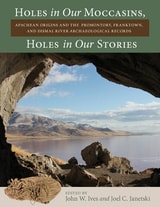
Holes in Our Moccasins, Holes in Our Stories
Apachean Origins and the Promontory, Franktown, and Dismal River Archaeological RecordsEdited by John W. Ives and Joel C. Janetski
University of Utah Press, 2022
This volume connects Steward’s work with results from new excavations in Promontory Caves 1 and 2 and illustrates that the early Promontory Phase resulted from an intrusive large-game hunting population very different from nearby late Fremont communities. Lingering for just one or two human generations, the cave occupants began to accept people as well as material and symbolic culture from surrounding thirteenth-century neighbors. Volume contributors employ a transdisciplinary approach to evaluate the possibility that the Promontory Phase materials reflect the presence of Apachean ancestors. In these records lies the seeds for the intensive Plains-Puebloan interactions of the centuries that followed.

Home Places
Contemporary Native American Writing from Sun TracksEdited by Larry Evers and Ofelia Zepeda
University of Arizona Press, 1995
Some are stories from oral traditions, others are autobiographical writings, and some are songs or poems. But all are contemporary, and all have as a unifying element a strong central theme in Native American writing: home places. Some of the contributors define the home place as a center of established values, while others speak of its cultural or physical geography. Healing powers are often found at home places. Home is a place to defend against those who would reduce it to insignificance, a place to reclaim, or a place reclaimed but not yet realized.
One writer recalls a home that must be pulled from deep beneath the waters of the Columbia River. By listening to these stories of home places, the reader can gain a new appreciation of the contemporary verbal expressions of Native American communities. Home Places, note the editors, "asks you to listen to Native American signers, storytellers, and writers, and in this way to celebrate the wellsprings of creativity that continue to flow from the home places in Native America."
Hope Leslie
Or, Early Times in the MassachusettsSedgwick, Catherine M
Rutgers University Press, 1987
Hope Leslie (1827), set in the seventeenth-century New England, is a novel that forced readers to confront the consequences of the Puritans’ subjugation and displacement of the indigenous Indian population at a time when contemporaries were demanding still more land from the Cherokees, the Chickasaws, and the Choctaws.
"This handsome reprint ... makes available after many decades the New Englander's tale of seventeeth-century Puritans, and their relations with the indigenous Indian population." -- Nineteeth-Century Literature
" A splendidly conceived edition of Sedwick's historical romance. Highly recommended." --Choice
"Develop(s) the connections between patriarchal authority within the Puritan state and its policy of dispossessing and exterminating Indians. The different heritage it envisions explicitly link white women and Indians and elaborates a communal concept of liberty at odds with the individualistic concept which predominated in American culture." -- Legacy
Household Archaeology at the Bridge River Site (EeRl4), British Columbia
Spatial Distributions of Features, Lithic Artifacts, and Faunal Remains on Fifteen Anthropogenic Floors from Housepit 54Anna Marie Prentiss, Ethan Ryan, Ashley Hampton, Kathryn Bobolinski, Pei-Lin Yu, Matthew Schmader, and Alysha Edwards
University of Utah Press, 2022
The authors take a methodological approach that integrates the study of household spatial organization with consideration of archaeological formation processes. Repeating the same set of analyses for each floor, they examine stability from standpoints of occupation and abandonment cycles, structure and organization of activity areas, and variation in positioning of wealth-related items. This volume is an outstanding example of research undertaken through a collaborative partnership between scholars from the University of Montana and the community of the St’át’imc Nation.

Household Economy at Wall Ridge
A Fourteenth-Century Central Plains Farmstead in the Missouri ValleyEdited by Stephen C. Lensink, Joseph A. Tiffany, and Shirley J. Schermer
University of Utah Press, 2020
Household Economy at Wall Ridge tells the story of a Native American household that occupied a lodge on the eastern Plains border during the early 1300s AD. Contributors use cutting-edge methods and the site’s unparalleled archaeological record to shed light on the daily technological, subsistence, and dietary aspects of the occupants’ lives. This work represents the first comprehensive study of a prehistoric Central Plains household in over half a century.
The research covers archaeobotany, zooarchaeology, dating, ceramics, lithics, bone and shell tools, diet, climate, ecology, and more. The study of plant and animal usage from the lodge stands as a tour de force of analytical methods, including stable isotope data that permit the discovery of dietary items missed by traditional studies. Many of these items have never been reported before from Central Plains sites. The book firmly sets the site’s occupancy at AD 1305, with a margin of error of only a few years. This result, based on high-precision dating methods, exceeds in accuracy all previously dated Plains lodges and provides a temporal backdrop for evaluating household activities.

How It Is
The Native American Philosophy of V. F. CordovaV. F. Cordova; Edited by Kathleen Dean Moore, Kurt Peters, Ted Jojola, and Amber Lacy, with a Foreword by Linda Hogan
University of Arizona Press, 2007
In three parts, Cordova sets out a complete Native American philosophy. First she explains her own understanding of the nature of reality itself—the origins of the world, the relation of matter and spirit, the nature of time, and the roles of culture and language in understanding all of these. She then turns to our role as residents of the Earth, arguing that we become human as we deepen our relation to our people and to our places, and as we understand the responsibilities that grow from those relationships. In the final section, she calls for a new reverence in a world where there is no distinction between the sacred and the mundane.
Cordova clearly contrasts Native American beliefs with the traditions of the Enlightenment and Christianized Europeans (what she calls “Euroman” philosophy). By doing so, she leads her readers into a deeper understanding of both traditions and encourages us to question any view that claims a singular truth. From these essays—which are lucid, insightful, frequently funny, and occasionally angry—we receive a powerful new vision of how we can live with respect, reciprocity, and joy.
How to Be an Indian in the 21st Century
Louis V. Clark (Two Shoes)
Wisconsin Historical Society Press, 2017
Hunter-Gatherer Archaeology as Historical Process
Edited by Kenneth E. Sassaman and Donald H. Holly Jr.
University of Arizona Press, 2011
Combining the latest empirical studies of archaeological practice with the latest conceptual tools of anthropological and historical theory, this volume seeks to set a new course for hunter-gatherer archaeology by organizing the chapters around three themes. The first section offers diverse views of the role of human agency, challenging the premise that hunter-gatherer societies were bound by their interactions with the natural world. The second section considers how society and culture are constituted. Chapters in the final section take the long view of the historical process, examining how cultural diversity arises out of interaction and the continuity of ritual practices.
A closing commentary by H. Martin Wobst underscores the promise of an archaeology of foragers that does not associate foraging with any particular ideology or social structure but instead invites inquiry into counterintuitive alternatives. Hunter-Gatherer Archaeology as Historical Process seeks to blur the divisions between prehistory and history, between primitive and modern, and between hunter-gatherers and people in other societies. Because it offers alternatives to the dominant discourse and contributes to the agenda of hunter-gatherer research, this book will be of interest to anyone involved in the study of foraging peoples.
Hunter-Gatherer Archaeology of the Colorado High Country
Mark Stiger
University Press of Colorado, 2001
Synthesizing research from several important, previously neglected sites, the book anchors its findings in a massive body of data that Mark Stiger gathered over eight years at Tenderfoot - a large lithic-scatter site once categorized as insignificant. Advances in spatial analysis, theoretical approaches, and excavation methods have allowed lithic-scatter sites, once considered less revealing than intact structures and similar sites, to yield startlingly rich cultural evidence.
Presenting artifactual data that reflects changes in houses, game drives, fire pits, stone tools, and debitage, Stiger explains the cultural sequence in the Upper Gunnison Basin and its connections to changes across the West. He relates environmental and cultural changes, relying on paleoenvironmental evidence, changes in floral and faunal usage patterns, and data recovered in multi-year, repetitive surface collections. An overview and critique of past research in the region complements discussion of the advantages of horizontally extensive block excavations and other contemporary ways of excavating and analyzing surface sites.
Stiger's findings hold promise for future research, as high-altitude surface sites are common, under-researched, and relatively well-preserved. The advances in archaeological method and theory that enabled Stiger's outstanding results in the Upper Gunnison Basin will allow many other Western sites to yield fascinating evidence.
Hunter-Gatherer Mortuary Practices during the Central Texas Archaic
By Leland C. Bement
University of Texas Press, 1995
Beginning over 10,000 years ago and continuing until the arrival of the Spanish in the 1500s, hunter and gatherer societies occupied the Edwards Plateau of central Texas. Archaeological studies over the past eighty years have reconstructed their subsistence, technology, and settlement patterns, but until now little information has been available on their burial practices, due to the scarcity of known burial sites. This detailed archaeological report describes the human skeletal remains, burial furnishings, and fauna recovered from Bering Sinkhole in Kerr County, the first carefully excavated hunter-gatherer burial site in central Texas.
The remains in Bering Sinkhole were deposited from 7,500 to 2,000 years ago. Leland Bement's analysis reveals a growing elaboration in burial rituals during the period and also uncovers important data on the diet and health of the hunter-gatherers. He discusses climate change based on faunal remains and compares burial goods such as bone, antler, freshwater shell, marine shell, turtle, and stone artifacts with those found at other Texas mortuary sites and with deposits at hunter-gatherer habitation sites in Central Texas.
Hunters of the Northern Forest
Designs for Survival among the Alaskan KutchinRichard K. Nelson
University of Chicago Press, 1986
Hunting for Hides
Deerskins, Status, and Cultural Change in the Protohistoric AppalachiansHeather A. Lapham
University of Alabama Press, 2006
Through research on faunal remains and mortuary assemblages, Lapham tracks both the products Native Americans produced for colonial trade--deerskins and other furs--as well as those items received in exchange--European and native prestige goods that end up in burial contexts. Zooarchaeological analyses provide insights into subsistence practices, deer-hunting strategies, and deer-hide production activities, while an examination of mortuary practices contributes information on the use of the nonlocal goods acquired through trade in deerskins. This study reveals changes in economic organization and mortuary practices that provide new insights into how participation in the colonial deerskin trade initially altered Native American social relations and political systems.
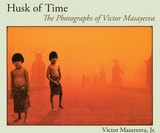
Husk of Time
The Photographs of Victor MasayesvaVictor Masayesva, Jr.; Introduction by Beverly R. Singer
University of Arizona Press, 2006