Results by title
732 books match the query 'Indigenous' and 20 start with h
Habsburg Encounters with Native America
Familiar StrangersJonathan Singerton
Central European University Press, 2025

Haudenosaunee Women Lacrosse Players
Making Meaning through RematriationSharity L. Bassett
Michigan State University Press, 2024
Hawaiian Blood
Colonialism and the Politics of Sovereignty and IndigeneityJ. Kauanui Kahaulani
Duke University Press, 2008
Kauanui provides an impassioned assessment of how the arbitrary correlation of ancestry and race imposed by the U.S. government on the indigenous people of Hawai‘i has had far-reaching legal and cultural effects. With the HHCA, the federal government explicitly limited the number of Hawaiians included in land provisions, and it recast Hawaiians’ land claims in terms of colonial welfare rather than collective entitlement. Moreover, the exclusionary logic of blood quantum has profoundly affected cultural definitions of indigeneity by undermining more inclusive Kanaka Maoli notions of kinship and belonging. Kauanui also addresses the ongoing significance of the 50-percent rule: Its criteria underlie recent court decisions that have subverted the Hawaiian sovereignty movement and brought to the fore charged questions about who counts as Hawaiian.

Heart of the Stone / El corazón de la piedra / Uk'u'x ri ab'aj
By Rosa Chávez, translated by Gabriela Ramirez-Chavez and Wel Raxulew
Amherst College Press, 2027
In Heart of the Stone, Rosa Chávez celebrates a Maya spirituality that recognizes all things—stones included—as part of the web of life. At the center of the collection is tijax, the poet's nawal represented by obsidian, the volcanic stone. Her verses cut through grief and fear to address colonization, injustices, and environmental abuse, while carving out a space for tenderness and deep healing.
Originally written in Spanish and translated into Maya K'iche' by Wel Raxulew, this stunning trilingual edition brings the poems into English for the first time in Gabriela Ramirez-Chavez's translation. The volume is framed by an introduction from Ramirez-Chavez, photography by Carlos Bernardo Euler Coy, and illustrations by Erick Boror.

Here Is a Figure
Grounding Literary FormSarah Dowling
Northwestern University Press, 2025
A study of supine, prone, and recumbent figures in contemporary literature
The prostitute, the protester, the murder victim, the invalid, the layabout, the depressive: all are associated with lying down. Skewing and flattening the perpendicular axis that defines the human in Western philosophy, art, and humanist inquiry, these downward-directed figures’ refusals or failures to hew to the moral and postural logics of uprightness enable a reassessment of subjectivity, ecological relation, and representation—that last of which is, after all, a process of standing-in-for. Here Is a Figure: Grounding Literary Form works across an array of well-known and counter-canonical texts, showing that recumbent figures saturate the literary arts of the present and respond to the proliferation of contemporary forms of grounding, in all its meanings. Reading these figures in dialogue with critical Indigenous studies, disability studies, and horizontalist feminisms, Sarah Dowling reveals the potential in thinking with and through a position stretched out across, dependent on, and undetachable from the earth.

Heritage and Change
Southern Paiute and Chemehuevi Nuwuvi Basketry, 1870 to 2026Catherine S. Fowler
Museum of New Mexico Press, 2026
This publication, years in the making, includes chapters by Catherine S. Fowler, Judith W. Finger, John J. Kania, and Larry Dalrymple that explore the cultural history of the Nuwuvi people, the work of known weavers, and the characteristics and development of Nuwuvi basketry from the 1870s to 2022. It focuses particularly on the fine-coiled work produced during the American Arts and Crafts Movement period of the 1890s to 1930s. Working separately and together, the authors analyzed over 1,200 baskets in museum collections across the United States, from the Smithsonian Institution in Washington, D.C., to the Lost City Museum in Henderson, Nevada. They researched the baskets’ collectors—from John Wesley Powell to Helen J. Stewart and Isabel T. Kelly—and conducted interviews with contemporary weavers. In order to give the reader as broad a visual understanding of Nuwuvi coiled baskets as possible, images of baskets from the collection of Judith and Andrew Finger are included. The book is lavishly illustrated with archival and contemporary photographs.
Hidden Thunder
Rock Art of the Upper MidwestGeri Schrab
Wisconsin Historical Society Press, 2016
In Hidden Thunder, renowned watercolor artist Geri Schrab and archaeologist Robert "Ernie" Boszhardt give readers an up-close-and-personal look at rock art. With an eye toward preservation, Schrab and Boszhardt take you with them as they research, document, and interpret at the ancient petroglyphs and pictographs made my Native Americans in past millennia. In addition to publicly accessible sites such as Wisconsin’s Roche-a-Cri State Park and Minnesota’s Jeffers Petroglyphs, Hidden Thunder covers the artistic treasures found at several remote and inaccessible rock art sites—revealing the ancient stories through words, full-color photographs, and artistic renditions.
Offering the duo perspectives of scientist and artist, Boszhardt shares the facts that archaeologists have been able to establish about these important artifacts of our early history, while Schrab offers the artist's experience, describing her emotional and creative response upon encountering and painting these sites. Viewpoints by members of the Menominee, Ho-Chunk, Ojibwe, and other Native nations offer additional insight on the historic and cultural significance of these sites. Together these myriad voices reveal layers of meaning and cultural context that emphasize why these fragile resources—often marred by human graffiti and mishandling or damage from the elements—need to be preserved.
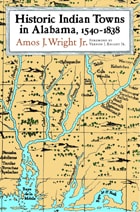
Historic Indian Towns in Alabama, 1540-1838
Amos J. Wright
University of Alabama Press, 2003
Discover the lost towns that shaped Alabama’s earliest history.
This encyclopedic work is a listing of 398 ancient towns recorded within the present boundaries of the state of Alabama, containing basic information on each village's ethnic affiliation, time period, geographic location, descriptions, and (if any) movements. While publications dating back to 1901 have attempted to compile such a listing, none until now has so exhaustively harvested the 214 historic maps drawn between 1544, when Hernando de Soto's entourage first came through the southeastern territory, and 1846, when Indian removal to the Oklahoma Territory was complete. Wright combines the map data with a keen awareness of both previously published information and archival sources, such as colonial town lists, census information, and travel narratives.
The towns are listed alphabetically, and the text of each entry develops chronologically. While only a few of these towns have been accurately located by archaeologists, this volume provides a wealth of information for the future study of cultural geography, southeastern archaeology, and ethnohistory. It will be an enduring reference source for many years to come.
SAMPLE ENTRY,
ALIBAMA TOWN (Alibama)
The Alibama consisted of several towns—Mucclassa, Tawasa, Tomopa, Koarsati (Knight 1981, 27:48). Pickett ([1851] 1962:81) adds Ecanchati, Pawokti, and Autauga. The Alibama Town can also be added. Many maps show the Alibama as a group, but one map, 1796 Thomas and Andrews, locates the "Alabama Town"on the east bank of the Coosa just below Wetumpka.
Swanton ([1922] 1970a:209) wrote that the Tuskegee at the Alabama forks may have been known as the "Alabama Town"; however, this is unlikely, as Major W. Blue, a removal agent, wrote in July 1835 that Coosada, Alabama Town, and Tuskegee were ready to emigrate and they all lived adjoining each other in Macon County (ASP, Military Affairs 1861,6:731).
On 6 July 1838, some twenty-seven towns, including "Alibama" (NA M234 R225), attended the Creek council held in Indian Territory. Thomas Bibb, brother to Alabama territorial govenor William Wyatt Bibb, and others, including Nashville investors, founded the town of Alabama in 1817 at Ten Mile Bluff in Montgomery County (Moser 1980-94, 4:131). The town soon disappeared into history.
History Of Utah's American Indians
Forrest S. Cuch
Utah State University Press, 2003
This book is a joint project of the Utah Division of Indian Affairs and the Utah State Historical Society. It is distributed to the book trade by Utah State University Press.
The valleys, mountains, and deserts of Utah have been home to native peoples for thousands of years. Like peoples around the word, Utah's native inhabitants organized themselves in family units, groups, bands, clans, and tribes. Today, six Indian tribes in Utah are recognized as official entities. They include the Northwestern Shoshone, the Goshutes, the Paiutes, the Utes, the White Mesa or Southern Utes, and the Navajos (Dineh). Each tribe has its own government. Tribe members are citizens of Utah and the United States; however, lines of distinction both within the tribes and with the greater society at large have not always been clear. Migration, interaction, war, trade, intermarriage, common threats, and challenges have made relationships and affiliations more fluid than might be expected. In this volume, the editor and authors endeavor to write the history of Utah's first residents from an Indian perspective. An introductory chapter provides an overview of Utah's American Indians and a concluding chapter summarizes the issues and concerns of contemporary Indians and their leaders. Chapters on each of the six tribes look at origin stories, religion, politics, education, folkways, family life, social activities, economic issues, and important events. They provide an introduction to the rich heritage of Utah's native peoples. This book includes chapters by David Begay, Dennis Defa, Clifford Duncan, Ronald Holt, Nancy Maryboy, Robert McPherson, Mae Parry, Gary Tom, and Mary Jane Yazzie.
Forrest Cuch was born and raised on the Uintah and Ouray Ute Indian Reservation in northeastern Utah. He graduated from Westminster College in 1973 with a bachelor of arts degree in behavioral sciences. He served as education director for the Ute Indian Tribe from 1973 to 1988. From 1988 to 1994 he was employed by the Wampanoag Tribe in Gay Head, Massachusetts, first as a planner and then as tribal administrator. Since October 1997 he has been director of the Utah Division of Indian Affairs.
History of the Central Brooks Range
Gaunt Beauty, Tenuous LifeWilliam E. Brown
University of Alaska Press, 2007
Hobomok and Other Writings on Indians
Karcher, Carolyn L
Rutgers University Press, 1986
Home Before the Raven Caws
Richard Feldman
Indiana Historical Society Press, 2012

Home Places
Contemporary Native American Writing from Sun TracksEdited by Larry Evers and Ofelia Zepeda
University of Arizona Press, 1995
Some are stories from oral traditions, others are autobiographical writings, and some are songs or poems. But all are contemporary, and all have as a unifying element a strong central theme in Native American writing: home places. Some of the contributors define the home place as a center of established values, while others speak of its cultural or physical geography. Healing powers are often found at home places. Home is a place to defend against those who would reduce it to insignificance, a place to reclaim, or a place reclaimed but not yet realized.
One writer recalls a home that must be pulled from deep beneath the waters of the Columbia River. By listening to these stories of home places, the reader can gain a new appreciation of the contemporary verbal expressions of Native American communities. Home Places, note the editors, "asks you to listen to Native American signers, storytellers, and writers, and in this way to celebrate the wellsprings of creativity that continue to flow from the home places in Native America."
Homol'ovi II
Archaeology of an Ancestral Hopi Village, ArizonaEdited by E. Charles Adams and Kelley Ann Hays
University of Arizona Press, 1991
Hope Leslie
Or, Early Times in the MassachusettsSedgwick, Catherine M
Rutgers University Press, 1987
Hope Leslie (1827), set in the seventeenth-century New England, is a novel that forced readers to confront the consequences of the Puritans’ subjugation and displacement of the indigenous Indian population at a time when contemporaries were demanding still more land from the Cherokees, the Chickasaws, and the Choctaws.
"This handsome reprint ... makes available after many decades the New Englander's tale of seventeeth-century Puritans, and their relations with the indigenous Indian population." -- Nineteeth-Century Literature
" A splendidly conceived edition of Sedwick's historical romance. Highly recommended." --Choice
"Develop(s) the connections between patriarchal authority within the Puritan state and its policy of dispossessing and exterminating Indians. The different heritage it envisions explicitly link white women and Indians and elaborates a communal concept of liberty at odds with the individualistic concept which predominated in American culture." -- Legacy
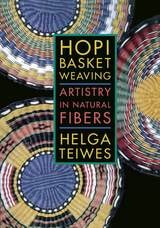
Hopi Basket Weaving
Artistry in Natural FibersHelga Teiwes
University of Arizona Press, 1996
Rising dramatically from the desert floor, Arizona's windswept mesas have been home to the Hopis for hundreds of years. A people known for protecting their privacy, these Native Americans also have a long and less known tradition of weaving baskets and plaques. Generations of Hopi weavers have passed down knowledge of techniques and materials from the plant world around them, from mother to daughter, granddaughter, or niece.
This book is filled with photographs and detailed descriptions of their beautiful baskets—the one art, above all others, that creates the strongest social bonds in Hopi life. In these pages, weavers open their lives to the outside world as a means of sharing an art form especially demanding of time and talent. The reader learns how plant materials are gathered in canyons and creek bottoms, close to home and far away. The long, painstaking process of preparation and dying is followed step by step. Then, using techniques of coiled, plaited, or wicker basketry, the weaving begins.
Underlying the stories of baskets and their weavers is a rare glimpse of what is called "the Hopi Way," a life philosophy that has strengthened and sustained the Hopi people through centuries of change. Many other glimpses of the Hopi world are also shared by author and photographer Helga Teiwes, who was warmly invited into the homes of her collaborators. Their permission and the permission of the Cultural Preservation Office of the Hopi Tribe gave her access to people and information seldom available to outsiders.
Teiwes was also granted access to some of the ceremonial observances where baskets are preeminent. Woven in brilliant reds, greens, and yellows as well as black and white, Hopi weavings, then, not only are an arresting art form but also are highly symbolic of what is most important in Hopi life. In the women's basket dance, for example, woven plaques commemorate and honor the Earth and the perpetuation of life. Other plaques play a role in the complicated web of Hopi social obligation and reciprocity.
Living in a landscape of almost surreal form and color, Hopi weavers are carrying on one of the oldest arts traditions in the world. Their stories in Hopi Basket Weaving will appeal to collectors, artists and craftspeople, and anyone with an interest in Native American studies, especially Native American arts. For the traveler or general reader, the book is an invitation to enter a little-known world and to learn more about an art form steeped in meaning and stunning in its beauty.
How to Be an Indian in the 21st Century
Louis V. Clark (Two Shoes)
Wisconsin Historical Society Press, 2017
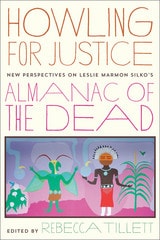
Howling for Justice
New Perspectives on Leslie Marmon Silko’s Almanac of the DeadEdited by Rebecca Tillett
University of Arizona Press, 2014
Howling for Justice actively engages with both the literary achievements and the politics of Silko’s text. It brings together essays by international scholars reacting to the novel while keeping in mind its larger concern with issues of social justice, both local and transnational. Aiming both to refocus critical attention and open the book to a broader array of readers, this collection offers fresh perspectives on its transnational vision, on its sociocultural, historical, and political ambitions, and on its continued relevance in the twenty-first century. The essays examine and explain some of the key points that readers and critics have identified as confusing, problematic, and divisive. Together, they offer new ways to approach and appreciate the text.
The book concludes with a new, never-before-published interview in which Silko reflects on the twenty years since the novel’s publication and relates the concerns of Almanac to her current work.
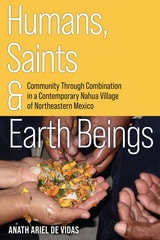
Humans, Saints, and Earth Beings
Community Through Combination in a Contemporary Nahua Village of Northeastern MexicoAnath Ariel De Vidas
University Press of Colorado, 2025
In her work, Ariel de Vidas demonstrates how villagers blend traditional earth-based rituals with Catholic practices, creating a sophisticated system of coexistence between humans and nonhuman entities. These ritual combinations serve as the primary mechanism for social production, cultural continuity, and political authority. The book challenges conventional anthropological binaries of tradition versus modernity and continuity versus acculturation through “thick” ethnographic descriptions that focus on the ethics of coexistence among humans themselves as well as between humans and the peculiar nonhuman inhabitants of their environment.
Originally published in Spanish as Combinar para convivir (2021), Humans, Saints, and Earth Beings contributes to contemporary theoretical discussions about Indigenous ontologies, ritual practice, and social cohesion. It offers crucial insights into how rural communities worldwide might navigate the tensions between maintaining cultural particularities and participating in broader social transformations, making it essential reading for anthropologists, Latin American studies scholars, and anyone interested in Indigenous resilience and adaptation.
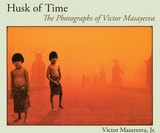
Husk of Time
The Photographs of Victor MasayesvaVictor Masayesva, Jr.; Introduction by Beverly R. Singer
University of Arizona Press, 2006