Results by title
57 books match the query 'Individual Director' and 3 start with h
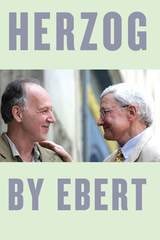
Herzog by Ebert
Roger Ebert
University of Chicago Press, 2017
Herzog by Ebert is a comprehensive collection of Ebert’s writings about the legendary director, featuring all of his reviews of individual films, as well as longer essays he wrote for his Great Movies series. The book also brings together other essays, letters, and interviews, including a letter Ebert wrote Herzog upon learning of the dedication to him of “Encounters at the End of the World;” a multifaceted profile written at the 1982 Cannes Film Festival; and an interview with Herzog at Facet’s Multimedia in 1979 that has previously been available only in a difficult-to-obtain pamphlet. Herzog himself contributes a foreword in which he discusses his relationship with Ebert.
Brimming with insights from both filmmaker and film critic, Herzog by Ebert will be essential for fans of either of their prolific bodies of work.
Hitchcock's People, Places, and Things
John Bruns
Northwestern University Press, 2019
This book offers new readings of well-known Hitchcock films, including The Lodger, Shadow of a Doubt, Psycho, The Birds, and Marnie, as well as insights into lesser-discussed films such as I Confess and Family Plot. Additional close readings of the original theatrical trailer for Psycho and a Hitchcock-directed episode of Alfred Hitchcock Presents expand the Hitchcock landscape beyond conventional critical borders. In tracing the network of relations in Hitchcock’s work, Bruns brings new Hitchcockian tropes to light. For students, scholars, and serious fans, the author promises a thrilling critical navigation of the Hitchcock landscape, with frequent “mental shake-ups” that Hitchcock promised his audience.
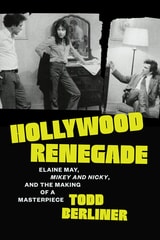
Hollywood Renegade
Elaine May, Mikey and Nicky, and the Making of a MasterpieceTodd Berliner
University of Texas Press, 2026
Examines the career and unorthodox filmmaking practices of director Elaine May, whose Mikey and Nicky, over a span of fifty years, transformed from a fiasco to a masterpiece of seventies cinema.
Elaine May’s Mikey and Nicky stands out in the history of Hollywood. After a troubled production, massive cost overruns, and lawsuits between May and the studio, the film received scathing reviews and failed at the box office. But the very qualities that initially alienated viewers and reviewers led later generations to regard the film as an overlooked masterpiece.
Written and directed by the period’s only female New Hollywood filmmaker, Mikey and Nicky has not received the attention given to other unconventional films of the 1970s. But May worked for years to give each moment of the movie multiple areas of interest. She made every character, even peripheral ones, nuanced and memorable. And she designed every scene, even minor ones, as a performance event. Her lead actors, Peter Falk and John Cassavetes, thrived under her unorthodox directing style, earning acclaim even from reviewers who hated the movie. Decades in the making—years of scriptwriting, a shoot that spanned ten months, and three years spent editing—Mikey and Nicky shows us what Hollywood cinema can accomplish when talented filmmakers challenge Hollywood’s limited notion of professionalism, rejecting the harsh time pressures of commercial filmmaking in order to get the most out of every scene.