Results by title
118 books match the query 'Land tenure' and 2 start with h

Hawaiian Blood
Colonialism and the Politics of Sovereignty and IndigeneityJ. Kauanui Kahaulani
Duke University Press, 2008
Kauanui provides an impassioned assessment of how the arbitrary correlation of ancestry and race imposed by the U.S. government on the indigenous people of Hawai‘i has had far-reaching legal and cultural effects. With the HHCA, the federal government explicitly limited the number of Hawaiians included in land provisions, and it recast Hawaiians’ land claims in terms of colonial welfare rather than collective entitlement. Moreover, the exclusionary logic of blood quantum has profoundly affected cultural definitions of indigeneity by undermining more inclusive Kanaka Maoli notions of kinship and belonging. Kauanui also addresses the ongoing significance of the 50-percent rule: Its criteria underlie recent court decisions that have subverted the Hawaiian sovereignty movement and brought to the fore charged questions about who counts as Hawaiian.
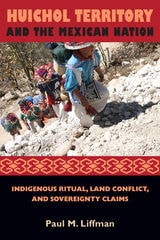
Huichol Territory and the Mexican Nation
Indigenous Ritual, Land Conflict, and Sovereignty ClaimsPaul M. Liffman
University of Arizona Press, 2011
Liffman writes that “the cultural grounds for territorial claims were what the people I wanted to study wanted me to work on.” Based on six years of collaboration with a land-rights organization, interviews, and participant observation in meetings, ceremonies, and extended stays on remote rancherías, Huichol Territory and the Mexican Nation analyzes the sites where people define Huichol territory. The book’s innovative structure echoes Huichols’ own approach to knowledge and examines the nation and state, not just the community. Liffman’s local, regional, and national perspective informs every chapter and expands the toolkit for researchers working with indigenous communities. By describing Huichols’ ceremonially based placemaking to build a theory of “historical territoriality,” he raises provocative questions about what “place” means for native peoples worldwide.