Results by title
460 books match the query 'Law and legislation' and 5 start with h
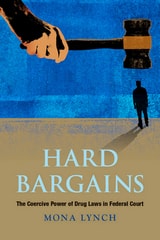
Hard Bargains
The Coercive Power of Drug Laws in Federal CourtMona Lynch
Russell Sage Foundation, 2016
As a result of the War on Drugs, the number of drug cases prosecuted each year in federal courts has increased fivefold since 1980. Lynch goes behind the scenes in three federal court districts and finds that federal prosecutors have considerable discretion in adjudicating these cases. Federal drug laws are wielded differently in each district, but with such force to overwhelm defendants’ ability to assert their rights. For drug defendants with prior convictions, the stakes are even higher since prosecutors can file charges that incur lengthy prison sentences—including life in prison without parole. Through extensive field research, Lynch finds that prosecutors frequently use the threat of extremely severe sentences to compel defendants to plead guilty rather than go to trial and risk much harsher punishment. Lynch also shows that the highly discretionary ways in which federal prosecutors work with law enforcement have led to significant racial disparities in federal courts. For instance, most federal charges for crack cocaine offenses are brought against African Americans even though whites are more likely to use crack. In addition, Latinos are increasingly entering the federal system as a result of aggressive immigration crackdowns that also target illicit drugs.
Hard Bargains provides an incisive and revealing look at how legal reforms over the last five decades have shifted excessive authority to federal prosecutors, resulting in the erosion of defendants’ rights and extreme sentences for those convicted. Lynch proposes a broad overhaul of the federal criminal justice system to restore the balance of power and retreat from the punitive indulgences of the War on Drugs.
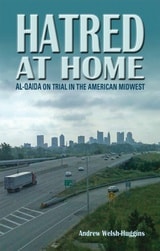
Hatred at Home
al-Qaida on Trial in the American MidwestAndrew Welsh-Huggins
Ohio University Press, 2011
One day in 2002, three friends—a Somali immigrant, a Pakistan–born U.S. citizen, and a hometown African American—met in a Columbus, Ohio coffee shop and vented over civilian casualties in the war in Afghanistan. Their conversation triggered an investigation that would become one of the most unusual and far–reaching government probes into terrorism since the 9/11 attacks.
Over several years, prosecutors charged each man with unrelated terrorist activities in cases that embodied the Bush administration’s approach to fighting terrorism at home.
Government lawyers spoke of catastrophes averted; defense attorneys countered that none of the three had done anything but talk. The stories of these homegrown terrorists illustrate the paradox the government faces after September 11: how to fairly wage a war against alleged enemies living in our midst.
Hatred at Home is a true crime drama that will spark debate from all political corners about safety, civil liberties, free speech, and the government’s war at home.
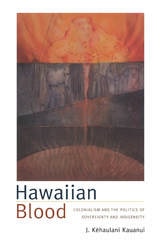
Hawaiian Blood
Colonialism and the Politics of Sovereignty and IndigeneityJ. Kauanui Kahaulani
Duke University Press, 2008
Kauanui provides an impassioned assessment of how the arbitrary correlation of ancestry and race imposed by the U.S. government on the indigenous people of Hawai‘i has had far-reaching legal and cultural effects. With the HHCA, the federal government explicitly limited the number of Hawaiians included in land provisions, and it recast Hawaiians’ land claims in terms of colonial welfare rather than collective entitlement. Moreover, the exclusionary logic of blood quantum has profoundly affected cultural definitions of indigeneity by undermining more inclusive Kanaka Maoli notions of kinship and belonging. Kauanui also addresses the ongoing significance of the 50-percent rule: Its criteria underlie recent court decisions that have subverted the Hawaiian sovereignty movement and brought to the fore charged questions about who counts as Hawaiian.
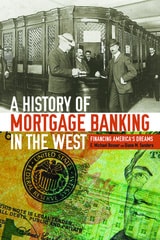
History of Mortgage Banking in the West
Financing America's DreamsE. Michael Rosser
University Press of Colorado, 2017
Part economic history, part public history, A History of Mortgage Banking in the West is an insider’s account of how the mortgage banking sector worked over the last 150 years, including analysis of the causes of the 2007 mortgage crisis. Beginning with the land and railroad development acts that encouraged settlement in the west, E. Michael Rosser and Diane M. Sanders trace the laws, institutions, and individuals that contributed to the economic growth of the region.
Using Colorado and the west as a case study for the nation’s economic and property development as a whole since the late nineteenth century, Rosser and Sanders explain how farm mortgages and agricultural lending steadily gave way to urban development and housing mortgages, all while the large mortgage and investment firms financed the development of some of the state’s most important water resources and railroad networks. Rosser uses his personal experience as a lifelong practitioner and educator of mortgage banking, along with a plethora of primary sources, academic archives, and industry publications, to analyze the causes of economic booms and busts as they relate to real estate and development.
Rosser’s professional acumen combined with Sanders’s research experience makes A History of Mortgage Banking in the West a rich and nuanced account of the region’s most significant economic events. It will be an important work for scholars and practitioners in regional and financial history, mortgage market practice and development, government housing and mortgage policy, and financial stability and of great significance to anyone curious about the role of the federal government in national housing policy and the inherent risk in mortgages.
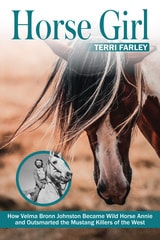
Horse Girl
How Velma Bronn Johnston Became Wild Horse Annie and Outsmarted the Mustang Killers of the WestTerri Farley
University of Nevada Press, 2026
The American mustang—wild, wind-tossed, and thundering across the open West—might have vanished into myth if not for Velma Bronn Johnston. A shy woman who was left with physical effects from a childhood battle with polio, Johnston was living a quiet life on a struggling ranch near Reno, Nevada, when she discovered wild horses being brutally transported to slaughter. Outraged, she reported it—only to be offered a permit allowing her to do the same horrific deed. But instead of backing down, Johnston took a stand.
Her refusal to profit from cruelty launched her into a firestorm of activism, upending her life. Laughed at, threatened, and dismissed, she pressed on. When a rival mocked her as “Wild Horse Annie,” she seized the name as a badge of honor and purpose. Embracing her new identity, she began to raid illegal holding pens under the cover of darkness, captivated the media, and became the voice of a movement. Her biggest allies? Schoolchildren across America, whose letter-writing campaign swept the country.
Johnston’s commitment to these majestic animals was finally recognized in 1971 when Congress unanimously passed legislation to protect the nation’s wild horses—an enduring victory for one determined woman and the animals she refused to abandon.
Award-winning author Terri Farley presents the captivating story of Horse Girl, revealing Velma Bronn Johnston in a new light through family photos and journal entries never before published. Farley’s storytelling brings Johnston’s unwavering courage into the spotlight, revealing a woman determined to protect the wild mustang—no matter the cost.