Results by title
78 books match the query 'Legends' and 4 start with h
Harriet Tubman
Myth, Memory, and HistoryMilton C. Sernett
Duke University Press, 2007
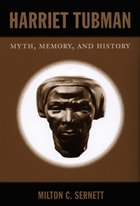
Three biographies of Harriet Tubman were published within months of each other in 2003–04; they were the first book-length studies of the “Queen of the Underground Railroad” to appear in almost sixty years. Sernett examines the accuracy and reception of these three books as well as two earlier biographies first published in 1869 and 1943. He finds that the three recent studies come closer to capturing the “real” Tubman than did the earlier two. Arguing that the mythical Tubman is most clearly enshrined in stories told to and written for children, Sernett scrutinizes visual and textual representations of “Aunt Harriet” in children’s literature. He looks at how Tubman has been portrayed in film, painting, music, and theater; in her Maryland birthplace; in Auburn, New York, where she lived out her final years; and in the naming of schools, streets, and other public venues. He also investigates how the legendary Tubman was embraced and represented by different groups during her lifetime and at her death in 1913. Ultimately, Sernett contends that Harriet Tubman may be America’s most malleable and resilient icon.
Haunted Wisconsin
Michael Norman
University of Wisconsin Press, 2011
Grab a cozy blanket, light a few flickering candles, and enjoy the unnerving tales of Haunted Wisconsin. Gathered from personal interviews with credible eyewitnesses, on-site explorations, historical archives, newspaper reports, and other sources, these scores of reports date from Wisconsin’s early settlement days to recent inexplicable events.
You’ll read about Wisconsin’s most famous haunted house, Summerwind; three Milwaukee men who encountered the beautiful ghost of National Avenue; a phantom basketball player; a spectral horse that signaled death in the pioneer era of the Wisconsin Dells; a poltergeist in St. Croix County who attracted a crowd of more than three hundred spectators; the Ridgeway Ghost who haunts the driftless valleys of southwestern Wisconsin; a swinging railroad lantern held by unseen hands; the Ghost Island of the Chippewa Flowage; and many others. Are ghosts real? That’s for you to decide!
Now available in a Third Edition with updates and several new accounts, Haunted Wisconsin remains a favorite collection of unexplained midwestern tales, enjoyed by readers of all ages.
Hegel Myths and Legends
Jon Stewart
Northwestern University Press, 1996
Huichol Mythology
Robert M. Zingg; Edited by Jay C. Fikes, Phil C. Weigand, and Acelia García de Weigand
University of Arizona Press, 2004
Zingg was the first professional anthropologist to study the Huichol, and his generosity toward them and political advocacy on their behalf allowed him to overcome tribal sanctions against divulging secrets to outsiders. He is fondly remembered today by some Huichols who were children when he lived among them. Zingg recognized that the alternation between dry and wet seasons pervades Huichol myth and ritual as it does their subsistence activities, and his arrangement of the texts sheds much light on Huichol tradition. The volume contains both aboriginal myths that attest to the abiding Huichol obligation to serve ancestors who control nature and its processes, and Christian-inspired myths that document the traumatic effect that silver mining and Franciscan missions had on Huichol society.
First published in 1998 in a Spanish-language edition, Huichol Mythology is presented here for the first time in English, with more than 40 original photographs by Zingg accompanying the text. For this volume, the editors provide a meticulous historical account of Huichol society from about 200 A.D. through the colonial era, enabling readers to fully grasp the significance of the myths free of the sensationalized interpretations found in popular accounts of the Huichol. Zingg’s compilation is a landmark work, indispensable to the study of mythology, Mexican Indians, and comparative religion.