Results by title
791 books match the query 'Levels' and 21 start with h
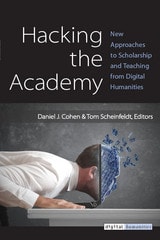
Hacking the Academy
New Approaches to Scholarship and Teaching from Digital HumanitiesDaniel J. Cohen and Tom Scheinfeldt, Editors
University of Michigan Press, 2013
On May 21, 2010, Daniel J. Cohen and Tom Scheinfeldt posted the following provocative questions online:
“Can an algorithm edit a journal? Can a library exist without books? Can students build and manage their own learning management platforms? Can a conference be held without a program? Can Twitter replace a scholarly society?”
As recently as the mid-2000s, questions like these would have been unthinkable. But today serious scholars are asking whether the institutions of the academy as they have existed for decades, even centuries, aren’t becoming obsolete. Every aspect of scholarly infrastructure is being questioned, and even more importantly, being hacked. Sympathetic scholars of traditionally disparate disciplines are canceling their association memberships and building their own networks on Facebook and Twitter. Journals are being compiled automatically from self-published blog posts. Newly minted PhDs are forgoing the tenure track for alternative academic careers that blur the lines between research, teaching, and service. Graduate students are looking beyond the categories of the traditional CV and building expansive professional identities and popular followings through social media. Educational technologists are “punking” established technology vendors by rolling out their own open source infrastructure.
Here, in Hacking the Academy, Daniel J. Cohen and Tom Scheinfeldt have gathered a sampling of the answers to their initial questions from scores of engaged academics who care deeply about higher education. These are the responses from a wide array of scholars, presenting their thoughts and approaches with a vibrant intensity, as they explore and contribute to ongoing efforts to rebuild scholarly infrastructure for a new millennium.
Handbook of Engaged Scholarship
Contemporary Landscapes, Future Directions: Volume 1: Institutional ChangeHiram E. Fitzgerald
Michigan State University Press, 2010
In the preface to the Handbook of Engaged Scholarship, Hiram Fitzgerald observes that the Kellogg Commission's challenge to higher education to engage with communities was a significant catalyst for action. At Michigan State University, the response was the development of "engaged scholarship," a distinctive, scholarly approach to campus-community partnerships.
Engaged scholars recognize that community based scholarship is founded on an underpinning of mutual respect and recognition that community knowledge is valid and that sustainability is an integral part of the partnership agenda.
In this two-volume collection, contributors capture the rich diversity of institutions and partnerships that characterize the contemporary landscape and the future of engaged scholarship. Volume One addresses such issues as the application of engaged scholarship across types of colleges and universities and the current state of the movement. Volume Two contains essays on such topics as current typologies, measuring effectiveness and accreditation, community-campus partnership development, national organizational models, and the future landscape.
Handbook of Engaged Scholarship
Contemporary Landscapes, Future Directions: Volume 2: Community-Campus PartnershipsHiram E. Fitzgerald
Michigan State University Press, 2010
In the preface to the Handbook of Engaged Scholarship, Hiram Fitzgerald observes that the Kellogg Commission's challenge to higher education to engage with communities was a significant catalyst for action. At Michigan State University, the response was the development of "engaged scholarship," a distinctive, scholarly approach to campus-community partnerships.
Engaged scholars recognize that community based scholarship is founded on an underpinning of mutual respect and recognition that community knowledge is valid and that sustainability is an integral part of the partnership agenda.
In this two-volume collection, contributors capture the rich diversity of institutions and partnerships that characterize the contemporary landscape and the future of engaged scholarship. Volume One addresses such issues as the application of engaged scholarship across types of colleges and universities and the current state of the movement. Volume Two contains essays on such topics as current typologies, measuring effectiveness and accreditation, community-campus partnership development, national organizational models, and the future landscape.
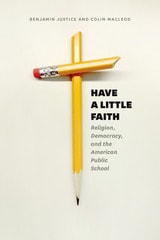
Have a Little Faith
Religion, Democracy, and the American Public SchoolBenjamin Justice and Colin Macleod
University of Chicago Press, 2016
From Bible readings and school prayer to teaching evolution and cultivating religious tolerance, Justice and Macleod consider the key issues and colorful characters that have shaped the way American schools have attempted to negotiate religious pluralism in a politically legitimate fashion. While schools and educational policies have not always advanced tolerance and understanding, Justice and Macleod point to the many efforts Americans have made to find a place for religion in public schools that both acknowledges the importance of faith to so many citizens and respects democratic ideals that insist upon a reasonable separation of church and state. Finally, they apply the lessons of history and political philosophy to an analysis of three critical areas of religious controversy in public education today: student-led religious observances in extracurricular activities, the tensions between freedom of expression and the need for inclusive environments, and the shift from democratic control of schools to loosely regulated charter and voucher programs.
Altogether Justice and Macleod show how the interpretation of educational history through the lens of contemporary democratic theory offers both a richer understanding of past disputes and new ways of addressing contemporary challenges.
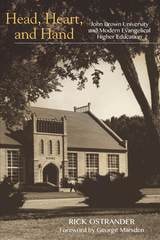
Head, Heart, and Hand
John Brown University and Modern Evangelical Higher EducationRick Ostrander
University of Arkansas Press, 2018
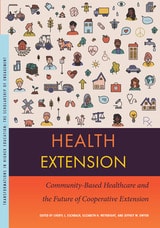
Health Extension
Community-Based Healthcare and the Future of Cooperative ExtensionCheryl L. Eschbach
Michigan State University Press, 2024
Heritage and Hate
Old South Rhetoric at Southern UniversitiesStephen M. Monroe
University of Alabama Press, 2021
How southern universities continue to wrestle with the words and symbols that embody and perpetuate Old South traditions
The US South is a rhetorical landscape that pulsates with division, a place where words and symbols rooted in a deeply problematic past litter the ground and contaminate the soil. Stephen M. Monroe’s provocative study focuses on predominantly white southern universities where Old South rhetoric still reverberates, where rebel flags cast a shadow over attempts at racial harmony, school cheers to reinforce racial barriers, and student yearbooks to create and protect an oppressive culture of exclusion. Across the region, in college towns like Oxford, Mississippi; Athens, Georgia; and Tuscaloosa, Alabama—communities remain locked in a difficult, recursive, and inherently rhetorical struggle that wrestles with this troubling legacy.
Words, images, and symbols are not merely passive artifacts of southern history, Monroe argues, but formative agents that influence human behavior and shape historical events. Drawing on research from many disciplines, including rhetoric, southern studies, history, sociology, and African American studies, Monroe develops the concept of confederate rhetoric: the collection of Old South words and symbols that have been and remain central to the identity conflicts of the South. He charts examples of such rhetoric at work in southern universities from Reconstruction to the present day.
Tracing the long life and legacy of Old South words and symbols at southern universities, this book provides close and nuanced analysis of the rhetorical conflicts that have resulted at places like the University of Mississippi and the University of Missouri. Some conflicts erupted during the civil rights movement, when the first African American students sought admission to all-white southern universities and colleges, and others are brewing now, as African Americans (and their progressive white peers) begin to cement genuine agency and voice in these communities. Tensions have been, and remain, high.
Ultimately, Monroe offers hope and optimism, contending that if words and symbols can be used to damage and divide, then words and symbols can also be used to heal and unify. Racist rhetoric can be replaced by antiracist rhetoric. The old South can become new. While resisting naïve or facile arguments, Heritage and Hate ultimately finds the promise of progress within the tremendous power of language.
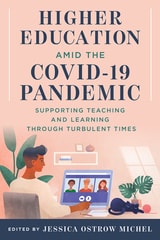
Higher Education amid the COVID-19 Pandemic
Supporting Teaching and Learning through Turbulent TimesJessica Ostrow Michel
Rutgers University Press, 2024
Higher Education and Democracy
Essays on Service-Learning and Civic EngagementEdited by John Saltmarsh and Edward Zlotkowski
Temple University Press, 2011
Higher Education and Democracy is a collection of essays written over the last ten years on how civic engagement in higher education works to achieve what authors John Saltmarsh and Edward Zlotkowsi consider to be the academic and civic purposes of higher education. These include creating new modes of teaching and learning, fostering participation in American democracy, the development and respect for community and civic institutions, and encouraging the constant renewal all of these dimensions of American life.
Organized chronologically, the twenty-two essays in this volume provide "signposts" along the road in the journey of fulfilling the civic purposes of higher education. For the authors, service-learning is positioned as centrally important to the primary academic systems and structures of higher education, departments, disciplines, curriculum, and programs that are central to the faculty domain. Progressing from the general and the contextual to specific practices embodied in ever larger academic units, the authors conclude with observations on the future of the civic engagement movement.
Higher Education and the American Dream
Success and Its DiscontentsMarvin Lazerson
Central European University Press, 2007
Higher Ground
Ethics and Leadership in the Modern UniversityNannerl O. Keohane
Duke University Press, 2006
Keohane regards colleges and universities as intergenerational partnerships in learning and discovery, whose compelling purposes include not only teaching and research but also service to society. Their mission is to equip students with a moral education, not simply preparation for a career or professional school.
But the modern era has presented universities and their leadership with unprecedented new challenges. Keohane worries about access to education in a world of rising costs and increasing economic inequality, and about threats to academic freedom and expressions of opinion on campus. She considers diversity as a key educational tool in our increasingly pluralistic campuses, ponders the impact of information technologies on the university’s core mission, and explores the challenges facing universities as they become more “global” institutions, serving far-flung constituencies while at the same time contributing to the cities and towns that are their institutional homes.
Reflecting on the role of contemporary university leaders, Keohane asserts that while they have many problems to grapple with, they will find creative ways of dealing with them, just as their predecessors have done.
Hip-Hop Civics
Connected Learning in the Rap ClassroomJabari M. Evans
University of Michigan Press, 2025
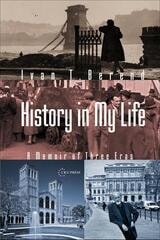
History in My Life
A Memoir of Three ErasIvan T. Berend is Distinguished Research Professor at the History Department of the University of California Los Angeles.
Central European University Press, 2009
Ivan T. Berend is Distinguished Professor at the University of California Los Angeles, Director of the European Studies Program. He was one of the masterminds of regime change in Hungary. He made a career in Hungary as a university professor, Rector of the University of Economics (1973–79), and President of the Hungarian Academy of Sciences (1985–90). He was President of the International Committee of Historical Sciences (1995–2000), and Vice-President of the International Economic History Association (1986–1994). His research interests are the complex economic, social, ideological, and cultural history of Central and Eastern Europe in the 19th–20th century; economic modernization; problems of European backwardness; transition from state socialism to capitalism. He published and 26 books and more than 120 studies.
Before he became a professor at UCLA, Ivan Berend had survived five regime changes and two revolutions in Hungary, had been in prison and German concentration camp in 1944–45.
His memoir offers an interesting case study, a subjective addition to the “objective” historical works on Central and Eastern European state socialism. It describes the hard choices of intellectuals in a dictatorial state: 1. remain in isolation, concentrate on scholarly works, and exclude politics in your personal life; 2. be in opposition, criticize and unveil the regime, accept discrimination and exclusion; 3. remain within the establishment and work for reforming the country using legal possibilities to criticize the regime and to achieve changes from within.
Berend’s book raises basic historical questions and debates, compares East European and American higher education systems, and presents an eyewitness’ insights on life in the United States.
History of the University of Alabama
Volume One, 1818-1902James Benson Sellers
University of Alabama Press, 1953
The definitive and authorized history of the University of Alabama's birth and first century
Step into the rich heritage of one of America’s most storied institutions with the History of the University of Alabama, Volume One 1818 – 1902 by James Sellers. This definitive volume captures the legends, triumphs, and traditions that shaped the Capstone’s first century. From its earliest days on the frontier to its rise as a modern research university, Sellers weaves a narrative that celebrates the people, places, and pivotal moments that define the University of Alabama’s proud legacy.
Among the most dramatic chapters is the interruption of campus life during the closing days of the Civil War, when Union troops burned the university to the ground—a devastating blow that tested resilience and sparked a remarkable rebirth. Through vivid storytelling and meticulous research, Sellers honors the people and milestones that built the Crimson legacy.
Beautifully written and meticulously researched, this book is perfect as a gift for alumni, fans, and collectors. Whether displayed on a coffee table or shared with a fellow member of the Crimson Tide family, this book is more than history. It’s a tribute to the spirit of Alabama. Own the legend. Share the legacy. Celebrate the spirit of the Capstone for generations to come.
History's Babel
Scholarship, Professionalization, and the Historical Enterprise in the United States, 1880 - 1940Robert B. Townsend
University of Chicago Press, 2012
How Humans Learn
The Science and Stories behind Effective College TeachingJoshua R. Eyler
West Virginia University Press, 2018
Even on good days, teaching is a challenging profession. One way to make the job of college instructors easier, however, is to know more about the ways students learn. How Humans Learn aims to do just that by peering behind the curtain and surveying research in fields as diverse as developmental psychology, anthropology, and cognitive neuroscience for insight into the science behind learning.
The result is a story that ranges from investigations of the evolutionary record to studies of infants discovering the world for the first time, and from a look into how our brains respond to fear to a reckoning with the importance of gestures and language. Joshua R. Eyler identifies five broad themes running through recent scientific inquiry—curiosity, sociality, emotion, authenticity, and failure—devoting a chapter to each and providing practical takeaways for busy teachers. He also interviews and observes college instructors across the country, placing theoretical insight in dialogue with classroom experience.
How We Make Each Other
Trans Life at the Edge of the UniversityPerry Zurn
Duke University Press, 2025

How to Study
Suggestions for High-School and College StudentsArthur W. Kornhauser
University of Chicago Press, 1993
*Mastering rather than just memorizing material
*Learning the secrets of mental preparation before tackling difficult assignments or exams
*Strengthening skills for better reading, note taking, and listening
*Improving use of time in the classroom, the library, and at home
It offers a wealth of advice, from the commonsensical ("Never begin study immediately after eating" and "Check every tendency to daydream") to the more psychological ("Use your knowledge by thinking, talking, and writing about the things you are learning").
Thoroughly revised and updated, this powerful little book can help any motivated and capable student work smarter, not just harder, from high school through college.
When he wrote How to Study Arthur W. Kornhauser (1896-1990) was associate professor of business psychology at the University of Chicago.
Human Resources and Higher Education
Staff Report on the Commission on Human Resources and Advanced EducationJohn K. Folger
Russell Sage Foundation, 1970
Human Targets
Schools, Police, and the Criminalization of Latino YouthVictor M. Rios
University of Chicago Press, 2017
In Human Targets, Rios takes us to the streets of California, where we encounter young men who find themselves in much the same situation as fifteen-year-old Victor. We follow young gang members into schools, homes, community organizations, and detention facilities, watch them interact with police, grow up to become fathers, get jobs, get rap sheets—and in some cases get killed. What is it that sets apart young people like Rios who succeed and survive from the ones who don’t? Rios makes a powerful case that the traditional good kid/bad kid, street kid/decent kid dichotomy is much too simplistic, arguing instead that authorities and institutions help create these identities—and that they can play an instrumental role in providing young people with the resources for shifting between roles. In Rios’s account, to be a poor Latino youth is to be a human target—victimized and considered an enemy by others, viewed as a threat to law enforcement and schools, and burdened by stigma, disrepute, and punishment. That has to change.
This is not another sensationalistic account of gang bangers. Instead, the book is a powerful look at how authority figures succeed—and fail—at seeing the multi-faceted identities of at-risk youths, youths who succeed—and fail—at demonstrating to the system that they are ready to change their lives. In our post-Ferguson era, Human Targets is essential reading.
Hutchins' University
A Memoir of the University of Chicago, 1929-1950William H. McNeill
University of Chicago Press, 1991
Hutchins' scathing opposition to the departmentalization of learning and his resounding call for reforms in general education sparked controversy and fueled debate on campus and off. It became a struggle for the heart and soul of higher education—and McNeill, as a student and then as an instructor, was a participant. His account of the university's history is laced with personal reminiscences, encounters with influential fellow scholars such as Richard McKeon, R. S. Crane, and David Daiches, and details drawn from Hutchins' papers and other archives.
McNeill sketches the interplay of personalities with changing circumstances of the Depression, war, and postwar eras. But his central concern is with the institutional life of the University, showing how student behavior, staff and faculty activity and even the Hyde Park neighborhood all revolved around the charismatic figure of Robert Maynard Hutchins—shaped by him and in reaction against him.
Successive transformations of the College, and the tribulations of the ideal of general or liberal education are central to much of the story; but the memoir also explores how the University was affected by such events as Red scares, the remarkably successful Round Table radio broadcasts, the
abolition of big time football, and the inauguration of the nuclear age under the west stands of Stagg Field in 1942.
In short, Hutchins' University sketches an extraordinarily vibrant period for the University of Chicago
and for American higher education. It will revive old controversies among veterans from those times, and may provoke others to reflect anew about the proper role of higher education in American society.