Results by title
716 books match the query 'Literary Figures' and 32 start with h

H.L. Mencken - American Writers 62
University of Minnesota Pamphlets on American WritersPhilip Wagner
University of Minnesota Press, 1966
H.L. Mencken - American Writers 62 was first published in 1966. Minnesota Archive Editions uses digital technology to make long-unavailable books once again accessible, and are published unaltered from the original University of Minnesota Press editions.

Hack
Stories from a Chicago CabDmitry Samarov
University of Chicago Press, 2011
An artist and painter trained at the School of the Art Institute of Chicago, Samarov began driving a cab in 1993 to make ends meet, and he’s been working as a taxi driver ever since. In Hack: Stories from a Chicago Cab, he recounts tales that will delight, surprise, and sometimes shock the most seasoned urbanite. We follow Samarov through the rhythms of a typical week, as he waits hours at the garage to pick up a shift, ferries comically drunken passengers between bars, delivers prostitutes to their johns, and inadvertently observes drug deals. There are long waits with other cabbies at O’Hare, vivid portraits of street corners and their regular denizens, amorous Cubs fans celebrating after a game at Wrigley Field, and customers who are pleasantly surprised that Samarov is white—and tell him so. Throughout, Samarov’s own drawings—of his fares, of the taxi garage, and of a variety of Chicago street scenes—accompany his stories. In the grand tradition of Nelson Algren, Saul Bellow, Mike Royko, and Studs Terkel, Dmitry Samarov has rendered an entertaining, poignant, and unforgettable vision of Chicago and its people.
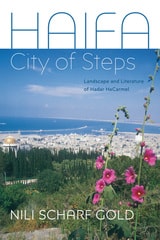
Haifa
City of StepsNili Scharf Gold
Brandeis University Press, 2017
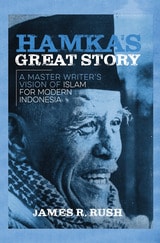
Hamka’s Great Story
A Master Writer’s Vision of Islam for Modern IndonesiaJames R. Rush
University of Wisconsin Press, 2016
Hamka (Haji Abdul Malik Karim Amrullah) was born when Indonesia was still a Dutch colony and came of age as the nation itself was emerging through tumultuous periods of Japanese occupation, revolution, and early independence. He became a prominent author and controversial public figure. In his lifetime of prodigious writing, Hamka advanced Islam as a liberating, enlightened, and hopeful body of beliefs around which the new nation could form and prosper. He embraced science, human agency, social justice, and democracy, arguing that these modern concepts comported with Islam’s true teachings. Hamka unfolded this big idea—his Great Story—decade by decade in a vast outpouring of writing that included novels and poems and chatty newspaper columns, biographies, memoirs, and histories, and lengthy studies of theology including a thirty-volume commentary on the Holy Qur’an. In introducing this influential figure and his ideas to a wider audience, this sweeping biography also illustrates a profound global process: how public debates about religion are shaping national societies in the postcolonial world.
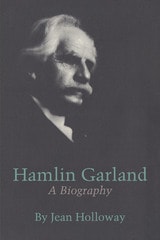
Hamlin Garland
A BiographyBy Jean Holloway
University of Texas Press, 1960
Hamlin Garland’s Main-Travelled Roads is recognized as one of the early landmarks of American literary realism. But Garland’s shift in mid-career from the harsh verisimilitude of Prairie Folks and Prairie Songs to a romanticizing of the Far West, and from ardent espousal of the principles of “veritism” to violent denunciations of naturalism, is a paradox which has long puzzled literary historians.
In tracing the evolution of Garland’s work, the various reactions of his stories under the influence of editorial comment and of contemporary critical reaction, Jean Holloway suggests that the Garland apostasy was an illusion produced by his very intellectual immobility amidst the swirling currents of American thought. His extensive correspondence with Gilder of the Century, Alden of Harper’s Monthly, McClure of McClure’s, and Bok of the Ladies’ Home Journal is adduced in support of the thesis that the writer’s choices of subject and of treatment were psychologically forced rather than conditioned primarily by literary theory.
As a subject for biography, however, Garland has an appeal far beyond the scope of his literary influence. The friendships of this gregarious peripatetic with the famous began with Howells, Twain, Whitman, and Stephen Crane, stretched down the years to include such younger men as Bret Harte and Carl Van Doren, and crossed the seas to embrace such British literary lions as Barrie, Shaw, and Kipling. Garland’s fervent espousal of “causes”—the Single Tax Movement, psychic experimentation, Indian rights-brought him into close contact with other prominent men—Henry George, Theodore Roosevelt, and William Jennings Bryan.
These public figures form the incidental characters in Garland’s spate of autobiographical works. Yet it is the central figure of his own story which has become permanently identified with the “Middle Border,” that region “between the land of the hunter and the harvester” which Augustus Thomas defined as “wherever Hamlin Garland is.” In A Son of the Middle Border Garland nostalgically recreated his boyhood on the frontier and, regardless of the detractions of literary critics, preserved for posterity an important segment of American social history.
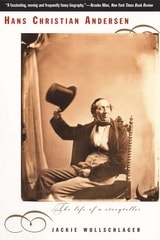
Hans Christian Andersen
The Life of a StorytellerJackie Wullschlager
University of Chicago Press, 2002
Drawing on letters, diaries, and other original sources (many never before translated from the Danish), Wullschlager shows in this compelling, extensively researched biography how Andersen's writings—darker and more diverse than previously recognized—reflected the complexities of his life, a far cry from the "happily ever after" of a fairy tale. As we follow in his footsteps from Golden Age Copenhagen to the princely courts of Germany and the villas of southern Italy, Andersen becomes a figure every bit as fascinating as a character from one of his stories—a gawky, self-pitying, and desperate man, but also one of the most gifted storytellers the world has ever known.
Harold Frederic - American Writers 83
University of Minnesota Pamphlets on American WritersStanton Garner
University of Minnesota Press, 1969
Harold Frederic - American Writers 83 was first published in 1969. Minnesota Archive Editions uses digital technology to make long-unavailable books once again accessible, and are published unaltered from the original University of Minnesota Press editions.
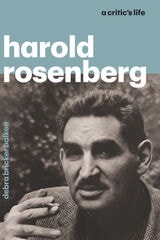
Harold Rosenberg
A Critic‘s LifeDebra Bricker Balken
University of Chicago Press, 2021
With Harold Rosenberg: A Critic’s Life, Debra Bricker Balken offers the first-ever complete biography of this great and eccentric man. Although he is now known mainly for his role as an art critic at the New Yorker from 1962 to 1978, Balken weaves together a complete tapestry of Rosenberg’s life and literary production, cast against the dynamic intellectual and social ferment of his time. She explores his role in some of the most contentious cultural debates of the Cold War period, including those over the commodification of art and the erosion of individuality in favor of celebrity, demonstrated in his famous essay “The Herd of Independent Minds.” An outspoken socialist and advocate for the political agency of art, he formed deep alliances with figures such as Hannah Arendt, Saul Bellow, Paul Goodman, Mary McCarthy, Jean-Paul Sartre, Willem de Kooning, and Jackson Pollock, all of whom Balken portrays with vivid accounts from Rosenberg’s life.
Thoroughly researched and captivatingly written, this book tells in full Rosenberg’s brilliant, fiercely independent life and the five decades in which he played a leading role in US cultural, intellectual, and political history.
Hart Crane - American Writers 47
University of Minnesota Pamphlets on American WritersMonroe K. Spears
University of Minnesota Press, 1965
Hart Crane - American Writers 47 was first published in 1965. Minnesota Archive Editions uses digital technology to make long-unavailable books once again accessible, and are published unaltered from the original University of Minnesota Press editions.
The University of Minnesota Pamphlets on American Writers series provides concise, stimulating introductions to American writers of all periods. The pamphlet authors are critics and writers recognized for their competence in their particular fields. Each pamphlet devoted to a single writer contains biographical information, a discussion and critical evaluation of his work, and a selected bibliography. Teachers of American literature, both in the United States and abroad, in colleges, universities, and secondary schools find the pamphlets ideal for their students' use. For general readers and librarians they are equally useful and interesting.
Hart Crane
A Re-IntroductionWarner Berthoff
University of Minnesota Press, 1989
Hart Crane was first published in 1989. Minnesota Archive Editions uses digital technology to make long-unavailable books once again accessible, and are published unaltered from the original University of Minnesota Press editions.
More than half a century after his death, the work of Hart Crane (1899–1932) remains central to our understanding of twentieth-century American poetry. During his short life, Crane's contemporaries had difficulty seeing past the "roaring boy" who drank too much and hurled typewriters from windows; in recent years, he has come to be seen as a kind of "last poet" whose only theme is self-destruction, and who himself exemplifies the breakdown of poetry in the modern age. Taking as a point of departure Robert Lowell's 1961 valuation of Crane and his power to speak from "the center of things," Warner Berthoff in this book reappraises the essential character and force of Crane's still problematic achievement. Though he takes into account the substantial body of commentary on Crane's work, his primary intent is to look afresh at the poems themselves, and at the poet's clear-eyed (and brilliant) letters. This approach enables Berthoff, first, to track the emergence and development of Crane's lyric style—an art that recreates, in compact form, the turbulence of the modern city. He then explores the background and historical community that nourished Crane's creative imagination, and he evaluates Crane's conception of the ideal modern poetic: a poetry of ecstasy created with architectural craft. His final chapter is devoted to The Bridge, the ambitious lyric suite that proved to be the climax and terminus of Crane's work. Berthoff's emphasis throughout is on the beauty and power of individual poems, and on the sanity, shrewdness, and sense of purpose that informed Crane's working intelligence.
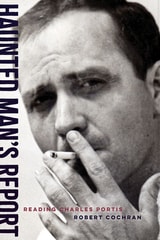
Haunted Man's Report
Reading Charles PortisRobert Cochran
University of Arkansas Press, 2024
Haunted Man’s Report, a deeply insightful literary exploration of Portis’s singular and underexamined oeuvre, celebrates this novelist’s great achievement and is certain to prove a valuable guide for readers new to Portis as well as aficionados.
Havana and Other Missing Fathers
Mia Leonin
University of Arizona Press, 2009
Shortly after her sixteenth birthday, Leonin learned from her mother that her father, a Cuban exile, was very much alive and living in Florida. Her attempts to contact him, however, were thwarted until four years later, when she left home in search of her roots.
She meets her father, but trying to discover the truth behind him proves to be a more daunting task. Her journey takes her to Miami, Colombia, and Cuba, and her search for cultural identity leads her to create memories, friendships, and romances. She finds moments of connection and redemption, ending up in Havana not as a cultural tourist but as an illegitimate daughter of Cuba looking for validation. What she discovers is an island bereft of fathers and brimming with paternalism. As she becomes entangled with two different men, she descends further into the Havana of poverty, humiliation, and despair, as well as the ever-inventive city that is as passionate as it is contradictory.
Insightful, imaginative, and often poetic, Havana and Other Missing Fathers is Mia Leonin’s recollection of this journey and her longing to learn more about her origins. In the end, she must learn to accept the answers she discovers as well as the questions that remain.
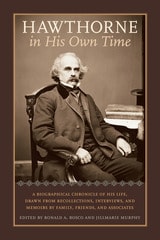
Hawthorne in His Own Time
A Biographical Chronicle of His Life,Drawn from Recollections,Interviews, and Memoirs by Family,FrieRonald A Bosco
University of Iowa Press, 2007
At his death, Nathaniel Hawthorne (1804–1864) was universally acknowledged in America and England as "the Great Romancer." Novels such as The Scarlet Letter and The House of the Seven Gables and stories published in such collections as Twice-Told Tales continue to capture the minds and imaginations of readers and critics to this day. Harder to capture, however, were the character and personality of the man himself. So few of the essays that appeared in the two years after his death offered new insights into his life, art, and reputation that Hawthorne seemed fated to premature obscurity or, at least, permanent misrepresentation. This first collection of personal reminiscences by those who knew Hawthorne intimately or knew about him through reliable secondary sources rescues him from these confusions and provides the real human history behind the successful writer.
Remembrances from Elizabeth Peabody, Sophia Hawthorne, Oliver Wendell Holmes, Ralph Waldo Emerson, Bronson Alcott, Rebecca Harding Davis, and twenty others printed in Hawthorne in His Own Time follow him from his childhood in Salem, through his years of initial literary obscurity, his days in the Boston and Salem Custom Houses, his service as U.S. Consul to Liverpool and Manchester and his life in the Anglo-American communities at Rome and Florence, to his late years as the "Great Romancer."
In their enlightening introduction, editors Ronald Bosco and Jillmarie Murphy assess the postmortem building of Hawthorne's reputation as well as his relationship to the prominent Transcendentalists, spiritualists, Swedenborgians, and other personalities of his time. By clarifying the sentimental associations between Hawthorne's writings and his actual personality and moving away from the critical review to the personal narrative, these artful and perceptive reminiscences tell the private and public story of a remarkable life.
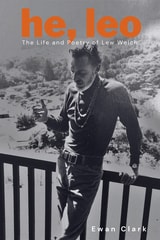
He, Leo
The Life and Poetry of Lew WelchEwan Clark
Oregon State University Press, 2023
He, Leo investigates Welch’s life and work in a chronological fashion, structured around Welch’s own notion of how three main aspects of his life—The Man, The Mountain, and The City—were interdependent. From his birth until his disappearance and presumed death, Welch’s life was often defined by problems, including a complex relationship with his mother, a long struggle with alcohol, and a fluctuating mental state. Yet he was open and candid about everything, a fact that is evident in all aspects of his work.
Each of the three main sections of He, Leo includes key poems, essays, and events—both personal and cultural—to help establish Welch’s importance as a prominent poet and figure during the San Francisco Renaissance. Despite his crushing self-criticism and his reputation as a “friend of,” he was bona fide poet with a strong voice and message of his own. With this first full-length biography, Ewan Clark restores Lew Welch to his rightful place as an important member of a significant American literary and cultural movement.
Heaven Is Near
The Lives of Two Artists and Their Daughter’s Quest to UnderstandLo Dagerman
University of Minnesota Press, 2027
Lo Dagerman reconstructs the love, trauma, and creative journeys of her parents—Swedish writer Stig Dagerman and actress Anita Björk
In 1953, Swedish writer Stig Dagerman, one of Europe’s greatest postwar writers, married Anita Björk, an acclaimed actress famous for the Cannes Grand Prix award-winning film Miss Julie. Inscribed into her wedding ring were his words “Heaven Is Near.” A year later, Stig was found dead by suicide. His death shocked Sweden and left a devastated Anita to raise their small daughter, Lo.
Heaven Is Near is Lo Dagerman’s endeavor to understand what happened. In an unconventional hybrid of biography and memoir, Lo dives deep into diaries, notebooks, letters, and other source material to bring her parents’ stories to life. Her account offers an unsparing look at her father’s creative crisis, depression, and suicide, as well as her mother’s life-long striving and sustained success in reaching the height of artistic excellence while navigating motherhood and family. Moving between Stockholm, Paris, Berlin, and Hollywood, Lo lays bare her parents’ legacy not as a tragic abstraction but as their lived experience, inserting her own memories and reflections along the way.
Through Lo’s unsentimental, psychologically rich narration, Heaven Is Near offers a quietly luminous, multigenerational account of genius, trauma, and creative regeneration.
Retail e-book files for this title are screen-reader friendly with images accompanied by short alt text and/or extended descriptions.
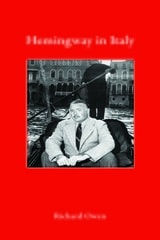
Hemingway in Italy
Richard Owen
Haus Publishing, 2017
In evocative prose, complemented by a rich selection of historical images, Richard Owen takes us on a tour through Hemingway’s Italy. He describes how Hemingway first visited the country of the Latins during World War I, an experience that set the scene for A Farewell to Arms. Then after World War II, it was in Italy that he found inspiration for Across the River and into the Trees. Again and again, the Italian landscape—from the Venetian lagoon to the Dolomites and beyond—deeply affected one of the greatest writers of the twentieth century. Hemingway in Italy demonstrates that Italy stands alongside Spain as a key influence on Hemingway’s work—and why the Italians themselves hold Hemingway and his writing close to their hearts.
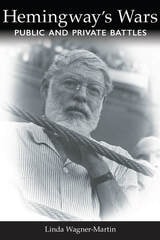
Hemingway's Wars
Public and Private BattlesLinda Wagner-Martin
University of Missouri Press, 2017
Linda Wagner-Martin has written or edited more than sixty books including Ernest Hemingway, A Literary Life. She is Frank Borden Hanes Professor Emerita at the University of North Carolina-Chapel Hill and a winner of the Jay B. Hubbell Medal for Lifetime Achievement.
Henry Adams - American Writers 93
University of Minnesota Pamphlets on American WritersLouis Auchincloss
University of Minnesota Press, 1971
Henry Adams - American Writers 93 was first published in 1971. Minnesota Archive Editions uses digital technology to make long-unavailable books once again accessible, and are published unaltered from the original University of Minnesota Press editions.
Henry D. Thoreau - American Writers 90
University of Minnesota Pamphlets on American WritersLeon Edel
University of Minnesota Press, 1970
Henry D. Thoreau - American Writers 90 was first published in 1970. Minnesota Archive Editions uses digital technology to make long-unavailable books once again accessible, and are published unaltered from the original University of Minnesota Press editions.
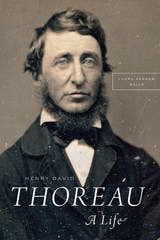
Henry David Thoreau
A LifeLaura Dassow Walls
University of Chicago Press, 2017
But there was much more to Thoreau than his brief experiment in living at Walden Pond. A member of the vibrant intellectual circle centered on his neighbor Ralph Waldo Emerson, he was also an ardent naturalist, a manual laborer and inventor, a radical political activist, and more. Many books have taken up various aspects of Thoreau’s character and achievements, but, as Laura Dassow Walls writes, “Thoreau has never been captured between covers; he was too quixotic, mischievous, many-sided.” Two hundred years after his birth, and two generations after the last full-scale biography, Walls restores Henry David Thoreau to us in all his profound, inspiring complexity.
Walls traces the full arc of Thoreau’s life, from his early days in the intellectual hothouse of Concord, when the American experiment still felt fresh and precarious, and “America was a family affair, earned by one generation and about to pass to the next.” By the time he died in 1862, at only forty-four years of age, Thoreau had witnessed the transformation of his world from a community of farmers and artisans into a bustling, interconnected commercial nation. What did that portend for the contemplative individual and abundant, wild nature that Thoreau celebrated?
Drawing on Thoreau’s copious writings, published and unpublished, Walls presents a Thoreau vigorously alive in all his quirks and contradictions: the young man shattered by the sudden death of his brother; the ambitious Harvard College student; the ecstatic visionary who closed Walden with an account of the regenerative power of the Cosmos. We meet the man whose belief in human freedom and the value of labor made him an uncompromising abolitionist; the solitary walker who found society in nature, but also found his own nature in the society of which he was a deeply interwoven part. And, running through it all, Thoreau the passionate naturalist, who, long before the age of environmentalism, saw tragedy for future generations in the human heedlessness around him.
“The Thoreau I sought was not in any book, so I wrote this one,” says Walls. The result is a Thoreau unlike any seen since he walked the streets of Concord, a Thoreau for our time and all time.
Henry James - American Writers 4
University of Minnesota Pamphlets on American WritersLeon Edel
University of Minnesota Press, 1960
Henry James - American Writers 4 was first published in 1960. Minnesota Archive Editions uses digital technology to make long-unavailable books once again accessible, and are published unaltered from the original University of Minnesota Press editions.
Henry James and the Mass Market
Marcia Jacobson
University of Alabama Press, 1983
The author considers James’s work from The Bostonians to The Awkward Age – from 1883 to 1889 – a period in which James was resident in London and searching for material to replace the “international theme.” Jacobson considers this context in relation to the emergence of a mass market and sees James’s major fiction of this period as an attempt to exploit the conventions of popular fiction in an analysis of his society’s assumptions. James’s work at this time must also be viewed as an artist’s effort to secure popular attention and acceptance.
Henry Miller - American Writers 56
University of Minnesota Pamphlets on American WritersGeorge Wickes
University of Minnesota Press, 1966
Henry Miller - American Writers 56 was first published in 1966. Minnesota Archive Editions uses digital technology to make long-unavailable books once again accessible, and are published unaltered from the original University of Minnesota Press editions.
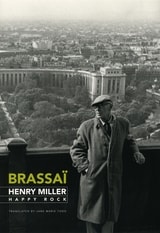
Henry Miller, Happy Rock
Brassaï
University of Chicago Press, 2002
That's Henry Miller's advice for young aspiring artists, as remembered by his very good friend Brassaï in this lively book. One of two that Brassaï wrote about the man who called himself a "happy rock," this volume covers their lives and friendship from the 1950s to 1973. Over the course of a number of warm, intimate conversations, Brassaï and Miller revisit their careers; discuss art, literature, Paris, Greece, Japan, World War II, and more; and consider the lives and works of many others in their circle, including Lawrence Durrell, Henri Matisse, Salvador Dalí, Georges Simenon, André Malraux, Hans Reichel, Paul Klee, and Amedeo Modigliani. Throughout Miller's zest for life shines through, as do his love of art and his passionate intensity for just about everything he does, from discussing a movie or play he'd just seen to reminiscing about a decades-long love.
Brassaï's Henry Miller, Happy Rock presents a vivid portrait of two close friends who thoroughly enjoy each other's company—and just happen to be world—famous artists too.
Henry Wadsworth Longfellow - American Writers 35
University of Minnesota Pamphlets on American WritersEdward Hirsh
University of Minnesota Press, 1964
Henry Wadsworth Longfellow. To meet a need which had been felt for some time both in the United States and abroad, the pamphlet series, the University of Minnesota Pamphlets on American Writers, was established in 1959. By providing readable critical introductions to American Writers, the pamphlets were designed to meet the needs and tastes of mature students and readers of imaginative literature throughout the world. Each pamphlet presents a brief biography of a writer, a longer critical analysis and evaluation of his or her work, and a selected bibliography of his or her books and articles about him or her. Editors of the series were William Van O’Connor, Allen Tate, and Robert Penn Warren. There was an advisory board consisting of William Thorp, Karl Shapiro, and Philip Rahv.
Here I Stand
The Life and Legacy of John BeecherAngela J. Smith
University of Alabama Press, 2017
Biography of a forgotten poet who used his name and influence to speak up for those on the margins of society.
Few surnames resonate in American history more than Beecher. The family’s abolitionist ministers, educators, and writers are central figures in the historical narrative of the United States. The Beechers’ influence was greatest in the nineteenth century, but the family story continued—albeit with less public attention—with a descendant who grew up in Birmingham, Alabama, during the early twentieth century.
John Beecher (1904–1980) never had the public prominence of his famous ancestors, but as a poet, professor, sociologist, New Deal administrator, journalist, and civil rights activist, he spent his life fighting for the voiceless and oppressed with a distinct moral sensibility that reflected his self-identification as the twentieth-century torchbearer for his famous family. While John Beecher had many vocations in his lifetime, he always considered himself a poet and a teacher. Some critics have compared the populist elements of Beecher’s poetry to the work of Walt Whitman and Carl Sandburg, but his writing never gained a broad audience or critical acclaim during his lifetime.
In Here I Stand: The Life and Legacy of John Beecher, Angela J. Smith examines Beecher’s writing and activism and places them in the broader context of American culture at pivotal points in the twentieth century. Employing his extensive letters, articles, unpublished poetry and prose, and audio interviews in addition to his numerous published books, Smith uncovers a record of public concerns in American history ranging from the plight of workers in 1920s steel mills to sharecroppers’ struggles during the Depression to the civil rights movement of the 1960s.
Herman Melville - American Writers 13
University of Minnesota Pamphlets on American WritersLeon Howard
University of Minnesota Press, 1961
Herman Melville - American Writers 13 was first published in 1961. Minnesota Archive Editions uses digital technology to make long-unavailable books once again accessible, and are published unaltered from the original University of Minnesota Press editions.
Hoop Crazy
The Lives of Clair Bee and Chip HiltonDennis Gildea
University of Arkansas Press, 2013
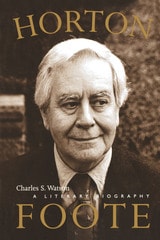
Horton Foote
A Literary BiographyBy Charles S. Watson
University of Texas Press, 2003
Winner of the Pulitzer Prize for Drama for The Young Man from Atlanta and Academy Awards for the screen adaptation of To Kill a Mockingbird and the original screenplay Tender Mercies, as well as the recipient of an Academy Award nomination for the screenplay of The Trip to Bountiful and the William Inge Lifetime Achievement Award, Horton Foote is one of America's most respected writers for stage and screen. The deep compassion he shows for his characters, the moral vision that infuses his social commentary, and the kindness and humanity that Foote himself radiates have also made him one of our most revered artists—the father-figure who understands our longings for home, for human connections, and for certainty in a world largely bereft of these.
This literary biography thoroughly investigates how Horton Foote's life and worldview have shaped his works for stage, television, and film. Tracing the whole trajectory of Foote's career from his small-town Texas upbringing to the present day, Charles Watson demonstrates that Foote has created a fully imagined mythical world from the materials supplied by his own and his family's and friends' lives in Wharton, Texas, in the early twentieth century. Devoting attention to each of Foote's major works in turn, he shows how this world took shape in Foote's writing for the New York stage, Golden Age television, Hollywood films, and in his nine-play masterpiece, The Orphan's Home Cycle. Throughout, Watson's focus on Foote as a master playwright and his extensive use of the dramatist's unpublished correspondence make this literary biography required reading for all who admire the work of Horton Foote.
How Joyce Wrote Finnegans Wake
A Chapter-by-Chapter Genetic GuideEdited by Luca Crispi and Sarn Slote
University of Wisconsin Press, 2008
The introduction by Luca Crispi, Sam Slote, and Dirk Van Hulle offers a chronology of the composition of Finnegans Wake, an archival survey of the manuscripts, and an introduction to genetic criticism. Then, the volume provides a chapter-by-chapter interpretation of Finnegans Wake from a variety of perspectives, probing the book as a work in progress. The fruit of more than two decades’ worth of Wakean genetic studies, this book is the essential starting point for all future studies of Joyce’s most complex and fascinating work.
How to Live, What to Do
Thirteen Ways of Looking at Wallace StevensJoan Richardson
University of Iowa Press, 2018
How to Live, What to Do is an indispensable introduction to and guide through the work of a poet equal in power and sensibility to Shakespeare and Milton. Like them, Stevens shaped a new language, fashioning an instrument adequate to describing a completely changed environment of fact, extending perception through his poems to align what Emerson called our “axis of vision” with the universe as it came to be understood during his lifetime, 1879–1955, a span shared with Albert Einstein. Projecting his own imagination into spacetime as “a priest of the invisible,” persistently cultivating his cosmic consciousness through reading, keeping abreast of the latest discoveries of Einstein, Max Planck, Niels Bohr, Louis de Broglie, and others, Stevens pushed the boundaries of language into the exotic territories of relativity and quantum mechanics while at the same time honoring the continuing human need for belief in some larger order. His work records how to live, what to do in this strange new world of experience, seeing what was always seen but never seen before.
Joan Richardson, author of the standard two-volume critical biography of Stevens and coeditor with Frank Kermode of the Library of America edition of the Collected Poetry and Prose, offers concise, lucid captures of Stevens’s development and achievement. Over the ten years of researching her Stevens biography, Richardson read all that he read, as well as his complete correspondence, journals, and notebooks. She weaves the details drawn from this deep involvement into the background of American cultural history of the period. This fabric is further enlivened by her preparation in philosophy and the sciences, creating in these thirteen panels a contemporary version of a medieval tapestry sequence, with Stevens in the place of the unicorn, as it were, holding our attention and eliciting, as necessary angel, individual solutions to the riddles of our existence on this planet spinning and hissing around its cooling star at 18.5 miles per second.
Howard Nemerov - American Writers 70
University of Minnesota Pamphlets on American WritersPeter Meinke
University of Minnesota Press, 1968
Howard Nemerov - American Writers 70 was first published in 1968. Minnesota Archive Editions uses digital technology to make long-unavailable books once again accessible, and are published unaltered from the original University of Minnesota Press editions.