Results by title
175 books match the query 'Marriage' and 5 start with h
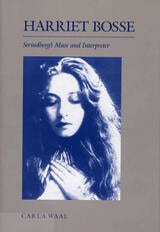
Harriet Bosse
Strindberg's Muse and InterpreterCarla Waal
Southern Illinois University Press, 1990
Harriet Bosse, a delicate beauty with rich theatrical talent, wasan inspiration for the prominent and controversial playwright August Strindberg. After their three-year marriage collapsed, she became his interpreter to the world, guardian of the Strindberg legend. This first biography of Harriet Bosse in English explores her own important career as an actress on the Swedish stage, as well as her influence on Strindberg’s work. Waal has separated Harriet Bosse from her romanticized image in the shadow of August Strindberg and has shown her as a person, fascinating and self-sufficient. Her daughter-in-law Randi Wingård said: "Harriet was a great personality, and even if she was tiny, one could nothelp noticing her in any gathering. She attracted everyone’s attention." While tracing the development of Bosse’s career, her triumphs and disappointments, Waal chronicles the beginnings of Swedish filmmaking in early silent films as well as four decades of major developments in Swedish theatre. But Bosse’s marriage to Strindberg and her relationship to his writing are an integral part of her story, and Waal also details the couple’s stormy marriage, from 1901 to 1903, the reasons for its failure, and the personal and career influences they continued to exert on each other. As Strindberg’s inspiration for many literary works, Bosse was alternately vilified and idealized. Much of what Strindberg wrote after meeting Bosse reflects his adoration of her and his despair over the problems of their relationship. She inspired two of his major works of poetry, "The Golden Eagle" and "The Dutchman," in addition to the character of the virgin princess in Swan White. On stage she played eight minor and six major Strindberg roles, including Indra’s Daughter in A Dream Play and Christina in Queen Christina.
Much information for this book is drawn from previously inaccessible sources, including unpublished materials in libraries, archives, and private collections, mostly in Scandinavia. Waal interviewed Strindberg and Bosse’s daughter Anne Marie Wyller Hagelin (to whom the book is dedicated) as well as other members of Bosse’s family and a wide range of actors, critics, directors, and scholars. Forty-one photographs are included in the text.
[more]
Hayek on Mill
The Mill-Taylor Friendship and Related WritingsF. A. Hayek
University of Chicago Press, 2015
Best known for reviving the tradition of classical liberalism, F. A. Hayek was also a prominent scholar of the philosopher John Stuart Mill. One of his greatest undertakings was a collection of Mill’s extensive correspondence with his longstanding friend and later companion and wife, Harriet Taylor-Mill. Hayek first published the Mill-Taylor correspondence in 1951, and his edition soon became required reading for any study of the nineteenth-century foundations of liberalism.
This latest addition to the University of Chicago Press’s Collected Works of F. A. Hayek series showcases the fascinating intersections between two of the most prominent thinkers from two successive centuries. Hayek situates Mill within the complex social and intellectual milieu of nineteenth-century Europe—as well as within twentieth-century debates on socialism and planning—and uncovers the influence of Taylor-Mill on Mill’s political economy. The volume features the Mill-Taylor correspondence and brings together for the first time Hayek’s related writings, which were widely credited with beginning a new era of Mill scholarship.
This latest addition to the University of Chicago Press’s Collected Works of F. A. Hayek series showcases the fascinating intersections between two of the most prominent thinkers from two successive centuries. Hayek situates Mill within the complex social and intellectual milieu of nineteenth-century Europe—as well as within twentieth-century debates on socialism and planning—and uncovers the influence of Taylor-Mill on Mill’s political economy. The volume features the Mill-Taylor correspondence and brings together for the first time Hayek’s related writings, which were widely credited with beginning a new era of Mill scholarship.
[more]
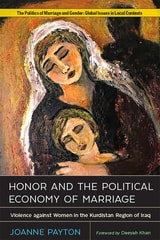
Honor and the Political Economy of Marriage
Violence against Women in the Kurdistan Region of IraqJoanne Payton
Rutgers University Press, 2020
'Honor' is used as a justification for violence perpetrated against women and girls considered to have violated social taboos related to sexual behavior. Several ‘honor’-based murders of Kurdish women, such as Fadime Sahindal, Banaz Mahmod and Du’a Khalil Aswad, and campaigns against 'honor'-based violence by Kurdish feminists have drawn international attention to this phenomenon within Kurdish communities.
Honor and the Political Economy of Marriage provides a description of ‘honor’-based violence that focuses upon the structure of the family rather than the perpetrator’s culture. The author, Joanne Payton, argues that within societies primarily organized by familial and marital connections, women’s ‘honor’ is a form of symbolic capital within a ‘political economy’ in which marriage organizes intergroup connections.
Drawing on statistical analysis of original data contextualized with historical and anthropological readings, Payton explores forms of marriage and their relationship to ‘honor’, sketching changing norms around the familial control of women from agrarian/pastoral roots to the contemporary era.
[more]
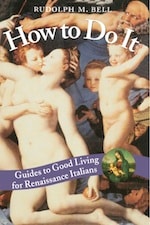
How to Do It
Guides to Good Living for Renaissance ItaliansRudolph M. Bell
University of Chicago Press, 1999
How to Do It shows us sixteenth-century Italy from an entirely new perspective: through manuals which were staples in the households of middlebrow Italians merely trying to lead better lives. Addressing challenges such as how to conceive a boy, the manuals offered suggestions such as tying a tourniquet around your husband's left testicle. Or should you want to goad female desires, throw 90 grubs in a liter of olive oil, let steep in the sun for a week and apply liberally on the male anatomy. Bell's journey through booklets long dismissed by scholars as being of little literary value gives us a refreshing and surprisingly fun social history.
"Lively and curious reading, particularly in its cascade of anecdote, offered in a breezy, cozy, journalistic style." —Lauro Martines, Times Literary Supplement
"[Bell's] fascinating book is a window on a lost world far nearer to our own than we might imagine. . . . How pleasant to read his delightful, informative and often hilarious book." —Kate Saunders, The Independent
"An extraordinary work which blends the learned with the frankly bizarre." —The Economist
"Professor Bell has a sly sense of humor and an enviably strong stomach. . . . He wants to know how people actually behaved, not how the Church or philosophers or earnest humanists thought they should behave. I loved this book." —Christopher Stace, Daily Telegraph
[more]
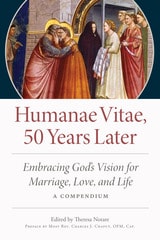
Humanae Vitae, 50 Years Later
Embracing God's Vision for Marriage, Love, and Life; A CompendiumPreface by Most. Rev. Charles J. Chaput, OFM, Cap.
Catholic University of America Press, 2019
In the life of the Catholic Church, the papal encyclical Humanae vitae represents a deepening of understanding regarding the nature of married love and the transmission of life. Despite fifty years (1968-2018) since it’s promulgation, many Catholics have yet to discover the treasure of these rich teachings. This volume therefore seeks to elucidate the encyclical’s reaffirmation of the divine plan. It does this in a unique way by providing essays from experts of various disciplines that include history, theology, science, medicine, law, and governmental policy.
The occasion of the fiftieth anniversary of Humanae vitae offers a teaching moment. In this compendium, experts representing a variety of disciplines including history, culture, theology, medicine, law, and psychology present their reflections upon God’s divine plan as described in Humanae vitae. The authors first presented this work in an abbreviated form at a symposium held at The Catholic University of America (April 4-6, 2018). Here, their presentations are substantively developed and hopefully will encourage further scholarly work. Ultimately, their purpose is to help the reader arrive at a more positive understanding of the teachings found in Humanae vitae. Although designed for the educated reader, the essays presume that when the teachings of Humanae vitae are embraced by men and women, they can contribute to the healing of the wounds of a world broken by sin but redeemed by Christ.
[more]