Results by title
66 books match the query 'Masculinity in literature' and 4 start with h
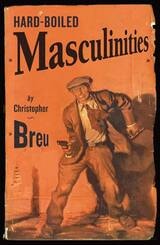
Hard-Boiled Masculinities
Christopher Breu
University of Minnesota Press, 2005
The persona of the American male in the period between the two world wars was characterized by physical strength, emotional detachment, aggressive behavior, and an amoral worldview. This ideal of a hard-boiled masculinity can be seen in the pages and, even more vividly, on the covers of magazines such as Black Mask, which shifted from Victorian-influenced depictions of men in top hats and mustaches in the early 1920s to the portrayal of much more overtly violent and muscular men.
Looking closely at this transformation, Christopher Breu offers a complex account of how and why hard-boiled masculinity emerged during an unsettled time of increased urbanization and tenuous peace and traces the changes in its cultural conception as it moved back and forth across the divide between high and low culture as well as the color line that bifurcated American society.
Examining the work of Ernest Hemingway, Dashiell Hammett, Chester Himes, and William Faulkner, as well as many lesser-known writers for the hypermasculine pulp magazines of the 1920s and 1930s, Breu illustrates how the tough male was a product of cultural fantasy, one that shored up gender and racial stereotypes as a way of lashing out at the destabilizing effects of capitalism and social transformation.
Christopher Breu is assistant professor of English at Illinois State University.
[more]
Hart Crane and the Homosexual Text
New Thresholds, New AnatomiesThomas E. Yingling
University of Chicago Press, 1990
"Canonized for being insufficiently American although he took America as his subject, chastised for obscurity by readers who would not allow or would not read homosexual meanings, Crane embodies many understandings of America, and of the predicament of the gay writer."—Voice Literary Supplement
"A brilliant critical model for understanding how textuality and sexuality can produce pervasive effects on each other in the writing of a figure like Crane."—Michael Moon, Duke University
"A brilliant critical model for understanding how textuality and sexuality can produce pervasive effects on each other in the writing of a figure like Crane."—Michael Moon, Duke University
[more]

Haunted By Waters
Fly Fishing In North American LiteratureMark Browning
Ohio University Press, 1998
Four essential questions: Why does one fish? How should one properly fish? What relations are created in fishing? And what effects does fishing have on the future? Haunted by Waters is a self-examination by the author as he constructs his own narrative and tries to answer these questions for himself. But it is also a thorough examination of the answers he uncovers in the course of reading what's been written on the subject.
As his own story unfolds, Mark Browning analyzes angling literature from the Bible to Norman Maclean, always bringing his inquiry back to the same source: the enigma of this sport.
Haunted by Waters is an exploration of the apparent compulsion of those who fish not only to read about the sport, but to write about it as well. Mark Browning's personal account as a fly fisherman and his perspective as a critic make him uniquely qualified to navigate these waters.
[more]
Homosexuality in Cold War America
Resistance and the Crisis of MasculinityRobert J. Corber
Duke University Press, 1997
Challenging widely held assumptions about postwar gay male culture and politics, Homosexuality in Cold War America examines how gay men in the 1950s resisted pressures to remain in the closet. Robert J. Corber argues that a form of gay male identity emerged in the 1950s that simultaneously drew on and transcended left-wing opposition to the Cold War cultural and political consensus. Combining readings of novels, plays, and films of the period with historical research into the national security state, the growth of the suburbs, and postwar consumer culture, Corber examines how gay men resisted the "organization man" model of masculinity that rose to dominance in the wake of World War II.
By exploring the representation of gay men in film noir, Corber suggests that even as this Hollywood genre reinforced homophobic stereotypes, it legitimized the gay male "gaze." He emphasizes how film noir’s introduction of homosexual characters countered the national "project" to render gay men invisible, and marked a deep subversion of the Cold War mentality. Corber then considers the work of gay male writers Tennessee Williams, Gore Vidal, and James Baldwin, demonstrating how these authors declined to represent homosexuality as a discrete subculture and instead promoted a model of political solidarity rooted in the shared experience of oppression. Homosexuality in Cold War America reveals that the ideological critique of the dominant culture made by gay male authors of the 1950s laid the foundation for the gay liberation movement of the following decade.
By exploring the representation of gay men in film noir, Corber suggests that even as this Hollywood genre reinforced homophobic stereotypes, it legitimized the gay male "gaze." He emphasizes how film noir’s introduction of homosexual characters countered the national "project" to render gay men invisible, and marked a deep subversion of the Cold War mentality. Corber then considers the work of gay male writers Tennessee Williams, Gore Vidal, and James Baldwin, demonstrating how these authors declined to represent homosexuality as a discrete subculture and instead promoted a model of political solidarity rooted in the shared experience of oppression. Homosexuality in Cold War America reveals that the ideological critique of the dominant culture made by gay male authors of the 1950s laid the foundation for the gay liberation movement of the following decade.
[more]