Results by title
479 books match the query 'Methodology' and 16 start with h
Hearing Things
Voice and Method in the Writing of Stanley CavellTimothy Gould
University of Chicago Press, 1998
Gould argues that a tension between voice and method unites Cavell's broad and often perplexing range of interests. From Wittgenstein to Thoreau, from Shakespeare to the movies, and from opera to Freud, Gould reveals the connection between the voice within Cavell's writing and the voices Cavell appeals to through the methods of ordinary language philosophy. Within Cavell's extraordinary productivity lies a new sense of philosophical method based on elements of the act of reading. Hearing Things is both an important study of Cavell's work and a major contribution to the construction of American philosophy.
Hierarchy, History, and Human Nature
The Social Origins of Historical ConsciousnessDonald E. Brown
University of Arizona Press, 1988
"This is an intriguing and stimulating study of historical differences in the indigenous historiography of parts of Asia, the Middle East, and Europe."—American Anthropologist.
Hierarchy
Perspectives for Ecological ComplexityT. F. H. Allen and Thomas B. Starr
University of Chicago Press, 2017
This thoroughly revised and expanded second edition of Hierarchy reflects the assimilation of hierarchy theory into ecological research, its successful application to the understanding of complex systems, and the many developments in thought since. Because hierarchies and levels are habitual parts of human thinking, hierarchy theory has proven to be the most intuitive and tractable vehicle for addressing complexity. By allowing researchers to look explicitly at only the entities and interconnections that are relevant to a specific research question, hierarchically informed data analysis has enabled a revolution in ecological understanding. With this new edition of Hierarchy, that revolution continues.
Historical Evidence and Argument
David Henige
University of Wisconsin Press, 2005
Historians know about the past because they examine the evidence. But what exactly is “evidence,” how do historians know what it means—and how can we trust them to get it right? Historian David Henige tackles such questions of historical reliability head-on in his skeptical, unsparing, and acerbically witty Historical Evidence and Argument. “Systematic doubt” is his watchword, and he practices what he preaches through a variety of insightful assessments of historical controversies—for example, over the dating of artifacts and the textual analysis of translated documents. Skepticism, Henige contends, forces us to recognize the limits of our knowledge, but is also a positive force that stimulates new scholarship to counter it.
Historical Linguistics and Biblical Hebrew
Steps Toward an Integrated ApproachRobert Rezetko
SBL Press, 2014
A philologically robust approach to the history of ancient Hebrew
In this book the authors work toward constructing an approach to the history of ancient Hebrew that overcomes the chasm of academic specialization. The authors illustrate how cross-textual variable analysis and variation analysis advance research on Biblical Hebrew and correct theories based on extra-linguistic assumptions, intuitions, and ideologies by focusing on variation of forms/uses in the Masoretic text and variation between the Masoretic text and other textual traditions.
Features:
- A unique approach that examines the nature of the sources and the description of their language together
- Extensive bibliography for further research
- Tables of linguistic variables and parallels
Histories of Scientific Observation
Edited by Lorraine Daston and Elizabeth Lunbeck
University of Chicago Press, 2010
Observation is the most pervasive and fundamental practice of all the modern sciences, both natural and human. Its instruments include not only the naked senses but also tools such as the telescope and microscope, the questionnaire, the photographic plate, the notebook, the glassed-in beehive, and myriad other ingenious inventions designed to make the invisible visible, the evanescent permanent, the abstract concrete. Yet observation has almost never been considered as an object of historical inquiry in itself. This wide-ranging collection offers the first examination of the history of scientific observation in its own right, as both epistemic category and scientific practice.
Histories of Scientific Observation features engaging episodes drawn from across the spectrum of the natural and human sciences, ranging from meteorology, medicine, and natural history to economics, astronomy, and psychology. The contributions spotlight how observers have scrutinized everything—from seaweed to X-ray radiation, household budgets to the emotions—with ingenuity, curiosity, and perseverance verging on obsession. This book makes a compelling case for the significance of the long, surprising, and epistemologically significant history of scientific observation, a history full of innovations that have enlarged the possibilities of perception, judgment, and reason.
History Is in the Land
Multivocal Tribal Traditions in Arizona's San Pedro ValleyT. J. Ferguson and Chip Colwell-Chanthaphonh
University of Arizona Press, 2006
Previous research in the San Pedro Valley has focused on scientific archaeology and documentary history, with a conspicuous absence of indigenous voices, yet Native Americans maintain oral traditions that provide an anthropological context for interpreting the history and archaeology of the valley. The San Pedro Ethnohistory Project was designed to redress this situation by visiting archaeological sites, studying museum collections, and interviewing tribal members to collect traditional histories. The information it gathered is arrayed in this book along with archaeological and documentary data to interpret the histories of Native American occupation of the San Pedro Valley.
This work provides an example of the kind of interdisciplinary and politically conscious work made possible when Native Americans and archaeologists collaborate to study the past. As a methodological case study, it clearly articulates how scholars can work with Native American stakeholders to move beyond confrontations over who “owns” the past, yielding a more nuanced, multilayered, and relevant archaeology.
History and Modern Media
A Personal JourneyJohn Mraz
Vanderbilt University Press, 2021
The book interweaves an autobiographical narrative with concrete research. Mraz describes the resistance he encountered in US academia to this new way of showing and describing the past in films and photographs, as well as some illuminating experiences as a visiting professor at several US universities. More importantly, he reflects on what it has meant to move to Mexico and become a Mexican. Mexico is home to a thriving school of photohistorians perhaps unequaled in the world. Some were trained in art history, and a few continue to pursue that discipline. However, the great majority work from the discipline known as "photohistory" which focuses on vernacular photographs made outside of artistic intentions.
A central premise of the book is that knowing the cultures of the past and of the other is crucial in societies dominated by short-term and parochial thinking, and that today's hyper-audiovisuality requires historians to use modern media to offer their knowledge as alternatives to the "perpetual present" in which we live.
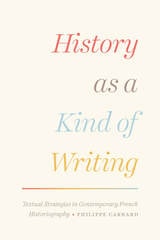
History as a Kind of Writing
Textual Strategies in Contemporary French HistoriographyPhilippe Carrard
University of Chicago Press, 2017
Carrard’s work here is expansive—examining the conventions historians draw on to produce their texts and casting light on views put forward by literary theorists, theorists of history, and historians themselves. Ranging from discussions of lengthy dissertations on 1960s social and economic history to a more contemporary focus on events, actors, memory, and culture, the book digs deep into the how of history. How do historians arrange their data into narratives? What strategies do they employ to justify the validity of their descriptions? Are actors given their own voice? Along the way, Carrard also readdresses questions fundamental to the field, including its necessary membership in the narrative genre, the presumed objectivity of historiographic writing, and the place of history as a science, distinct from the natural and theoretical sciences.
History, Memory, and the Law
Austin Sarat and Thomas R. Kearns, Editors
University of Michigan Press, 2002
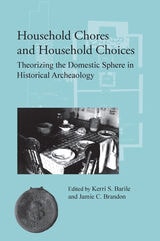
Household Chores and Household Choices
Theorizing the Domestic Sphere in Historical ArchaeologyEdited by Kerri S. Barile and James C. Brandon
University of Alabama Press, 2004
Discusses the concepts of “home,” “house,” and “household” in past societies
Because archaeology seeks to understand past societies, the concepts of "home," "house," and "household" are important. Yet they can be the most elusive of ideas. Are they the space occupied by a nuclear family or by an extended one? Is it a built structure or the sum of its contents? Is it a shelter against the elements, a gendered space, or an ephemeral place tied to emotion? We somehow believe that the household is a basic unit of culture but have failed to develop a theory for understanding the diversity of households in the historic (and prehistoric) periods.
In an effort to clarify these questions, this volume examines a broad range of households—a Spanish colonial rancho along the Rio Grande, Andrew Jackson's Hermitage in Tennessee, plantations in South Carolina and the Bahamas, a Colorado coal camp, a frontier Arkansas farm, a Freedman's Town eventually swallowed by Dallas, and plantations across the South—to define and theorize domestic space. The essays devolve from many disciplines, but all approach households from an archaeological perspective, looking at landscape analysis, excavations, reanalyzed collections, or archival records. Together, the essays present a body of knowledge that takes the identification, analysis, and interpretation of households far beyond current conceptions.
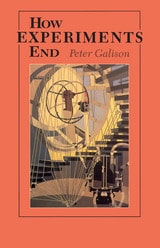
How Experiments End
Peter Galison
University of Chicago Press, 1987
"Anyone who is seriously concerned with understanding how research is done should read this. There have been many books on one or another part of its subject matter but few giving such insights into how the research is done and how the consensus of discovery is arrived at."—Frank Close, New Scientist
"[Galison] is to be congratulated on producing a masterpiece in the field."—Michael Redhead, Synthese
"How Experiments End is a major historical work on an exciting topic."—Andy Pickering, Isis
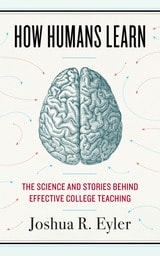
How Humans Learn
The Science and Stories behind Effective College TeachingJoshua R. Eyler
West Virginia University Press, 2018
Even on good days, teaching is a challenging profession. One way to make the job of college instructors easier, however, is to know more about the ways students learn. How Humans Learn aims to do just that by peering behind the curtain and surveying research in fields as diverse as developmental psychology, anthropology, and cognitive neuroscience for insight into the science behind learning.
The result is a story that ranges from investigations of the evolutionary record to studies of infants discovering the world for the first time, and from a look into how our brains respond to fear to a reckoning with the importance of gestures and language. Joshua R. Eyler identifies five broad themes running through recent scientific inquiry—curiosity, sociality, emotion, authenticity, and failure—devoting a chapter to each and providing practical takeaways for busy teachers. He also interviews and observes college instructors across the country, placing theoretical insight in dialogue with classroom experience.
How I Became the Kind of Writer I Became
An Experiment in AutoethnographyCharles Bazerman
University Press of Colorado, 2024
How Science Takes Stock
The Story of Meta-AnalysisMorton Hunt
Russell Sage Foundation, 1997
How to Do Things with Legal Doctrine
Pierre Schlag and Amy J. Griffin
University of Chicago Press, 2020