Results by title
100 books match the query 'Monographs' and 4 start with h
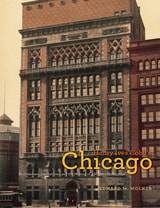
Henry Ives Cobb's Chicago
Architecture, Institutions, and the Making of a Modern MetropolisEdward W. Wolner
University of Chicago Press, 2011
When championing the commercial buildings and homes that made the Windy City famous, one can’t help but mention the brilliant names of their architects—Daniel Burnham, Louis Sullivan, and Frank Lloyd Wright, among others. But few people are aware of Henry Ives Cobb (1859–1931), the man responsible for an extraordinarily rich chapter in the city’s turn-of-the-century building boom, and fewer still realize Cobb’s lasting importance as a designer of the private and public institutions that continue to enrich Chicago’s exceptional architectural heritage.
Henry Ives Cobb’s Chicago is the first book about this distinguished architect and the magnificent buildings he created, including the Newberry Library, the Chicago Historical Society, the Chicago Athletic Association, the Fisheries Building for the 1893 World’s Fair, and the Chicago Federal Building. Cobb filled a huge institutional void with his inventive Romanesque and Gothic buildings—something that the other architect-giants, occupied largely with residential and commercial work, did not do. Edward W. Wolner argues that these constructions and the enterprises they housed—including the first buildings and master plan for the University of Chicago—signaled that the city had come of age, that its leaders were finally pursuing the highest ambitions in the realms of culture and intellect.
Assembling a cast of colorful characters from a free-wheeling age gone by, and including over 140 images of Cobb’s most creative buildings, Henry Ives Cobb’s Chicago is a rare achievement: a dynamic portrait of an architect whose institutional designs decisively changed the city’s identity during its most critical phase of development.
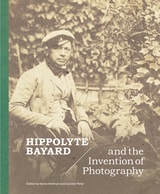
Hippolyte Bayard and the Invention of Photography
Karen Hellman
J. Paul Getty Trust, The, 2024
Hippolyte Bayard (1801–1887) is often characterized as an underdog in the early history of photography. From the outset, his contribution to the invention of the medium was eclipsed by others such as Louis-Jacques-Mandé Daguerre (1787–1851) and William Henry Fox Talbot (1800–1877). However, Bayard had an undeniable role in the birth of photography and its subsequent evolution into a form of art. He was a pioneer in artistic style, innovator in terms of practice, and teacher of the next generation of photographers.
Alongside an exploration of Bayard’s decades-long career and lasting impact, this volume presents—for the first time in print—some of the earliest photographs in existence. An album containing nearly 200 images, 145 of those by or attributed to Bayard, is among the Getty Museum’s rarest and most treasured photographic holdings. Few prints have ever been seen in person due to the extreme light sensitivity of Bayard’s experimental processes, making this an essential reference for scholars and enthusiasts of the very beginning of photography.
This volume is published to accompany an exhibition on view at the J. Paul Getty Museum at the Getty Center from April 9 to July 7, 2024.
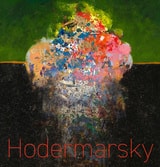
Hodermarsky
Daniel Hodermarsky
The Artist Book Foundation, 2024
Daniel Hodermarsky's work embraces both the representational and the abstract, reflecting the intricate spaces of both his psyche and shared human experience.
Daniel Hodermarsky was the son of Slovak immigrants who emigrated from Hačava to settle and work in the coal fields of Pennsylvania and later in the auto-manufacturing industries of Ohio. He served in World War II on the Western front and was awarded two presidential citations, two Croix de Guerre, and one combat star. He returned home with severe and persistent post-traumatic stress disorder that left an indelible mark on his life and art.
Throughout his career, Hodermarsky’s work embraced both the representational and the abstract. His early works experimented with new media (such as Dayglo paint) and new styles such as Op Art and performance. In the 1970s and beyond, he engaged landscape—rural, urban, and imaginary—wherein he explored the interplay of terrain (land or water, horizon, and sky). The human figure—Slovak farmers, wounded or dismembered soldiers, and mythical and historical figures—were among his favorite subjects. He was fascinated by how age, human nature, and personality combine to create the physical form. His eclectic themes mirror his own unique complexities and experiences. Later in his career, he focused on abstract works that reflect the intricate spaces of both his psyche and shared human experience.
A deeply spiritual man with a strong religious faith, Hodermarsky’s abstract paintings ask the existential questions that have challenged humankind across millennia. By showing us his own experience of these great mysteries, his art underscores life’s abiding beauty. Over his long career of interpreting the world in which he lived, Hodermarsky invites us to inhabit a realm filled with joy, reverence, and passion.
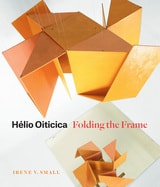
Hélio Oiticica
Folding the FrameIrene V. Small
University of Chicago Press, 2016
From Oiticica’s late 1950s experiments with painting and color to his mid-1960s wearable Parangolés, Small traces a series of artistic procedures that foreground the activation of the spectator. Analyzing works, propositions, and a wealth of archival material, she shows how Oiticica’s practice recast—in a sense “folded”—Brazil’s utopian vision of progress as well as the legacy of European constructive art. Ultimately, the book argues that the effectiveness of Oiticica’s participatory works stems not from a renunciation of art, but rather from their ability to produce epistemological models that reimagine the traditional boundaries between art and life.