Results by title
72 books match the query 'Museums' and 2 start with h
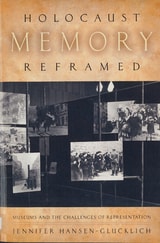
Holocaust Memory Reframed
Museums and the Challenges of RepresentationHansen-Glucklich, Jennifer
Rutgers University Press, 2014
Holocaust memorials and museums face a difficult task as their staffs strive to commemorate and document horror. On the one hand, the events museums represent are beyond most people’s experiences. At the same time they are often portrayed by theologians, artists, and philosophers in ways that are already known by the public. Museum administrators and curators have the challenging role of finding a creative way to present Holocaust exhibits to avoid clichéd or dehumanizing portrayals of victims and their suffering.
In Holocaust Memory Reframed, Jennifer Hansen-Glucklich examines representations in three museums: Israel’s Yad Vashem in Jerusalem, Germany’s Jewish Museum in Berlin, and the United States Holocaust Memorial Museum in Washington, D.C. She describes a variety of visually striking media, including architecture, photography exhibits, artifact displays, and video installations in order to explain the aesthetic techniques that the museums employ. As she interprets the exhibits, Hansen-Glucklich clarifies how museums communicate Holocaust narratives within the historical and cultural contexts specific to Germany, Israel, and the United States. In Yad Vashem, architect Moshe Safdie developed a narrative suited for Israel, rooted in a redemptive, Zionist story of homecoming to a place of mythic geography and renewal, in contrast to death and suffering in exile. In the Jewish Museum in Berlin, Daniel Libeskind’s architecture, broken lines, and voids emphasize absence. Here exhibits communicate a conflicted ideology, torn between the loss of a Jewish past and the country’s current multicultural ethos. The United States Holocaust Memorial Museum presents yet another lens, conveying through its exhibits a sense of sacrifice that is part of the civil values of American democracy, and trying to overcome geographic and temporal distance. One well-know example, the pile of thousands of shoes plundered from concentration camp victims encourages the visitor to bridge the gap between viewer and victim.
Hansen-Glucklich explores how each museum’s concept of the sacred shapes the design and choreography of visitors’ experiences within museum spaces. These spaces are sites of pilgrimage that can in turn lead to rites of passage.
[more]
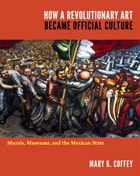
How a Revolutionary Art Became Official Culture
Murals, Museums, and the Mexican StateMary K. Coffey
Duke University Press, 2012
A public art movement initiated by the postrevolutionary state, Mexican muralism has long been admired for its depictions of popular struggle and social justice. Mary K. Coffey revises traditional accounts of Mexican muralism by describing how a radical art movement was transformed into official culture, ultimately becoming a tool of state propaganda. Analyzing the incorporation of mural art into Mexico's most important public museums—the Palace of Fine Arts, the National History Museum, and the National Anthropology Museum—Coffey illuminates the institutionalization of muralism and the political and aesthetic issues it raised. She focuses on the period between 1934, when José Clemente Orozco and Diego Rivera were commissioned to create murals in the Palace of Fine Arts, through the crisis of state authority in the 1960s. Coffey highlights a reciprocal relationship between Mexico's mural art and its museums. Muralism shaped exhibition practices, which affected the politics, aesthetics, and reception of mural art. Interpreting the iconography of Mexico's murals, she focuses on representations of mestizo identity, the preeminent symbol of postrevolutionary Mexico. Coffey argues that those gendered representations reveal a national culture project more invested in race and gender inequality than in race and class equality.
[more]