Results by title
132 books match the query 'Myth' and 4 start with h
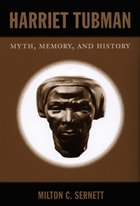
Harriet Tubman
Myth, Memory, and HistoryMilton C. Sernett
Duke University Press, 2007
Three biographies of Harriet Tubman were published within months of each other in 2003–04; they were the first book-length studies of the “Queen of the Underground Railroad” to appear in almost sixty years. Sernett examines the accuracy and reception of these three books as well as two earlier biographies first published in 1869 and 1943. He finds that the three recent studies come closer to capturing the “real” Tubman than did the earlier two. Arguing that the mythical Tubman is most clearly enshrined in stories told to and written for children, Sernett scrutinizes visual and textual representations of “Aunt Harriet” in children’s literature. He looks at how Tubman has been portrayed in film, painting, music, and theater; in her Maryland birthplace; in Auburn, New York, where she lived out her final years; and in the naming of schools, streets, and other public venues. He also investigates how the legendary Tubman was embraced and represented by different groups during her lifetime and at her death in 1913. Ultimately, Sernett contends that Harriet Tubman may be America’s most malleable and resilient icon.
Heidegger and the Myth of a Jewish World Conspiracy
Peter Trawny
University of Chicago Press, 2015
While Heidegger’s affiliation with National Socialism is well known, the anti-Semitic dimension of that engagement could not be fully told until now. Trawny traces Heidegger’s development of a grand “narrative” of the history of being, the “being-historical thinking” at the center of Heidegger’s work after Being and Time. Two of the protagonists of this narrative are well known to Heidegger’s readers: the Greeks and the Germans. The world-historical antagonist of this narrative, however, has remained hitherto undisclosed: the Jews, or, more specifically, “world Judaism.” As Trawny shows, world Judaism emerges as a racialized, destructive, and technological threat to the German homeland, indeed, to any homeland whatsoever. Trawny pinpoints recurrent, anti-Semitic themes in the Notebooks, including Heidegger’s adoption of crude cultural stereotypes, his assigning of racial reasons to philosophical decisions (even undermining his Jewish teacher, Edmund Husserl), his endorsement of a Jewish “world conspiracy,” and his first published remarks on the extermination camps and gas chambers (under the troubling aegis of a Jewish “self-annihilation”). Trawny concludes with a thoughtful meditation on how Heidegger’s achievements might still be valued despite these horrifying facets. Unflinching and systematic, this is one of the most important assessments of one of the most important philosophers in our history.
History and Myth in Romanian Consciousness
Lucian Boia
Central European University Press, 2001
There is a considerable difference between real history and discourse history - this book stems from this idea. The author points out that history is constantly reconstructed, adapted and sometimes mythified from the perspective of the present day, of present states of mind and ideologies. Boia closely examines the process of historical culture and conscience in nineteenth and twentieth century Romania, particularly concentrating on the impact of the national ideology on history. Based upon his findings, the author identifies several key mythical configurations and analyses the manner in which Romanians have reconstituted their own highly ideologized history over the last two centuries.
The strength of History and Myth in Romanian Consciousness lies in the author's ability to fully deconstruct the entire Romanian historiographic system and demonstrate the increasing acuteness of national problems in general, and in particular the exploitation of history to support national ideology.

History of Paradise
THE GARDEN OF EDEN IN MYTH AND TRADITIONJean Delumeau
University of Illinois Press, 1995
With erudition and wit, Jean Delumeau explores the medieval conviction that paradise existed in a precise although unreachable earthly location. Delving into the writings of dozens of medieval and Renaissance thinkers, from Augustine to Dante, Delumeau presents a luminous study of the meaning of Original Sin and the human yearning for paradise.
The finest minds of the Middle Ages wrote about where paradise was to be found, what it was like, and who dwelt in it. Explorers sailed into the unknown in search of paradisal gardens of wealth and delight that were thought to be near the original Garden. Cartographers drew Eden into their maps, often indicating the wilderness into which Adam and Eve were cast, along with the magical kingdom of Prester John, Jerusalem, Babel, the Happy Isles, Ophir, and other places described in biblical narrative or borrowed from other cultures. Later, Renaissance thinkers and writers meticulously reconstructed the details of the original Eden, even providing schedules of the Creation and physical descriptions of Adam and Eve.
Even when the Enlightenment, with its discovery of fossils and pre-Darwinian theories of evolution, gradually banished the dream of paradise on earth, a nostalgia for Eden shaped elements of culture from literature to gardening. In our own time, Eden's hold on the Western imagination continues to fuel questions such as whether land should be conserved or exploited and whether a return to innocence is possible.