Results by title
227 books match the query 'New England (CT, MA, ME, NH, RI, VT)' and 7 start with h
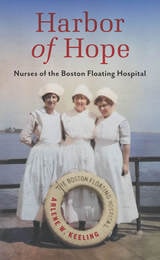
Harbor of Hope
Nurses of the Boston Floating HospitalArlene W. Keeling
University of Massachusetts Press, 2026
The untold story of Boston’s Floating Hospital and the nurses whose work redefined infant care
In late nineteenth-century Boston, nearly one in five babies did not survive infancy. Each summer, outbreaks of “summer complaint”—a deadly gastrointestinal illness caused by contaminated cow’s milk—swept through the city’s poorest neighborhoods. Infants born to immigrant families were especially vulnerable, trapped in stifling tenements with poor sanitation and little access to safe nutrition. Searching for a solution, reform-minded Bostonians looked to New York City’s hospital boats, which offered sick children relief from the heat. In the summer of 1894, Boston launched its own bold experiment: the Boston Floating Hospital.
What began as a modest charitable venture in Boston Harbor soon transformed pediatric care. While physicians have long received credit for the Floating Hospital’s success in reducing infant mortality, Harbor of Hope tells a deeper story. Historian Arlene W. Keeling reveals the essential and often overlooked role of nurses. It was nurses who translated medical theory into lifesaving practice: feeding and bathing fragile infants, administering treatments, calming anxious mothers, and carefully observing each child’s response. Serving as the vital link between doctors and families, they became the heart of the Floating Hospital’s mission.
Tracing the hospital’s story from its first voyage to its tragic destruction by fire in 1927, Harbor of Hope situates these nurses within a city undergoing dramatic change. Against the backdrop of rapid industrial growth, mass immigration, and emerging movements in public health and social reform, Keeling shows how skill, compassion, and persistence reshaped the fate of Boston’s most vulnerable children. Set afloat on Boston Harbor, this is a powerful story of caregiving, innovation, and the women who fought day after day to save babies’ lives.
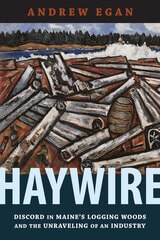
Haywire
Discord in Maine's Logging Woods and the Unraveling of an IndustryAndrew Egan
University of Massachusetts Press, 2022
Logging in the northern forest has been romanticized, with images of log drives, plaid shirts, and bunkhouses in wide circulation. Increasingly dismissed as a quaint, rural pastime, logging remains one of the most dangerous jobs in the United States, with loggers occupying a precarious position amid unstable markets, expanding global competition, and growing labor discord. Examining a time of transition and decline in Maine’s forest economy, Andrew Egan traces pathways for understanding the challenges that have faced Maine’s logging community and, by extension, the state’s forestry sector, from the postwar period through today.
Seeking greater profits, logging companies turned their crews loose at midcentury, creating a workforce of independent contractors who were forced to purchase expensive equipment and compete for contracts with the mills. Drawing on his own experience with the region’s forest products industry, interviews with Maine loggers, media coverage, and court documents, Egan follows the troubled recent history of the industry and its battle for survival.
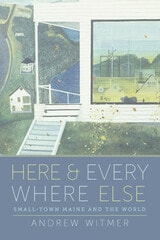
Here and Everywhere Else
Small-Town Maine and the WorldAndrew Witmer
University of Massachusetts Press, 2022
Winner of the 2023 New England Society Book Award in the Historical Nonfiction category
Winner of an Award of Excellence, American Association for State and Local History (AASLH)
In 1822, settlers pushed north from Massachusetts and other parts of New England into Monson, Maine. On land taken from the Penobscot people, they established prosperous farms and businesses. Focusing on the microhistory of this village, Andrew Witmer reveals the sometimes surprising ways that this small New England town engaged with the wider world across the nineteenth and twentieth centuries. Townspeople fought and died in distant wars, transformed the economy and landscape with quarries and mills, and used railroads, highways, print, and new technologies to forge connections with the rest of the nation.
Here and Everywhere Else starts with Monson’s incorporation in the early nineteenth century, when central Maine was considered the northern frontier and over 90 percent of Americans still lived in rural areas; it ends with present-day attempts to revive this declining Maine town into an artists’ colony. Engagingly written, with colorful portraits of local characters and landmarks, this study illustrates how the residents of this remote place have remade their town by integrating (and resisting) external influences.
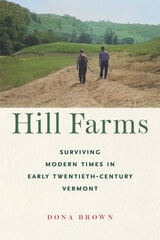
Hill Farms
Surviving Modern Times in Early Twentieth-Century VermontDona Brown
University of Massachusetts Press, 2025
There is a stubborn myth that has persisted for almost two centuries: the narrative of the abandoned farm in the rural American northeast. In Hill Farms, historian Dona Brown confronts this myth of rural decline with a focus on Jamaica, Vermont, a small town in the hills west of Brattleboro. Through this town’s history, she reveals a more complex economic and environmental narrative, a story of the continued use of traditional farm methods despite the growing power of modernization and demands for increased efficiencies.
Brown examines the records of a 1930 study by the University of Vermont’s now infamous Eugenics Survey, part of a flood of problematic investigations of Vermont rural life at the time, wherein eugenicists interviewed residents in every Jamaica household about crops, incomes, and housing conditions. These researchers from various disciplines saw in Jamaica and towns like it poverty and ignorance rather than a commitment to farming as a modest but sustainable way of life. Extensive handwritten notes from the Eugenics Survey provide a remarkable glimpse into the daily lives and practices of these upland farmers, revealing the value in maintaining older, less intensive farming practices and shedding new light on the social and environmental history of the time. As debates around farming and rural life intensified during the Great Depression, advocates beyond Vermont rose to the defense of traditional farms. Though industrialized agriculture ultimately prevailed, the old farming strategies cultivated by these upcountry residents continue to attract adherents in the face of new challenges to traditional farming in our own times.
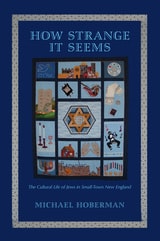
How Strange It Seems
The Cultural Life of Jews in Small-Town New EnglandMichael Hoberman
University of Massachusetts Press, 2008
Jews have lived in small-town New England since the colonial era, but during the last hundred years they have been especially active contributors to the region's cultural life. Part oral history, part ethnography, and part literary portrait, How Strange It Seems tells the story of this often overlooked group, tracing its patterns of settlement, economic activity, civic involvement, and religious life since the late 1800s.
Based on more than fifty interviews with men and women of all ages from Maine, New Hampshire, Vermont, Massachusetts, and Connecticut, it seeks to understand what is distinctive—and not so distinctive—about contemporary Jewish communities outside the larger urban centers of the Northeast. Michael Hoberman weaves the personal stories of these individuals and families into a collective narrative that offers as much folklore as history and is equal parts Jewish and Yankee. He introduces us to Hiram Adelman, a Russian immigrant peddler and potato farmer who settled in northernmost Maine because its climate was comparable to his native Siberia, and to Shmuel Simenowitz, an urban transplant who produces kosher maple syrup in southern Vermont. We also meet Suzie Laskin, who moved to the White Mountains region of New Hampshire in the 1900s and soon established a local havurah, and Bob August of Whately, Massachusetts, who once ran what may have been the world's only Christmas tree farm owned by a Jewish family.
Each section of the book explores how small-town New England Jews have both departed from and mimicked the broader patterns of Jewish American experience, while also illustrating how they have acclimated themselves to local practices without relinquishing a strong sense of Jewish identity. Accompanying the text are photographs by Janice Sorensen that include portraits of many of the interviewees and lively glimpses of the region's present-day Jewish revival.
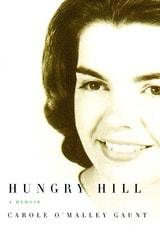
Hungry Hill
A MemoirCarole O'Malley Gaunt
University of Massachusetts Press, 2007
On a sweltering June night in 1959, Betty O'Malley died from lymphatic cancer, leaving behind an alcoholic husband and eight shell-shocked children—seven sons and one daughter, ranging in age from two to fifteen years. The daughter, Carole, was thirteen at the time. In this poignant memoir, she recalls in vivid detail the chaotic course of her family life over the next four years.
The setting for the story is Hungry Hill, an Irish-Catholic working-class neighborhood in Springfield, Massachusetts. The author recounts her sad and turbulent story with remarkable clarity, humor, and insight, punctuating the narrative with occasional fictional scenes that allow the adult Carole to comment on her teenage experiences and to probe the impact of her mother's death and her father's alcoholism.
Hungry Hill
A MemoirCarole O'Malley Gaunt
University of Massachusetts Press, 2007
On a sweltering June night in 1959, Betty O'Malley died from lymphatic cancer, leaving behind an alcoholic husband and eight shell-shocked children—seven sons and one daughter, ranging in age from two to fifteen years. The daughter, Carole, was thirteen at the time. In this poignant memoir, she recalls in vivid detail the chaotic course of her family life over the next four years.
The setting for the story is Hungry Hill, an Irish-Catholic working-class neighborhood in Springfield, Massachusetts. The author recounts her sad and turbulent story with remarkable clarity, humor, and insight, punctuating the narrative with occasional fictional scenes that allow the adult Carole to comment on her teenage experiences and to probe the impact of her mother's death and her father's alcoholism.