Results by title
527 books match the query 'Novel' and 20 start with h
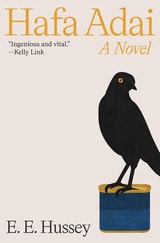
Hafa Adai
A NovelE. E. Hussey
Northwestern University Press, 2027
A tale of two sisters braving the current of global tremors, mysterious beings, and their own past
Amihan is a respected and talented wildlife researcher on a small Pacific island in the US Commonwealth of the Northern Mariana Islands, where the land has undergone centuries of occupation. Offshore military testing, shifting climates, and tourists threaten the local ecosystem, making Amihan’s job harder than ever. As she braves knotty forests and watery caves in search of the elusive rufous fantail, her expedition takes her to the suicide cliffs . . . and over them. Amihan plummets into another realm, a purgatory of colonial violence and Filipino folklore.
Ligaya, Amihan’s sister, is back in Osaka and in between research positions when she is called to the island to search for her itinerant and reclusive sister. But when her search uncovers a stowaway, Ligaya's path takes an unexpected turn. Traveling along with her is a ghost with an omikuji tongue—a ghost that delights in spitting fortunes and mining memories. As Ligaya searches and Amihan wanders, it becomes clear that there is more to confront between these sisters than their whereabouts. On an island shuddering under the weight of global crises, can Ligaya make it to Amihan, or has her sister wandered too far?
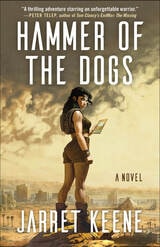
Hammer of the Dogs
A NovelJarret Keene
University of Nevada Press, 2023
Set in the wasteland of post-apocalyptic Las Vegas, Hammer of the Dogs is a literary dystopian adventure filled with high-octane fun starring twenty-one-year-old Lash. With her high-tech skill set and warrior mentality, Lash is a master of her own fate as she helps to shield the Las Vegas valley’s survivors and protect her younger classmates at a paramilitary school holed up in Luxor on the Las Vegas Strip. After graduation, she’ll be alone in fending off the deadly intentions and desires of the school’s most powerful opponents.
When she’s captured by the enemy warlord, she’s surprised by two revelations: He’s not the monster her headmaster wants her to believe and the one thing she can’t safeguard is her own heart. Hammer of the Dogs celebrates the courageousness of a younger generation in the face of authority while exploring the difficult choices a conscionable young woman must make with her back against a blood-spattered wall. It’s a story of transformation and maturity, as Lash grapples with her own identity and redefines the glittering Las Vegas that Nevada is known for.
Hammer of the Dogs
A NovelJarret Keene
University of Nevada Press, 2023
Set in the wasteland of post-apocalyptic Las Vegas, Hammer of the Dogs is a literary dystopian adventure filled with high-octane fun starring twenty-one-year-old Lash. With her high-tech skill set and warrior mentality, Lash is a master of her own fate as she helps to shield the Las Vegas valley’s survivors and protect her younger classmates at a paramilitary school holed up in Luxor on the Las Vegas Strip. After graduation, she’ll be alone in fending off the deadly intentions and desires of the school’s most powerful opponents.
When she’s captured by the enemy warlord, she’s surprised by two revelations: He’s not the monster her headmaster wants her to believe and the one thing she can’t safeguard is her own heart. Hammer of the Dogs celebrates the courageousness of a younger generation in the face of authority while exploring the difficult choices a conscionable young woman must make with her back against a blood-spattered wall. It’s a story of transformation and maturity, as Lash grapples with her own identity and redefines the glittering Las Vegas that Nevada is known for.
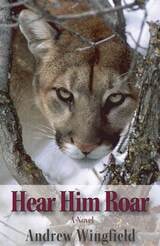
Hear Him Roar
A NovelAndrew Wingfield
Utah State University Press, 2005
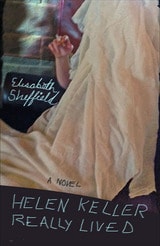
Helen Keller Really Lived
A NovelElisabeth Sheffield
University of Alabama Press, 2014
What does it mean to really live? Or not?
Set in eastern, upstate New York, Helen Keller Really Lived features a fortyish former barfly and grifter who must make a living in the wake of her wealthy husband’s death, and who finds work in a clinic helping women seeking reproductive assistance. The other main character is the grifter’s dead ex-husband, a Ukrainian hooker-to-healer success story, who prior to his demise was a gynecologist and after, an amateur folklorist, or ghostlorist, who collected and provided scholarly commentary on the stories of his fellow “revenants.”
Their intertwined stories explore the mistakes, miscarriages, inadequacies, and defeats that may have led to their divorce, including his failure (according to her) to “fully live.”
As it investigates the theme of what it means to “really live” or not, Elisabeth Sheffield’s brilliant new novel is also an exploration of virtual reality in the sense of the experience provided by literature. It is a novel awash in a multitude of voices, from the obscenity-laced, Nabokovian soliloquys of the dead Ukrainian doctor, to the trade-school / midcentury-romance-novel-constrained style of his dead mother-in-law.

Hellé
A NovelMarcelle Tinayre
Swan Isle Press, 2026
The first major English translation of Marcelle Tinayre’s Belle Époque novel that interrogates the struggle of coming of age as a young woman in a changing modern world.
Raised in the countryside by her reclusive classicist uncle, Hellé’s ideals are put to the test when she encounters the decadence and frivolity of Parisian society. Yet there she also meets the young political theorist and resolute socialist Antoine Genesvrier, who urges Hellé and her uncle to join him in supporting the city’s poor and advocating for social justice. Meanwhile, Hellé’s head is turned by the poet Maurice Clairmont, hailed by Parisian society as “the new Byron” and eager to win over Hellé with his beauty and charm. Caught between her love of beauty and her burgeoning social concern, Hellé must choose between two men, two ideals, and two worlds, while also staying true to herself. Tinayre infuses Hellé’s voice with the classical allusions of her uncle’s education and her love for the natural world, creating a fresh, engaging narrative that awakens both the mind and heart.
In this first major English translation, Grace Ashton brings exquisite resonance of tone, register, and spirit to Marcelle Tinayre’s perennially relevant novel.
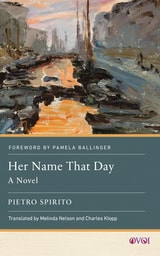
Her Name That Day
A NovelPietro Spirito
Rutgers University Press, 2026
Giuliana Striano is forty years old and lives in Cape Town, South Africa. She is the daughter of Italian emigrants with a daughter of her own, Renata, now five years old. Upon the death of her mother, Giuliana learns that she had been adopted and given a new identity with a different name and a different date and place of birth. So Giuliana determines to find out who she really is, what is hidden in her past, and who her birth parents were.
Her Name That Day the story of “another” Italy set in a region that only recently became Italian and whose characters are Croatian, Slovenian, Australian, and South African, as well as Italians, precariously perched in a border community filled with secrets and scores to settle with History. Against this backdrop, the narrator endeavors to save a woman encountered by chance on the internet from becoming still another name without a history, another deracinated and disenchanted individual. In prose that is precise and engaging, as though shot through by a sense of pain both silent and inescapable, Pietro Spirito gives shape to an existential thriller in which there are neither guilty parties nor heroes, only victims and survivors.
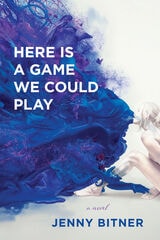
Here Is a Game We Could Play
A NovelJenny Bitner
Acre Books, 2021
In each fantasy, her lover takes a different form, ranging from a prison guard in a world where metaphor is forbidden, to a more-than-brotherly Hansel from the Grimms’ fairy tale, to a tentacled mind-reading space alien. All share a desire for a deep intimacy that eludes Claudia, even as she forms new real-life relationships and reconsiders her sexual identity—building a rapport with an elderly volunteer at the library, striking up a friendship with a wily temp at her dead-end job, and embarking on a passionate affair with Rose, the town’s new librarian. When paranoia threatens to ruin her relationship with Rose, Claudia is forced not only to combat her anxiety but to face the unresolved trauma in her past—the disappearance of her father on a night she has long repressed.
Funny, dark, inventive, and moving, Here Is a Game We Could Play is an original debut novel recalling the work of Aimee Bender, Angela Carter, Rebecca Brown, and Margaret Atwood.
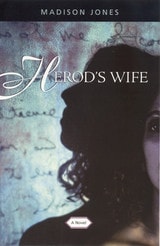
Herod's Wife
A NovelMadison Jones
University of Alabama Press, 2003
A timely novel evocative of the biblical story of the beheading of John the Baptist by a major American writer
Hugh Helton, a prosperous attorney in a progressive town, has married his brother's ex-wife, Nora. As Hugh negotiates his relationships with his new spouse, her daughter, Jean, and parish priest Father John Riley, Nora’s growing hate for the church into which they were all born and from which they have all lapsed drives her to desperate acts of deceit and manipulation.
Father Riley himself wrestles with his own sense of purpose and mission. But when Nora attempts to discredit him as an authority figure in the minds of both her husband and their community, she uses her devoted daughter as the springboard for a series of accusations against the priest that has catastrophic results for all involved.
Grappling with issues of faith, trust, family loyalty, child molestation, and scandal in the Catholic Church, Herod’s Wife is a timely exploration of subjects from today's headlines. It illuminates the isolation and search for meaning of characters young and old, innocent and experienced, in a rapidly changing and bewildering southern landscape. Madison Smartt Bell, author of All Soul's Rising, writes, “The main plot revolves around a mother pressuring a child to express her will in a more concrete way than she would or could herself—so that the child ultimately commits acts which are both criminal and morally horrifying. . . . [Herod’s Wife] is a morality play set in contemporary conditions, with its eye on eternal verities.”
Madison Jones is the author of 10 previous novels, including An Exile and A Cry of Absence. He has won the T. S. Eliot Award from the Ingersoll Foundation, the Michael Shaara Award from the United States Civil War Center, and the Harper Lee Award.
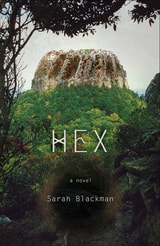
Hex
A NovelSarah Blackman
University of Alabama Press, 2016
Alice is a motherless child, born to a motherless child, and raised with neither care nor grace. Her response to this multiple abandonment is a lifelong obsession with her best friend Ingrid, or Thingy, as Alice calls her, and a sort of fantastic narcissism wherein she figures herself as the nexus of a supernatural world she understands through a blend of mountain lore, indigenous Cherokee legend, and the dangerous idiom of the fairy-tale girl who enters the forest despite being warned.
The novel is written in blended parts and is crafted as an address to Thingy’s daughter, Ingrid the Second, who is now in Alice’s care. Alice attempts to tell Ingrid the story of her life: her friendship with Thingy; her troubled relationships with her father, a small-town sexual troubadour; her stepmother, a hard-minded business woman who treats all interactions as commerce; her marriage to her husband Jacob, a silent figure of tremendous will; and her growing suspicion that Ingrid is another girl-child around whom disaster accumulates. Simultaneously, Alice tells the child the kind of bedtime stories she herself has used to make sense of her world. For Alice, and thus in Hex, the line between fantasy and reality is nonexistent, the mountain is older than its geology, and the world a limbo in which everything that has ever happened is coming around again.
Hex is a novel about violence—the violence of the fist, of the womb, of the story. It is also a novel about language and how we use it to build a world when the one we find around us is irretrievably broken.
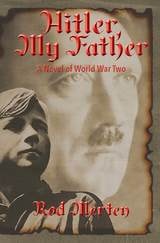
Hitler, My Father
A Novel of World War Two, Hitler's Unknown Lover, and Son.Rodney Merten
Parkhurst Brothers, Inc., 2017
An adoring young woman encounters Adolph Hitler when her youth group sings for him. He demands her company in private, and she becomes pregnant, bearing his child but never being contacted by Hitler again. The plot follows her life as an outcast believed to be lying about the child’s parentage, and the life of her son told through her correspondence, diary entries, and from the point of view of a researcher who writes a generation later. Based on facts and documented history, author Ron Merten tells this tale with just enough creativity to make the story fascinating.
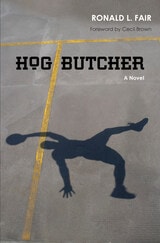
Hog Butcher
A NovelRonald L. Fair
Northwestern University Press, 2014
It’s summer on the South Side of Chicago, and ten-year-old boys Earl and Wilford are frequently courtside watching their role model Nathaniel “Cornbread” Hamilton as he prepares to leave for college on a basketball scholarship. Their world comes crashing down in an alley when two cops—one white, one black—mistake Cornbread for a fleeing burglary suspect. What follows threatens to tear apart the community. Earl and Wilford know what happened, but will they stand up for their hero in a city in which power trumps justice, and each player must decide whether to fold to the system, or risk losing it all?
Instantly recognized as a gritty classic when it was first published in 1966, Hog Butcher was later adapted for the 1975 film Cornbread, Earl and Me. This new edition brings back into print Fair’s startlingly relevant indictment of Chicago’s inequalities.
Hogg
A NovelSamuel R. Delany
University of Alabama Press, 2004
A fearless descent into the darkest corners of human desire and violence.
First written thirty-five years ago and completed days before the Stonewall riots in New York, award-winning author Samuel R. Delany’s Hogg is one of America’s most famous “unpublishable” novels. It recounts three days in 1969 in the life of truck driver and rapist-for-hire, Franklin Hargus. Narrated by his young accomplice, Delaney’s novel portrays an exploration of erotic depravity, a capacious landscape of sexuality that transgresses social and erotic boundaries.
While testing readers’ tolerance, what transfigures the novel into a work of literature is Delany’s refusal, faced with moral anxieties and revulsion, to mutilate or disown his creation. Hogg’s characters wear recognizable human faces, possessing intense loyalty, perverse admiration, and a kind of integrity. Hargus fascinates. He is the embodiment of what society can turn people into, the decaying condition of the human soul.
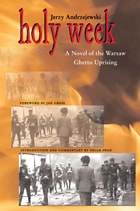
Holy Week
A Novel of the Warsaw Ghetto UprisingJerzy Andrzejewski
Ohio University Press, 2006
At the height of the Nazi extermination campaign in the Warsaw Ghetto, a young Jewish woman, Irena, seeks the protection of her former lover, a young architect, Jan Malecki. By taking her in, he puts his own life and the safety of his family at risk. Over a four-day period, Tuesday through Friday of Holy Week 1943, as Irena becomes increasingly traumatized by her situation, Malecki questions his decision to shelter Irena in the apartment where Malecki, his pregnant wife, and his younger brother reside. Added to his dilemma is the broader context of Poles’ attitudes toward the “Jewish question” and the plight of the Jews locked in the ghetto during the final moments of its existence.
Few fictional works dealing with the war have been written so close in time to the events that inspired them. No other Polish novel treats the range of Polish attitudes toward the Jews with such unflinching honesty.
Jerzy Andrzejewski’s Holy Week (Wielki Tydzien, 1945), one of the significant literary works to be published immediately following the Second World War, now appears in English for the first time.
This translation of Andrzejewski’s Holy Week began as a group project in an advanced Polish language course at the University of Pittsburgh. Class members Daniel M. Pennell, Anna M. Poukish, and Matthew J. Russin contributed to the translation; the instructor, Oscar E. Swan, was responsible for the overall accuracy and stylistic unity of the translation as well as for the biographical and critical notes and essays.
How Fire Runs
A NovelCharles Dodd White
Ohio University Press, 2020
How I Got Him Back
A NovelValerie Sayers
Northwestern University Press, 2013
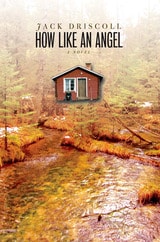
How Like an Angel
A NovelJack Driscoll
University of Michigan Press, 2005
---Rick Bass
"How Like an Angel is a lyrical, lonely ode to fatherhood, an aria in words that looks forward and backward at once. Jack Driscoll is a writer of deep heart, relentless honesty, uncanny gentleness, and irresistible spirit."
---Pam Houston
How Like an Angel is the story of Archibald Angel. With his career going nowhere and a marriage in decline, Angel retreats to a rustic cabin in northern Michigan to make a new life for himself.
In spite of his forward thinking, Angel's move is in many ways a journey into the past. Besides lacking modern comforts, the cabin conjures the ghost of Angel's troubled childhood, when his undertaker father took the cabin in trade as payment from a widow who couldn't otherwise afford the cost of her husband's burial. After Angel's mother subsequently fled, abandoning her family to recover from a mental breakdown, the cabin was an escape for father and son.
While Archibald Angel revisits his knotted and difficult past, his ex-wife and young son contemplate their future. Slowly, with unexpected help from an unpredictable woman, Angel realizes he too must find a way to begin again or risk failing his son as his own father failed him.
With pathos, humor, and unflagging generosity of spirit, How Like an Angel takes us deep into the hinterland of the human heart and discovers there the source of the love that keeps us holding on against all odds.
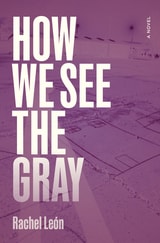
How We See the Gray
A NovelRachel León
Northwestern University Press, 2026
A riveting story about parenthood, substance abuse, and the strength it takes to come back from our mistakes
Foster care is a disaster in Rockford, Illinois. Meredith, a social worker and single mom, is stretched beyond thin but determined to protect her kids: not only her son, but those on her caseload too. When the stress of the job has her breaking her sobriety, the foundations of her life begin to tremble. After drinking too much, she makes a mistake that puts her preschooler in jeopardy, and Meredith finds herself in a situation that mirrors her clients’ as she loses custody of her son. In her fight to get him back, Meredith experiences the system from the outside—while still working for the kids inside of it. Set over the course of a year, this riveting documentary-esque novel is told from multiple perspectives, including those of case workers, birth parents, foster parents, and foster children. Written with the working-class humor and heart that defines the Midwest, How We See the Gray is a story about mistakes, second chances, and trying to do better in a system that seems doomed to fail.
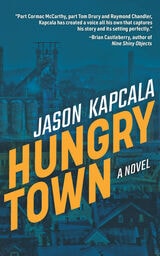
Hungry Town
A NovelJason Kapcala
West Virginia University Press, 2022
One October night in the depressed steel town of Lodi, Ohio, two police officers respond to a call about trespassers in the derelict Lodi Steel machine shop. A chase through the crumbling cathedral of steel columns launches a chain of events that will test the officers’ partnership and leave a boy to fend for himself in a decaying Rust Belt neighborhood choked by joblessness, boredom, and addiction.
On the opposite end of town, a young woman steps out of a rust-bucket Grand Marquis into an all-night diner. Instead of luggage, she carries mementos: an ankh tattoo she inked herself and a wallet-sized photograph of a boy who disappeared. She doesn’t realize her ex-boyfriend has hired two brothers to track her down and bring her back, by any means necessary.
The complex female leads of Hungry Town, with its sharp dialogue and poetic sensibility, turn classic noir and cop drama tropes on their heads. These morally complicated characters weave in and out of each other’s lives, sometimes violently, sometimes with surprising compassion.
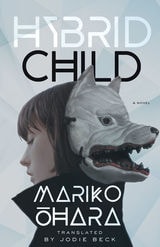
Hybrid Child
A NovelMariko Ohara
University of Minnesota Press, 2018
A classic of Japanese speculative fiction that blurs the line between consumption and creation when a cyborg assumes the form and spirit of a murdered child
Until he escaped, he had been called “Sample B #3,” but he had never liked this name. That would surprise them—that he could feel one way or another about it. He was designed to reshape himself based on whatever life forms he ingested; he was not made to think, and certainly not to assume the shape of a repair technician whose cells he had sampled and then simply walk out of the secure compound.
Artificial Intelligence is all too real in this classic of Japanese science fiction by Mariko Ōhara. Jonah, a child murdered by her mother, has become the spirit of an AI-controlled house where the rogue cyborg once known as Sample B #3 takes refuge and, making a meal of the dead girl buried under the house, takes Jonah’s form. On faraway Planet Caritas, an outpost of human civilization, the female AI system that governs society has become insane. Meanwhile, the threat of the Adiaptron Empire, the machine race that #3 was built to fight, remains.
With the familiar strangeness of a fairy tale, Ōhara’s novel traverses the mysterious distance between body and mind, between the mechanics of life and the ghost in the machine, between the infinitesimal and infinity. The child as mother, the mother as monster, the monster as hero: this shape-shifting story of nourishment, nurture, and parturition is a rare feminist work of speculative fiction and received the prestigious Seiun (Nebula) Award in 1991. Hybrid Child is the first English translation of a major work of science fiction by a female Japanese author.