Results by title
69 books match the query 'Nursing' and 3 start with h
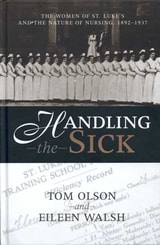
HANDLING THE SICK
Women of St Luke’s and the Nature of Nursing, 1892–1937Tom Olson and Eileen Walsh
The Ohio State University Press, 2004
[more]
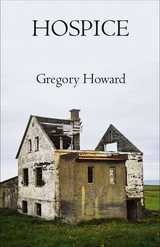
Hospice
Gregory Howard
University of Alabama Press, 2015
When Lucy is little something happens to her brother. He disappears for months and when he returns he’s not the same. He’s not her brother. At least this is what Lucy believes. But what actually happened?
Comic, melancholy, haunted, and endlessly inventive, Gregory Howard’s debut novel Hospice follows Lucy later in life as she drifts from job to job caring for dogs, children, and older women—all the while trying to escape the questions of her past only to find herself confronting them again and again.
In the odd and lovely but also frightening life of Lucy, everyday neighborhoods become wonderlands where ordinary houses reveal strange inmates living together in monastic seclusion, wayward children resort to blackmail to get what they want, and hospitals seem to appear and disappear to avoid being found.
Replete with the sense that something strange is about to happen at any moment, Hospice blurs the borders between the mundane and miraculous, evoking the intensity of the secret world of childhood and distressing and absurd search for a place to call home.
[more]
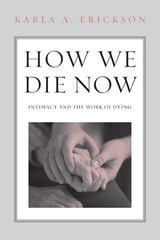
How We Die Now
Intimacy and the Work of DyingKarla Erickson
Temple University Press, 2013
As we live longer and die slower and differently than our ancestors, we have come to rely more and more on end-of-life caregivers. These workers navigate a changing landscape of old age and death that many of us have little preparation to encounter. How We Die Now is an absorbing and sensitive investigation of end-of-life issues from the perspectives of patients, relatives, medical professionals, and support staff.
Karla Erickson immersed herself in the daily life of workers and elders in a Midwestern community for over two years to explore important questions around the theme of “how we die now.” She moves readers through and beyond the many fears that attend the social condition of old age and reveals the pleasures of living longer and the costs of slower, sometimes senseless ways of dying.
For all of us who are grappling with the “elder boom,” How We Die Now offers new ways of thinking about our longer lives.
[more]