Results by title
55 books match the query 'Pease, Donald E.' and 2 start with h
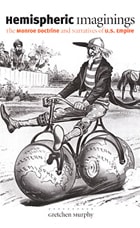
Hemispheric Imaginings
The Monroe Doctrine and Narratives of U.S. EmpireGretchen Murphy
Duke University Press, 2005
Murphy juxtaposes close readings of novels with analyses of nonfiction texts. From uncovering the literary inspirations for the Monroe Doctrine itself to tracing visions of hemispheric unity and transatlantic separation in novels by Lydia Maria Child, Nathaniel Hawthorne, María Amparo Ruiz de Burton, Lew Wallace, and Richard Harding Davis, she reveals the Doctrine’s forgotten cultural history. In making a vital contribution to the effort to move American Studies beyond its limited focus on the United States, Murphy questions recent proposals to reframe the discipline in hemispheric terms. She warns that to do so risks replicating the Monroe Doctrine’s proprietary claim to isolate the Americas from the rest of the world.
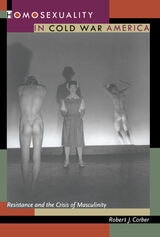
Homosexuality in Cold War America
Resistance and the Crisis of MasculinityRobert J. Corber
Duke University Press, 1997
By exploring the representation of gay men in film noir, Corber suggests that even as this Hollywood genre reinforced homophobic stereotypes, it legitimized the gay male "gaze." He emphasizes how film noir’s introduction of homosexual characters countered the national "project" to render gay men invisible, and marked a deep subversion of the Cold War mentality. Corber then considers the work of gay male writers Tennessee Williams, Gore Vidal, and James Baldwin, demonstrating how these authors declined to represent homosexuality as a discrete subculture and instead promoted a model of political solidarity rooted in the shared experience of oppression. Homosexuality in Cold War America reveals that the ideological critique of the dominant culture made by gay male authors of the 1950s laid the foundation for the gay liberation movement of the following decade.