Results by title
64 books match the query 'Pets' and 4 start with h

Happy Tails Across New Jersey
Things to See and Do with Your Dog in the Garden StateGoodspeed, Diane
Rutgers University Press, 2006
In this first-of-its-kind guidebook, Diane Goodspeed brings the encouraging news to pet lovers that their furry friends are welcome to many of New Jersey's beaches, trails, parks, swim holes, and even stores. Whether you are hiking in the Kittatinny Mountains, going for a run on the beach, or playing fetch along the Delaware River, you and your dog can explore New Jersey together. From transportation and equipment to basic obedience and fitness conditioning, this guide contains all the information you need to get your dog out the door for exciting adventures in every season.
Organized by county for easy reference, you will find information about county, state, and national parks that will welcome your canine companion. The book also functions as a convenient handbook for shops, covering everything from high-end pet stores and large chains to independently run dog bakeries. Goodspeed identifies training facilities, the most reputable and well-established dog trainers, as well as shelters, rescue centers, and every dog park across the state. Whether you are a long-time dog owner, or new to the canine scene, you will be surprised by how many dog-friendly events, including walk-a-thons, fairs, canine sporting competitions, town festivals, dog parades, and fundraising events for rescue groups occur annually throughout New Jersey.
Finally, with your leash in one hand and this indispensable and all-inclusive guide in the other, you can enjoy the exciting recreational opportunities available in the Garden State with your favorite four-legged friend.
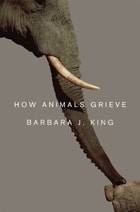
How Animals Grieve
Barbara J. King
University of Chicago Press, 2013

How Dogs Work
Raymond Coppinger and Mark Feinstein
University of Chicago Press, 2015
Approaching dogs as a biological species rather than just as pets, Coppinger and Feinstein accessibly synthesize decades of research and field experiments to explain the evolutionary foundations underlying dog behaviors. They examine the central importance of the shape of dogs: how their physical body (including the genes and the brain) affects behavior, how shape interacts with the environment as animals grow, and how all of this has developed over time. Shape, they tell us, is what makes a champion sled dog or a Border collie that can successfully herd sheep. Other chapters in How Dogs Work explore such mysteries as why dogs play; whether dogs have minds, and if so what kinds of things they might know; why dogs bark; how dogs feed and forage; and the influence of the early relationship between mother and pup. Going far beyond the cozy lap dog, Coppinger and Feinstein are equally fascinated by what we can learn from the adaptations of dogs, wolves, coyotes, jackals, dingoes, and even pumas in the wild, as well as the behavior of working animals like guarding and herding dogs.
We cherish dogs as family members and deeply value our lengthy companionship with them. But, isn’t it time we knew more about who Fido and Trixie really are? How Dogs Work will provide some keys to unlocking the origins of many of our dogs' most common, most puzzling, and most endearing behaviors.
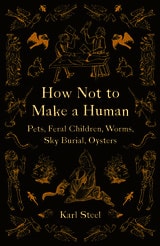
How Not to Make a Human
Pets, Feral Children, Worms, Sky Burial, OystersKarl Steel
University of Minnesota Press, 2019
From pet keeping to sky burials, a posthuman and ecocritical interrogation of and challenge to human particularity in medieval texts
Mainstream medieval thought, like much of mainstream modern thought, habitually argued that because humans alone had language, reason, and immortal souls, all other life was simply theirs for the taking. But outside this scholarly consensus teemed a host of other ways to imagine the shared worlds of humans and nonhumans. How Not to Make a Human engages with these nonsystematic practices and thought to challenge both human particularity and the notion that agency, free will, and rationality are the defining characteristics of being human.
Recuperating the Middle Ages as a lost opportunity for decentering humanity, Karl Steel provides a posthuman and ecocritical interrogation of a wide range of medieval texts. Exploring such diverse topics as medieval pet keeping, stories of feral and isolated children, the ecological implications of funeral practices, and the “bare life” of oysters from a variety of disanthropic perspectives, Steel furnishes contemporary posthumanists with overlooked cultural models to challenge human and other supremacies at their roots.
By collecting beliefs and practices outside the mainstream of medieval thought, How Not to Make a Human connects contemporary concerns with ecology, animal life, and rethinkings of what it means to be human to uncanny materials that emphasize matters of death, violence, edibility, and vulnerability.