Results by title
426 books match the query 'Philosophy & Social Aspects' and 14 start with h
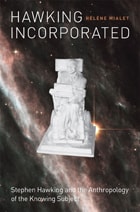
Hawking Incorporated
Stephen Hawking and the Anthropology of the Knowing SubjectHélène Mialet
University of Chicago Press, 2012
These days, the idea of the cyborg is less the stuff of science fiction and more a reality, as we are all, in one way or another, constantly connected, extended, wired, and dispersed in and through technology. One wonders where the individual, the person, the human, and the body are—or, alternatively, where they stop. These are the kinds of questions Hélène Mialet explores in this fascinating volume, as she focuses on a man who is permanently attached to assemblages of machines, devices, and collectivities of people: Stephen Hawking.
Drawing on an extensive and in-depth series of interviews with Hawking, his assistants and colleagues, physicists, engineers, writers, journalists, archivists, and artists, Mialet reconstructs the human, material, and machine-based networks that enable Hawking to live and work. She reveals how Hawking—who is often portrayed as the most singular, individual, rational, and bodiless of all—is in fact not only incorporated, materialized, and distributed in a complex nexus of machines and human beings like everyone else, but even more so. Each chapter focuses on a description of the functioning and coordination of different elements or media that create his presence, agency, identity, and competencies. Attentive to Hawking’s daily activities, including his lecturing and scientific writing, Mialet’s ethnographic analysis powerfully reassesses the notion of scientific genius and its associations with human singularity. This book will fascinate anyone interested in Stephen Hawking or an extraordinary life in science.
Heart of Science
A Philosophy of Scientific InquiryJacob Stegenga
University of Chicago Press, 2026
In Heart of Science, philosopher Jacob Stegenga breaks with the most dominant epistemologies of science to argue that in judging scientific activity, we should focus on its justification, not the achievement of truth or knowledge. Yet, Stegenga argues, the aim of science goes far beyond justification and is, instead, a special kind of truth—common knowledge, a broadly shared and mutually justified scientific finding.
Drawing on both historical examples and recent events like the COVID-19 pandemic, Stegenga outlines his approach before delving into its implications for scientific evaluation, testimony, values, progress, and credit, as well as the nature of science during times of crisis. Truth, he shows, may not be easily identified in the short term. However, an evaluation of scientific justification, grounded in shared standards, is possible. This framework helps us appraise—and appreciate—historical theories that ultimately weren’t accurate and offers fresh insights about appropriate science communication and public trust in scientific research. Justification and scientific rigor are not just means to an end, Stegenga writes, but the very heart of good science.
Ambitious, authoritative, and accessible, Heart of Science offers a new vision for the philosophy of science.

Historical and Philosophical Perspectives of Science
Roger H. Stuewer, Editor
University of Minnesota Press, 1970
Historical and Philosophical Perspectives of Science was first published in 1970. Minnesota Archive Editions uses digital technology to make long-unavailable books once again accessible, and are published unaltered from the original University of Minnesota Press editions.
The series of essays published in this book, which is Volume V of the Minnesota Studies in the Philosophy of Science, are (with the exception of two essays) based on papers presented or discussed at a conference devoted to exploring the relationships between the history and the philosophy of science, held at the University of Minnesota in the fall of 1969. In a forward Peter Caws notes that the conference grew out of the deliberations of subcommittee of the U.S. National Committee for the International Union of History and Philosophy of Science.
The contributors are Herbert Feigl, Ernan McMullin, Wesley C. Salmon, Peter Archinstein, Arnold Thackray, Mary Hesse, Edward Rosen, Paul K. Feyerabend, Erwin N. Hiebert, Gerd Buchdahl, Roger H. Stuewer, Howard Stein, and Kenneth F. Schaffner. Some of the papers draw philosophical conclusions from examples in the history of science; others point out the significance of philosophical insights for a study of the history of science; still others explore special aspects of the history or philosophy of science.
Holding On to Reality
The Nature of Information at the Turn of the MillenniumAlbert Borgmann
University of Chicago Press, 1999
"[Borgmann] has offered a stunningly clear definition of information in Holding On to Reality. . . . He leaves room for little argument, unless one wants to pose the now vogue objection: I guess it depends on what you mean by nothing."—Paul Bennett, Wired
"A superb anecdotal analysis of information for a hype-addled age."—New Scientist
"This insightful and poetic reflection on the changing nature of information is a wonderful antidote to much of the current hype about the 'information revolution.' Borgmann reminds us that whatever the reality of our time, we need 'a balance of signs and things' in our lives."—Margaret Wertheim, LA Weekly
Houston, We Have a Narrative
Why Science Needs StoryRandy Olson
University of Chicago Press, 2015
That’s a huge mistake, says Randy Olson: Hollywood has a lot to teach scientists about how to tell a story—and, ultimately, how to do science better. With Houston, We Have a Narrative, he lays out a stunningly simple method for turning the dull into the dramatic. Drawing on his unique background, which saw him leave his job as a working scientist to launch a career as a filmmaker, Olson first diagnoses the problem: When scientists tell us about their work, they pile one moment and one detail atop another moment and another detail—a stultifying procession of “and, and, and.” What we need instead is an understanding of the basic elements of story, the narrative structures that our brains are all but hardwired to look for—which Olson boils down, brilliantly, to “And, But, Therefore,” or ABT. At a stroke, the ABT approach introduces momentum (“And”), conflict (“But”), and resolution (“Therefore”)—the fundamental building blocks of story. As Olson has shown by leading countless workshops worldwide, when scientists’ eyes are opened to ABT, the effect is staggering: suddenly, they’re not just talking about their work—they’re telling stories about it. And audiences are captivated.
Written with an uncommon verve and enthusiasm, and built on principles that are applicable to fields far beyond science, Houston, We Have a Narrative has the power to transform the way science is understood and appreciated, and ultimately how it’s done.
How Does Germline Regenerate?
Kate MacCord
University of Chicago Press, 2024
Scientists have long held that we have two kinds of cells—germ and soma. Make a change to germ cells—say using genome editing—and that change will appear in the cells of future generations. Somatic cells are “safe” after such tampering; modify your skin cells, and your future children’s skin cells will never know. And, while germ cells can give rise to new generations (including all of the somatic cells in a body), somatic cells can never become germ cells. How did scientists discover this relationship and distinction between somatic and germ cells—the so-called Weismann Barrier—and does it actually exist? Can somatic cells become germ cells in the way germ cells become somatic cells? That is, can germ cells regenerate from somatic cells even though conventional wisdom denies this possibility? Covering research from the late nineteenth century to the 2020s, historian and philosopher of science Kate MacCord explores how scientists came to understand and accept the dubious concept of the Weismann Barrier and what profound implications this convenient assumption has for research and policy, from genome editing to stem cell research, and much more.

How Science Enriches Theology
Benedict M. Ashley
St. Augustine's Press, 2012
In a time when the relation of theology to science is in question, due in part to the unwitting fideism of religious fundamentalists and, conversely, as a result of the equally fundamentalist diatribes of the so-called “New Atheists,” How Science Enriches Theology provides a much-needed demonstration of the possibility and necessity for dialogue and integration between the two perspectives or fields of inquiry. Far from being in the unhappy throes of divorce, theology and science must renew their common commitment to the use of reason! This work is written by two formidable thinkers who have each written extensively on the foundations of natural science and related issues – including the inherently evolutionary nature and development of the cosmos. Now they team up to show the fruitful impact of science on theology as a use of reason in the service of Christian faith.
In its philosophical or ‘cenoscopic’ foundations, science can support the truths of monotheistic faith and provide a corrective to both materialist and spiritualist forms of monism. Meanwhile, with the advance of science in the modern sense, the special sciences as ‘ideoscopic,’ we can see not only the traces of God’s existence, but of the Trinitarian nature of God, the Divine Persons of the Godhead, as proposed in Christian faith.
Make no mistake, the authors are sure to uphold the indemonstrability of Christian-specific doctrines, such as the Trinity and the Incarnation; but, with Augustine and Aquinas, they affirm that creation is rife with traces of the divine. The validity of theology does not reduce to the deliverances of the modern sciences, but the latter can undoubtedly aid the person of faith in the “evolution” of his or her theological understanding and embrace of faith as beyond – but not contrary to – reason properly exercised. For example, the immensity and depth of our universe, as indicated alike by relativity theory and quantum theory, along with the biological, chemical, and physical diversity and dynamic stability contained within the universe’s vast limits, enrich our understanding of God the Father. Our universe’s order, uniqueness, and intelligibility suggest how we may better understand the Divine Logos, Jesus Christ. While further the evolution, freedom, and plenitude of the cosmos reveal the character of God the Holy Spirit.
In How Science Enriches Theology, Ashley and Deely present a veritably “theosemiotic picture” of the universe, and one which avoids the naïve reductionisms of mind to matter, culture to society, biology to physics, and cenoscopic to ideoscopic science. But not only do the authors of this stellar book explore the diverse riches of creation’s many nooks and crannies; they do not balk at concluding with the speculative but inevitable question, Where is creation headed?, while also providing a tentative answer to how we might reconcile the inevitable consequences of the Second Law of Thermodynamics with the Book of Revelation’s eschatological promise of a New Heavens and a New Earth.
How Scientific Practices Matter
Reclaiming Philosophical NaturalismJoseph Rouse
University of Chicago Press, 2002
Rouse begins with a detailed critique of modern thought on naturalism, from Neurath and Heidegger to Charles Taylor, Thomas Kuhn, and W. V. O. Quine. He identifies two constraints central to a philosophically robust naturalism: it must impose no arbitrarily philosophical restrictions on science, and it must shun even the most subtle appeals to mysterious or supernatural forces. Thus a naturalistic approach requires philosophers to show that their preferred conception of nature is what scientific inquiry discloses, and that their conception of scientific understanding is itself intelligible as part of the natural world. Finally, Rouse draws on feminist science studies and other recent work on causality and discourse to demonstrate the crucial role that closer attention to scientific practice can play in reclaiming naturalism.
A bold and ambitious book, How Scientific Practices Matter seeks to provide a viable—yet nontraditional—defense of a naturalistic conception of philosophy and science. Its daring proposals will spark much discussion and debate among philosophers, historians, and sociologists of science.
How We Became Our Data
A Genealogy of the Informational PersonColin Koopman
University of Chicago Press, 2019
In How We Became Our Data, Colin Koopman excavates early moments of our rapidly accelerating data-tracking technologies and their consequences for how we think of and express our selfhood today. Koopman explores the emergence of mass-scale record keeping systems like birth certificates and social security numbers, as well as new data techniques for categorizing personality traits, measuring intelligence, and even racializing subjects. This all culminates in what Koopman calls the “informational person” and the “informational power” we are now subject to. The recent explosion of digital technologies that are turning us into a series of algorithmic data points is shown to have a deeper and more turbulent past than we commonly think. Blending philosophy, history, political theory, and media theory in conversation with thinkers like Michel Foucault, Jürgen Habermas, and Friedrich Kittler, Koopman presents an illuminating perspective on how we have come to think of our personhood—and how we can resist its erosion.
How We Became Posthuman
Virtual Bodies in Cybernetics, Literature, and InformaticsN. Katherine Hayles
University of Chicago Press, 1999
Hayles relates three interwoven stories: how information lost its body, that is, how it came to be conceptualized as an entity separate from the material forms that carry it; the cultural and technological construction of the cyborg; and the dismantling of the liberal humanist "subject" in cybernetic discourse, along with the emergence of the "posthuman."
Ranging widely across the history of technology, cultural studies, and literary criticism, Hayles shows what had to be erased, forgotten, and elided to conceive of information as a disembodied entity. Thus she moves from the post-World War II Macy Conferences on cybernetics to the 1952 novel Limbo by cybernetics aficionado Bernard Wolfe; from the concept of self-making to Philip K. Dick's literary explorations of hallucination and reality; and from artificial life to postmodern novels exploring the implications of seeing humans as cybernetic systems.
Although becoming posthuman can be nightmarish, Hayles shows how it can also be liberating. From the birth of cybernetics to artificial life, How We Became Posthuman provides an indispensable account of how we arrived in our virtual age, and of where we might go from here.
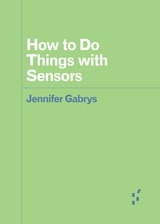
How to Do Things with Sensors
Jennifer Gabrys
University of Minnesota Press, 2019
An investigation of how-to guides for sensor technologies
Sensors are increasingly common within citizen-sensing and DIY projects, but these devices often require the use of a how-to guide. From online instructional videos for troubleshooting sensor installations to handbooks for using and abusing the Internet of Things, the how-to genres and formats of digital instruction continue to expand and develop. As the how-to proliferates, and instructions unfold through multiple aspects of technoscientific practices, Jennifer Gabrys asks why the how-to has become one of the prevailing genres of the digital. How to Do Things with Sensors explores the ways in which things are made do-able with and through sensors and further considers how worlds are made sense-able and actionable through the instructional mode of citizen-sensing projects.
Forerunners: Ideas First
Short books of thought-in-process scholarship, where intense analysis, questioning, and speculation take the lead
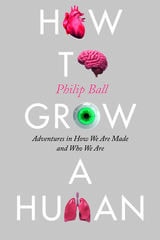
How to Grow a Human
Adventures in How We Are Made and Who We ArePhilip Ball
University of Chicago Press, 2019
In his most mind-bending book yet, Ball makes that disconcerting question the focus of a tour through what scientists can now do in cell biology and tissue culture. He shows how these technologies could lead to tailor-made replacement organs for when ours fail, to new medical advances for repairing damage and assisting conception, and to new ways of “growing a human.” For example, it might prove possible to turn skin cells not into neurons but into eggs and sperm, or even to turn oneself into the constituent cells of embryos. Such methods would also create new options for gene editing, with all the attendant moral dilemmas. Ball argues that such advances can therefore never be about “just the science,” because they come already surrounded by a host of social narratives, preconceptions, and prejudices. But beyond even that, these developments raise questions about identity and self, birth and death, and force us to ask how mutable the human body really is—and what forms it might take in years to come.
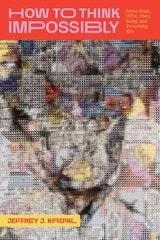
How to Think Impossibly
About Souls, UFOs, Time, Belief, and Everything ElseJeffrey J. Kripal
University of Chicago Press, 2024
Now in paperback, a mind-bending invitation to experience the impossible as fundamentally human.
From precognitive dreams and telepathic visions to near-death experiences, UFO encounters, and beyond, so-called impossible phenomena are not supposed to happen. But they do happen—all the time. Jeffrey J. Kripal asserts that the impossible is a function not of reality but of our everchanging assumptions about what is real. How to Think Impossibly invites us to think about these fantastic (yet commonplace) experiences as an essential part of being human, expressive of a deeply shared reality that is neither mental nor material but gives rise to both. Thinking with specific individuals and their extraordinary experiences in vulnerable, open, and often humorous ways, Kripal interweaves humanistic and scientific inquiry to foster an awareness that the fantastic is real, the supernatural is super natural, and the impossible is possible.
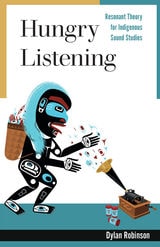
Hungry Listening
Resonant Theory for Indigenous Sound StudiesDylan Robinson
University of Minnesota Press, 2020
WInner of the Best First Book from the Native American and Indigenous Studies Association
Winner of the Labriola Center American Indian National Book Award
Winner of the Ann Saddlemyer Award from the Canadian Association for Theatre Research
Reimagining how we understand and write about the Indigenous listening experience
Hungry Listening is the first book to consider listening from both Indigenous and settler colonial perspectives. A critical response to what has been called the “whiteness of sound studies,” Dylan Robinson evaluates how decolonial practices of listening emerge from increasing awareness of our listening positionality. This, he argues, involves identifying habits of settler colonial perception and contending with settler colonialism’s “tin ear” that renders silent the epistemic foundations of Indigenous song as history, law, and medicine.
With case studies on Indigenous participation in classical music, musicals, and popular music, Hungry Listening examines structures of inclusion that reinforce Western musical values. Alongside this inquiry on the unmarked terms of inclusion in performing arts organizations and compositional practice, Hungry Listening offers examples of “doing sovereignty” in Indigenous performance art, museum exhibition, and gatherings that support an Indigenous listening resurgence.
Throughout the book, Robinson shows how decolonial and resurgent forms of listening might be affirmed by writing otherwise about musical experience. Through event scores, dialogic improvisation, and forms of poetic response and refusal, he demands a reorientation toward the act of reading as a way of listening. Indigenous relationships to the life of song are here sustained in writing that finds resonance in the intersubjective experience between listener, sound, and space.