Results by title
230 books match the query 'Physics' and 4 start with h
Helmholtz
A Life in ScienceDavid Cahan
University of Chicago Press, 2018
Hermann von Helmholtz was a towering figure of nineteenth-century scientific and intellectual life. Best known for his achievements in physiology and physics, he also contributed to other disciplines such as ophthalmology, psychology, mathematics, chemical thermodynamics, and meteorology. With Helmholtz: A Life in Science, David Cahan has written a definitive biography, one that brings to light the dynamic relationship between Helmholtz’s private life, his professional pursuits, and the larger world in which he lived.
Utilizing all of Helmholtz’s scientific and philosophical writings, as well as previously unknown letters, this book reveals the forces that drove his life—a passion to unite the sciences, vigilant attention to the sources and methods of knowledge, and a deep appreciation of the ways in which the arts and sciences could benefit each other. By placing the overall structure and development of his scientific work and philosophy within the greater context of nineteenth-century Germany, Helmholtz also serves as cultural biography of the construction of the scientific community: its laboratories, institutes, journals, disciplinary organizations, and national and international meetings. Helmholtz’s life is a shining example of what can happen when the sciences and the humanities become interwoven in the life of one highly motivated, energetic, and gifted person.
Utilizing all of Helmholtz’s scientific and philosophical writings, as well as previously unknown letters, this book reveals the forces that drove his life—a passion to unite the sciences, vigilant attention to the sources and methods of knowledge, and a deep appreciation of the ways in which the arts and sciences could benefit each other. By placing the overall structure and development of his scientific work and philosophy within the greater context of nineteenth-century Germany, Helmholtz also serves as cultural biography of the construction of the scientific community: its laboratories, institutes, journals, disciplinary organizations, and national and international meetings. Helmholtz’s life is a shining example of what can happen when the sciences and the humanities become interwoven in the life of one highly motivated, energetic, and gifted person.
[more]
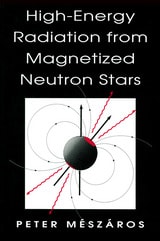
High-Energy Radiation from Magnetized Neutron Stars
Peter Mészáros
University of Chicago Press, 1992
Neutron stars, the most extreme state of matter yet confirmed, are responsible for much of the high-energy radiation detected in the universe. Mèszàros provides a general overview of the physics of magnetized neutron stars, discusses in detail the radiation processes and transport properties relevant to the production and propagation of high-energy radiation in the outer layers of these objects, and reviews the observational properties and theoretical models of various types of neutron star sources.
[more]
Horizons of Cosmology
Joseph Silk
Templeton Press, 2009
Horizons of Cosmology: Exploring Worlds Seen and Unseen is the fourth title published in the Templeton Science and Religion Series, in which scientists from a wide range of fields distill their experience and knowledge into brief tours of their respective specialties. In this volume, highly esteemed astrophysicist Joseph Silk explores the vast mysteries and speculations of the field of cosmology in a way that balances an accessible style for the general reader and enough technical detail for advanced students and professionals. Indeed, while the physical laws and origins of the universe can be endlessly complex, even Einstein once mused that they could be explained simply enough to be grasped by nonspecialists. To that end Silk begins by introducing the basic story of the major discoveries in cosmology over the past century—wherein we learned that we live in an expanding universe populated with galaxies and stars. The middle chapters examine a number of contemporary puzzles such as dark matter and dark energy. The last third of the book looks at the human side of cosmology and moves to the more philosophical frontiers of the field, such as concepts of multiverses and time travel—areas of exploration where some crossover into speculative territory becomes unavoidable. In the past century alone, our understanding of the universe has expanded exponentially, and it will be fascinating to see what discoveries the next hundred years hold. Few books will provide such a thorough understanding of where we have been and what might lie ahead as Horizons of Cosmology.
[more]
How Experiments End
Peter Galison
University of Chicago Press, 1987
"Galison provides excellent histories of three experimental episodes: the measurement of the gyromagnetic ratio of the electron, the discovery of the mu meson, or muon, and the discovery of weak neutral currents. These studies of actual experiments will provide valuable material for both philosophers and historians of science and Galison's own thoughts on the nature of experiment are extremely important. . . . Galison has given both philosophers and historians much to think about. I strongly urge you to read this book."—Allan Franklin, British Journal of the Philosophy of Science
"Anyone who is seriously concerned with understanding how research is done should read this. There have been many books on one or another part of its subject matter but few giving such insights into how the research is done and how the consensus of discovery is arrived at."—Frank Close, New Scientist
"[Galison] is to be congratulated on producing a masterpiece in the field."—Michael Redhead, Synthese
"How Experiments End is a major historical work on an exciting topic."—Andy Pickering, Isis
[more]