Results by title
183 books match the query 'Places' and 5 start with h
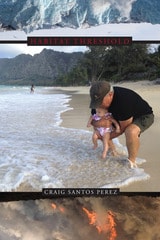
Habitat Threshold
Craig Santos Perez
Omnidawn, 2019
Through experimental forms, free verse, prose, haiku, sonnets, satire, and a method he calls “recycling,” Perez has created a diverse collection filled with passion. Habitat Threshold invites us to reflect on the damage done to our world and to look forward, with urgency and imagination, to the possibility of a better future.
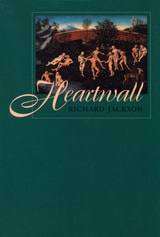
Heartwall
Richard Jackson
University of Massachusetts Press, 2000
Taking its title from a poem by Paul Celan that is both elegiac and hopeful, but also playing off the notion of the “hart” walls erected to corral deer for a medieval hunt that was more a slaughter, and evoking the very physiology of the heart itself, this collection of poems explores the possibilities for love and feeling in a world besieged by tragedies in Bosnia, Kosovo, Rwanda, and elsewhere. At times lyrical, at times satirical, and written in a surrealistic style that ranges from the formal to the aphoristic, Heartwall explores the complex and sometimes confounding relationship between the personal and the political, between our individual perceptions and the larger vision they suggest. These are poems that ask forgiveness, offer praise, and carry enough irony never to seek redemption. They are, at heart, love poems. According to the late William Matthews, Jackson's poems tell us “what it means to belong in history. . . . The wonderful amplitude . . . testifies that we can live with such chaos and not lie about it or ignore it: indeed the poems are a demonstration of how we might do such a thing.”
Hitchcock's People, Places, and Things
John Bruns
Northwestern University Press, 2019
This book offers new readings of well-known Hitchcock films, including The Lodger, Shadow of a Doubt, Psycho, The Birds, and Marnie, as well as insights into lesser-discussed films such as I Confess and Family Plot. Additional close readings of the original theatrical trailer for Psycho and a Hitchcock-directed episode of Alfred Hitchcock Presents expand the Hitchcock landscape beyond conventional critical borders. In tracing the network of relations in Hitchcock’s work, Bruns brings new Hitchcockian tropes to light. For students, scholars, and serious fans, the author promises a thrilling critical navigation of the Hitchcock landscape, with frequent “mental shake-ups” that Hitchcock promised his audience.
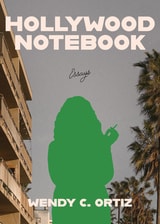
Hollywood Notebook
EssaysWendy C. Ortiz
Northwestern University Press, 2025
A daylight traipse through early-aughts Los Angeles, Hollywood Notebook encapsulates the powerful feelings and hopeful futures of twentysomething Wendy C. Ortiz. In this boundary-defying sister memoir to Bruja, Ortiz navigates internal maps as she traverses external palm-treed streets, moving through her youthful twenties and into the pensiveness of her thirties. Peering at what lies ahead while dipping her toes into the past, Ortiz shows us that there is no place like Hollywood to unearth the joys of success and the blows of mistakes—both realized and denied. An innovative and bold examination of the daytime roaming mind, Hollywood Notebook is a cartography of love, loss, and transformation in the face of a brilliant psyche in a vibrant city.
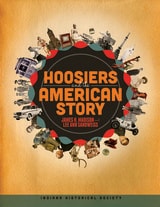
Hoosiers and the American Story
James H. Madison and Lee Ann Sandweiss
Indiana Historical Society Press, 2014