314 books match the query 'Plants' and 10 start with h
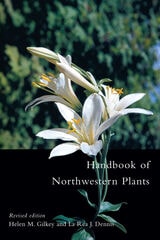
cover of Handbook of Northwestern Plants Revised Edition

Handbook of Northwestern Plants Revised Edition

Helen Gilkey

Oregon State University Press, 2001
[more]
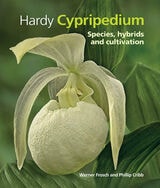
cover of Hardy Cypripedium: Species, Hybrids and Cultivation

Hardy Cypripedium

Species, Hybrids and Cultivation

Werner Frosch, Phillip Cribb

Royal Botanic Gardens, Kew, 2012

With a name that references Aphrodite and colors that range from muted to majestic, it is easy to see why the Cypripedium, commonly known as the slipper orchid, is one of the most loved orchids. Now readers can learn what it takes to fully appreciate and care for this genus.

Hardy Cypripedium presents the fifty species and one hundred hybrids of the slipper orchid through more than three hundred photos. It also provides plant descriptions, ecology, distribution, and cultivation methods. Sections on history, morphology, and conservation round out the guide. Professional and amateur growers, as well as fans of orchids of all types, will find a wealth of useful information in this beautiful book.

[more]
cover of Healing with Plants in the American and Mexican West

Healing with Plants in the American and Mexican West

Margarita Artschwager Kay

University of Arizona Press, 1996

Disenchanted with biomedicine and dismayed by its cost, increasing numbers of people are seeking alternative therapies such as the healing plants discussed in this book. Plant medicine is a billion-dollar business: health food stores, small yerberias, and even giant grocery store chains carry hundreds of medicinal herbs. By one estimate, up to one-third of the U.S. population uses alternative medicine—generally in addition to conventional therapy and commonly without telling their doctors. The heart of this volume is a complete description of 100 plants commonly used today, often for the same purposes reported by chroniclers of the Aztecs or eighteenth-century European explorers. Information for each plant includes botanical and common plant names, history, contemporary uses, a description of how the plant is prepared and administered, and brief phytochemical data. Discussions of folk efficacy and folk properties—beliefs in how and why the herb heals—help to explain the continued use of each plant into the present day. Are any of these plants dangerous, and do any of them really work? Where did they come from, and where are they available now? How can health-care practitioners gain the confidence of their patients to learn whether they are using alternative medicines for specific illnesses, symptoms, or injuries? Perhaps most intriguing, which of these plants might be waiting to take the place of known antibiotics as pathological organisms become increasingly resistant to modern miracle drugs? Answers to these and other questions will pique the interest of general readers and will be an invaluable resource for health-care providers—especially nurses and other primary-care providers, who often must find an interface between biomedical and more traditional therapies. For all readers, the book opens a window into many ethnic cultures of the region—Mexican American communities, desert Pima, coastal Seri, and others. Here is the fascinating saga of how their healing plants from prehistoric times melded with Old World herbs brought by the Europeans to create the unique pharmacopoeia available today here and in other parts of the world. Plants included:
Acacia (Cassie, Acacia)
Achillea (Yarrow)
Agastache (Giant Hyssop)
Agave (Century Plant)
Allium (Garlic, Onion)
Aloe (Aloe)
Ambrosia (Ragweed)
Anemopsis (Yerba Mansa)
Arctostaphylos (Bearberry, Uva Ursi)
Argemone (Prickly Poppy)
Aristolochia (Bithwort, Snakeroot)
Arracacia (Arracacha)
Artemisia (Wormwood, Mugwort, Western Mugwort, Sagebrush)
Asclepias (Milkweed)
Baccharis (Desert Broom, Seep Willow)
Bocconia (Tree Celandine)
Buddleia (Butterfly Bush)
Bursera (Elephant Tree)
Caesalpinia (Mexican Bird-of-Paradise)
Cannabis (Marijuana)
Capsicum (Chili)
Carnegiea (Saguaro)
Casimiroa (Zapote)
Cassia (Senna)
Cereus (Cactus)
Chenopodium (Goosefoot, Wormseed)
Citrus (Lemon, Lime, Orange)
Datura (Jimson Weed)
Ephedra (Mormon Tea)
Equisetum (Horsetail)
Eryngium (Eryngo, Button Snakeroot)
Eucalyptus (Eucalyptus)
Euphorbia (Spurge)
Eysenhardtia (Kidneywood)
Gnaphalium (Everlasting, Cudweed)
Guaiacum (Lignum Vitae)
Guazuma (Guazuma)
Gutierrezia (Turpentine Bush)
Haematoxylon (Logwood)
Haplopappus (Jimmyweed)
Heterotheca (Telegraph Plant, Falso Arnica)
Hintonia (Copalqu¡n)
Ibervillea (Coyote Melon)
Jacquinia (Jacquinia)
Jatropha (Limberbush)
Juniperus (Juniper)
Karwinskia (Coffeeberry)
Kohleria (Tree Gloxinia)
Krameria (Ratany)
Lantana (Lantana)
Larrea (Creosote Bush, Greasewood)
Ligusticum (Lovage)
Lippia (Oregano)
Lysiloma (Featherbush)
Malva (Mallow)
Mammillaria (Pincushion Cactus)
Mascagnia (Mascagnia)
Matricaria (Chamomile)
Mentha (Mint)
Nicotiana (Tobacco)
Ocimum (Basil)
Opuntia (Cholla, Prickly Pear)
Perezia (Perezia)
Persea (Avocado)
Phaseolus (Bean)
Phoradendron, Stru
[more]
cover of Herbs for the Gourmet Gardener: A Practical Resource from the Garden to the Table

Herbs for the Gourmet Gardener

A Practical Resource from the Garden to the Table

Caroline Holmes

University of Chicago Press, 2014

The rise of the slow food movement and the return to home gardens mean cooks are donning gardening gloves as often as oven mitts. Modern cooking is heading back to its roots, with home cooks embracing local ingredients and down-to-earth recipes. With more and more of us discovering the delight of preparing and eating freshly harvested food, Herbs for the Gourmet Gardener is the indispensable guide to what to grow, cook, and eat.

A feast for the eyes and the table, this user-friendly resource traverses the realms of both the garden and the kitchen, addressing the cultivation, storage, and preparation of more than sixty herbs. Practical growing tips, fascinating histories, nutritional information, and classic recipes appear alongside botanical illustrations drawn from the Royal Horticultural Society’s cherished collection. With both familiar varieties and novel options, Herbs for the Gourmet Gardener will inspire you to create a world of new shapes, colors, and tastes.
[more]
cover of Hidden Natural Histories: Herbs

Hidden Natural Histories

Herbs

Kim Hurst

University of Chicago Press, 2015
Behind the pungent aroma of garlic and the cool, palate-cleansing taste of mint in our toothpaste are untold stories of human interactions with the natural world. Celebrating the human heritage of these and other natural phenomena, the new Hidden Natural Histories series offers fascinating insight into the cultivation and use of the bits of nature we take for granted in our daily lives. In Herbs, Kim Hurst concocts a delightful tale of the leafs, seeds, and flowers that for millennia have grown in our gardens, provided savor to our stews, and been used to treat our ailments. Many of herbs’ uses will surprise: rosemary, renowned for its piney flavor, has also been used to protect homes from thieves, aid memory, preserve youth, cure depression, and attract helpful garden elves. Packed with informative and beautiful illustrations—both new and from historical archives—Herbs will charm and enlighten anyone interested in our relationship with the natural world and will be a special delight for every chef, gourmand, gardener . . . or purveyor of garden elves.
[more]
cover of Hidden Natural Histories: Trees

Hidden Natural Histories

Trees

Noel Kingsbury

University of Chicago Press, 2015

Behind the cedar scent of fresh pencil shavings and the slightly bitter tang of orange in our marmalade are untold stories of human interactions with the natural world. Celebrating the human heritage of these and other natural phenomena, the new Hidden Natural Histories series offers fascinating insight into the cultivation and use of the bits of nature we take for granted in our daily lives. In Trees, noted garden writer Noel Kingsbury turns his pen—or pencil—to the leafy life-forms that have warmed our hearths, framed our boats for ocean voyaging, and provided us shade on summer afternoons. From the fortitude of the ancient ginkgo tree to artistic depictions of quince fruit in the ruins of Pompeii, Kingsbury explores the culinary, medicinal, cultural, and practical uses of a forest of tree species. Packed with informative and beautiful illustrations—both new and from historical archives—Trees will charm and enlighten anyone interested in our relationship with the natural world and will be a special delight for every gardener, chef, and climber of trees.
[more]
cover of How To Identify Plants

How To Identify Plants

H. D. Harrington

Ohio University Press, 1957

First issued in 1957 by Swallow Press, this classic guide to the art of plant identification is now familiar to an entire generation of students. Harrington who was Professor of Botany and Curator of the Herbarium at Colorado State University, gives step-by-step instructions and definitions to help readers recognize and classify plants. The new printing has been reset and reformatted, and L.W. Durrell’s drawings and glossary—more than 500 images—have been digitally enhanced for clarity.

[more]
cover of How the Earth Turned Green: A Brief 3.8-Billion-Year History of Plants

How the Earth Turned Green

A Brief 3.8-Billion-Year History of Plants

Joseph E. Armstrong

University of Chicago Press, 2014

On this blue planet, long before pterodactyls took to the skies and tyrannosaurs prowled the continents, tiny green organisms populated the ancient oceans. Fossil and phylogenetic evidence suggests that chlorophyll, the green pigment responsible for coloring these organisms, has been in existence for some 85% of Earth’s long history—that is, for roughly 3.5 billion years. In How the Earth Turned Green, Joseph E. Armstrong traces the history of these verdant organisms, which many would call plants, from their ancient beginnings to the diversity of green life that inhabits the Earth today.

Using an evolutionary framework, How the Earth Turned Green addresses questions such as: Should all green organisms be considered plants? Why do these organisms look the way they do? How are they related to one another and to other chlorophyll-free organisms? How do they reproduce? How have they changed and diversified over time? And how has the presence of green organisms changed the Earth’s ecosystems? More engaging than a traditional textbook and displaying an astonishing breadth, How the Earth Turned Green will both delight and enlighten embryonic botanists and any student interested in the evolutionary history of plants.
[more]
cover of How to Identify Grasses and Grasslike Plants: Sedges and Rushes

How to Identify Grasses and Grasslike Plants

Sedges and Rushes

H. D. Harrington

Ohio University Press, 1977

There is no easy way to identify grasses. And no one understands this better than H.D. Harrington, who observed thousands of students struggle and learn. His clear, concise, and well-organized guide will continue to be a basic and essential text for use in the classroom or in the field. The book contains over 500 drawings and an illustrated glossary.
[more]
cover of Hydrangea Happiness: Planting, Pruning, and Blooming

Hydrangea Happiness

Planting, Pruning, and Blooming

C. L. Fornari

Brandeis University Press, 2026

A comprehensive, easy-to-use, illustrated guide to hydrangeas for novice gardeners and experienced horticulturists.
 
With large, long-lasting flowers that range from showy pinks to heartbreaking shades of blue, hydrangeas are captivating, popular plants. Yet gardeners often find themselves flummoxed by the challenge of understanding and growing the many varieties of these shrubs.
 
Writer, radio host, and gardening consultant C. L. Fornari (also known as The Garden Lady) simplifies the cultivation and care of the six most popular species of hydrangeas in this practical, clear, and accessible guide. Hydrangea Happiness explains the difference between varietals and tells how and where they can successfully grow in assorted soils and conditions throughout the United States. In addition to sharing essential information, Fornari addresses myths and misinformation and fields questions about cultivating these popular plants. Punctuated with catchy rhymes and beautiful photographs, this book makes the road to Hydrangea Happiness easy, successful, and fun.

[more]