Results by title
557 books match the query 'Poems' and 21 start with h

HOUSE OF POURED OUT WATERS
POEMSJane Mead
University of Illinois Press, 2001
More than anything, it is her spiritual dimension that offers Mead a way into the future--but that way must be paved, image by image, with the world before her. Simultaneously conversational and lyrical, these fearless poems extend the possibilities of narrative verse.
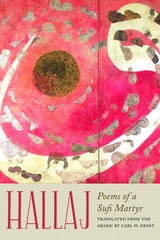
Hallaj
Poems of a Sufi MartyrTranslated from the Arabic by Carl W. Ernst
Northwestern University Press, 2018
Winner of the Global Humanities Translation Prize
Hallaj is the first authoritative translation of the Arabic poetry of Husayn ibn Mansur al-Hallaj, an early Sufi mystic. Despite his execution in Baghdad in 922 and the subsequent suppression of his work, Hallaj left an enduring literary and spiritual legacy that continues to inspire readers around the world. In Hallaj, Carl W. Ernst offers a definitive collection of 117 of Hallaj’s poems expertly translated for contemporary readers interested in Middle Eastern and Sufi poetry and spirituality.
Ernst’s fresh and direct translations reveal Hallaj’s wide range of themes and genres, from courtly love poems to metaphysical reflections on union with God. In a fascinating introduction, Ernst traces Hallaj’s dramatic story within classical Islamic civilization and early Arabic Sufi poetry. Setting himself apart by revealing Sufi secrets to the world, Hallaj was both celebrated and condemned for declaring: “I am the Truth.”
Expressing lyrics and ideas still heard in popular songs, the works of Hallaj remain vital and fresh even a thousand years after their composition. They reveal him as a master of spiritual poetry centuries before Rumi, who regarded Hallaj as a model. This unique collection makes it possible to appreciate the poems on their own, as part of the tragic legend of Hallaj, and as a formidable legacy of Middle Eastern culture.
The Global Humanities Translation Prize is awarded annually to a previously unpublished translation that strikes the delicate balance between scholarly rigor, aesthetic grace, and general readability, as judged by a rotating committee of Northwestern faculty, distinguished international scholars, writers, and public intellectuals. The Prize is organized by the Global Humanities Initiative, which is jointly supported by Northwestern University’s Buffett Institute for Global Studies and Kaplan Institute for the Humanities.

Halve
PoemsKristina Jipson
Tupelo Press, 2016
Hammer with No Master
Poems of René Char (French and English Edition)René Char
Tupelo Press, 2016
Stone Lyre was a selection of poems from Char’s numerous volumes of poems; Carlson’s new Hammer with No Master is a discrete and continuous work, the first English translation of Char’s Le marteau sans maître, first published in 1934 — a time of rumbling menace that our time resembles.
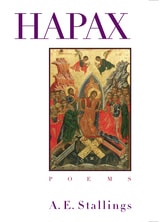
Hapax
PoemsA.E. Stallings
Northwestern University Press, 2006
Recipient of the 2008 Benjamin H. Danks Award
Hapax is ancient Greek for "once, once only, once and for all," and "onceness" pervades this second book of poems by American expatriate poet A. E. Stallings. Opening with the jolt of "Aftershocks," this book explores what does and does not survive its "gone moment"-childhood ("The Dollhouse"), ancient artifacts ("Implements from the Grave of the Poet"), a marriage's lost moments of happiness ("Lovejoy Street"). The poems also often compare the ancient world with the modern Greece where Stallings has lived for several years. Her musical lyrics cover a range of subjects from love and family to characters and themes derived from classical Greek sources ("Actaeon" and "Sisyphus").
Employing sonnets, couplets, blank verse, haiku, Sapphics, even a sequence of limericks, Stallings displays a seemingly effortless mastery of form. She makes these diverse forms seem new and relevant as modes for expressing intelligent thought as well as charged emotions and a sense of humor. The unique sensibility and linguistic freshness of her work has already marked her as an important, young poet coming into her own.
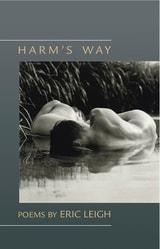
Harm's Way
PoemsEric Leigh
University of Arkansas Press, 2010
Finalist, Miller Williams Poetry Prize
“The past is a flame you must learn to hold / your hand above,” Eric Leigh writes in this stunning first volume of poems, a poignant meditation on the harm that we can and cannot keep from those we love, and the harm that cannot be kept from us. Taking place in both the rural and the urban, in fields and on sidewalks, in gay bars and in laboratories, with topics as diverse and powerful as a father’s suicide, a mother’s resilience, coming out, lost love, and the continuing plight of HIV, Leigh’s poems locate the heartbreaking music in these struggles. At the center of this profound book about loss—of family, of love, of immunity—lies the spirit’s ability to persevere. “My worst fear has come true, / and I am still here walking,” Leigh writes. Indeed, these poems are as assured and brave as those steps toward an unknown future. At turns beautiful, disturbing, mournful, and redemptive, Harm’s Way is an accomplished debut.
Harm’s Way is part of the University of Arkansas Press Poetry Series, edited by Enid Shomer.
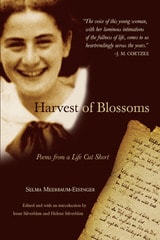
Harvest of Blossoms
Poems from a Life Cut ShortSelma Meerbaum-Eisinger
Northwestern University Press, 2008
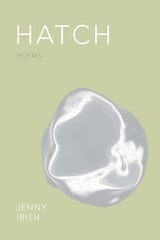
Hatch
PoemsJenny Irish
Northwestern University Press, 2024
The prose poems in Jenny Irish’s newest collection, Hatch, trace the consciousness of an artificial womb that must confront the role she has played in the continuation of the dying of the human species. This apocalyptic vision engages with the most pressing concerns of this contemporary sociopolitical moment: reproductive rights, climate crises, and mass extinction; gender and racial bias in healthcare and technology; disinformation, conspiracy theories, and pseudoscience; and the possibilities and dangers of artificial intelligence. More intimately, Hatch considers questions about how motherhood and its cultural expectations shape female identity. Working with avant strategies, Irish crafts a speculative feminist narrative, excavating and reexamining the aspects of the American experience that should have served as a call to action but have not. Part elegy and part prophecy, Hatch warns of a possible future while speaking to the present moment.
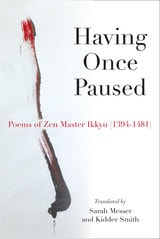
Having Once Paused
Poems of Zen Master Ikkyu (1394-1481)Ikkyu Sojun
University of Michigan Press, 2015
Haywire
PoemsGeorge Bilgere
Utah State University Press, 2006
Haywire was chosen for the Swenson Award by poet Edward Field, winner of numerous awards and a personal friend of the late May Swenson. Field describes the book this way. "This poet, you knew from his very first lines, didn’t fall for anything phony—his own language is irresistibly no-bullshit down to earth, even sassy."
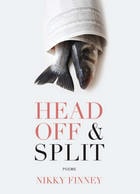
Head Off & Split
PoemsNikky Finney
Northwestern University Press, 2011
Winner, 2011 National Book Award for Poetry
Winner, 2012 GCLS Award for Poetry
Winner, 2012 SIBA Book Award for Poetry
Nominee, 2012 NAACP Image Award for Outstanding Literary Work in Poetry
The poems in Nikky Finney's breathtaking new collection Head Off & Split sustain a sensitive and intense dialogue with emblematic figures and events in African American life: from civil rights matriarch Rosa Parks to former secretary of state Condoleezza Rice, from a brazen girl strung out on lightning to a terrified woman abandoned on a rooftop during Hurricane Katrina. Finney's poetic voice is defined by an intimacy that holds a soft yet exacting eye on the erotic, on uncanny political and family events, like her mother's wedding waltz with South Carolina senator Strom Thurmond, and then again on the heartbreaking hilarity of an American president's final State of the Union address.
Artful and intense, Finney's poems ask us to be mindful of what we fraction, fragment, cut off, dice, dishonor, or throw away, powerfully evoking both the lawless and the sublime.
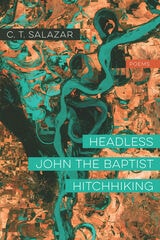
Headless John the Baptist Hitchhiking
PoemsC. T. Salazar
Acre Books, 2022
In C. T. Salazar’s striking debut poetry collection, the speaker is situated in the tradition of Southern literature but reimagines its terrain with an eye on the South’s historic and ongoing violence. His restless relationship with religion (“a child told me there was a god / and because he was smiling, I believed him”) eventually includes a reclamation of the language of belief in the name of desire. “I felt myself become gospel in your hands,” the speaker tells his beloved. And, as the title poem asserts, a headless body “leaves more room for salvation.”
Though Salazar’s South is not a tender place, the book is a petition for tenderness, revealing in both place and people the possibilities for mercy, vulnerability, and wonder. The lyric I, as it creates an archive of experience, is not distanced from the poems’ subjects or settings, but deeply enmeshed in a tangled world. In poems with lush diction, ranging from a sonnet crown to those that explore the full field of the page, Headless John the Baptist Hitchhiking seeks—and finds—where the divine resides: “Praise our hollow-bell bodies still ringing.”
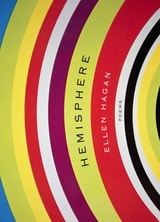
Hemisphere
PoemsEllen Hagan
Northwestern University Press, 2015
Winner, 2015 Seven Sisters Book Award for Poetry
The poems in Hemisphere explore what it means to be a daughter and what it means to bear new life. Ellen Hagan investigates the world historical hemispheres of a family legacy from around the globe and moves down to the most intimate hemisphere of impending motherhood. Her poems reclaim the female body from the violence, both literal and literary, done to it over the years. Hagan acknowledges the changing body of a mother from the strains of birth—from the growing body of a child, to the scars left most visibly by a C-section—as well as the changes wrought by age and, too often, abuse. The existence of a hemisphere implies a part seeking a whole, and as a collection, Hemisphere is a coherent and cogent journey toward reclamation and wholeness.
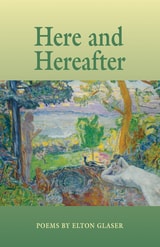
Here and Hereafter
PoemsElton Glaser
University of Arkansas Press, 2005
The poems in celebrated poet Elton Glaser’s sixth collection journey through the seasons, from spring to spring, a pilgrimage down to the South, over the Midwest of snow and roses, and across the Romance countries of Europe. If the poet often finds himself “[h]alfway between grief and longing,” that may be his natural condition, rooted in this world against the pull of the next, his faith in the “purple evidence of plums, the testimony of wild persimmon” weathering the stormy preachers and the droughts of middle age.
Within that tension, the range of tones is unlimited, sometimes in the same poem, from the serious to the sublime, from anguish to awe. Holding everything together is Glaser’s unmistakable voice, a warm idiom made pungent by wintry wit: “my tongue of odd American, my mongrel sublime.” Whether the poems speak of ripe pears or minor prophets, they invite the reader to a feast of language that lets us taste how it feels to live on this earth, in the shadow of the afterlife.
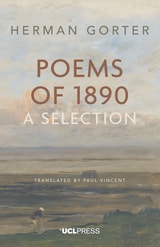
Herman Gorter
Poems of 1890: A SelectionHerman Gorter
University College London, 2015
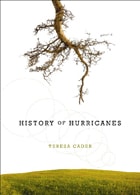
History of Hurricanes
PoemsTeresa Cader
Northwestern University Press, 2009
In her third collection of poems, Teresa Cader spins a complete universe of lyrical, probing verse that reaches out to readers and invites them to come inside. These poems deal with love and loss in particularly striking ways, as Cader uses rigorously controlled verse to express chaotic emotion. Stylistically adventurous, her work moves gracefully from intricate, slant-rhymed couplets to elliptical, lanky free verse. Geographically, she takes readers on a ride with stops in Kraków’s rock clubs, colonial New England’s sites, and shrines of contemporary Japan. The shadow of death, especially the loss of Cader’s mother, falls across many of her poems, but her verse reacts viscerally to such events, her emotion resounding out from each line to move through pain or desire.
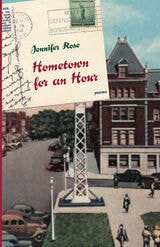
Hometown for an Hour
PoemsJennifer Rose
Ohio University Press, 2006
In her second collection of poems, Jennifer Rose writes primarily of places and displacement. Using the postcard’s conventions of brevity, immediacy, and, in some instances, humor, these poems are greetings from destinations as disparate as Cape Cod, Kentuckiana, and Croatia. Rich in imagery, deftly crafted, and imbued with a lightness of voice, these poems are also postmarked from poetry’s more familiar provinces of love, nature, and loss.
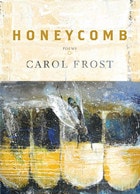
Honeycomb
PoemsCarol Frost
Northwestern University Press, 2010
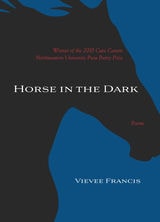
Horse in the Dark
PoemsVievee Francis
Northwestern University Press, 2012
In the next chapter of the Cave Canem/Northwestern University Poetry Prize, we enter the poetic world of Vievee Francis. Bold and skilled, Francis takes us into the still landscapes of Texas and the fluid details of the African American South. Her poems become panhandle folktales revealing the weight of memories so clear and on the cusp. Her creative tangle of metaphors, people and geography will keep the reader rooted in a good earth of extraordinary verse.
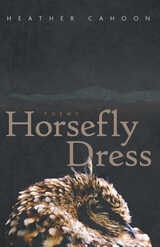
Horsefly Dress
PoemsHeather Cahoon
University of Arizona Press, 2020
Horsefly Dress is a meditation on the experience and beauty of suffering, questioning its triggers and ultimate purpose through the lens of historical and contemporary interactions and complications of Séliš, Qĺispé, and Christian beliefs. Heather Cahoon’s collection explores dark truths about the world through first-person experiences, as well as the experiences of her family and larger tribal community. As a member of the Confederated Salish and Kootenai Tribes, Cahoon crafts poems that recount traditional stories and confront Coyote’s transformation of the world, including his decision to leave certain evils present, such as cruelty, greed, hunger, and death.
By weaving together stories of Cahoon’s family and tribal community with those of Coyote and his family, especially Coyote’s daughter, Horsefly Dress, the interactions and shared experiences show the continued relevance of traditional Séliš and Qĺispé culture to contemporary life. Rich in the imagery of autumnal foliage, migrating birds, and frozen landscapes, Horsefly Dress calls forth the sensory experience of grief and transformation. As the stories and poems reveal, the transformative powers associated with the human experience of loss belong to the past, present, and future, as do the traditional Salish-Pend d’Oreille stories that create the backbone of this intricate collection.
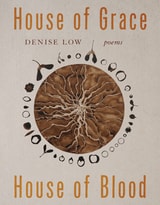
House of Grace, House of Blood
PoemsDenise Low
University of Arizona Press, 2024
In a personal poetic treatment of documents, oral tradition, and images, the author embodies the contradictions she unravels. From a haunting first-person perspective, Low’s formally inventive archival poetry combines prose and lyric, interweaving verse with historical voices in a dialogue with the source material. Each poem builds into a larger narrative on American genocide, the ways in which human loss corresponds to ecological destruction, and how intimate knowledge of the past can enact healing.
Ultimately, these poems not only reconstruct an important historical event, but they also put pressure on the gaps, silences, and violence of the archive. Low asks readers to question not only what is remembered, but how history is remembered—and who is forgotten from it. Reflecting on the injustice of the massacre, the Shawnee leader Tecumseh lamented that though “the Americans murdered all the men, women, and children, even as they prayed to Jesus . . . no American ever was punished, not one.” These poems challenge this attempted erasure.