Results by title
168 books match the query 'Poland' and 4 start with h
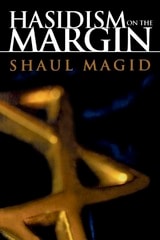
Hasidism on the Margin
Reconciliation, Antinomianism, and MessianismShaul Magid
University of Wisconsin Press, 2003
Hasidism on the Margin explores one of the most provocative and radical traditions of Hasidic thought, the school of Izbica and Radzin that Rabbi Gershon Henokh originated in nineteenth-century Poland. Shaul Magid traces the intellectual history of this strand of Judaism from medieval Jewish philosophy through centuries of Kabbalistic texts to the nineteenth century and into the present. He contextualizes the Hasidism of Izbica-Radzin in the larger philosophy and history of religions and provides a model for inquiry into other forms of Hasidism.
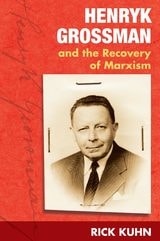
Henryk Grossman and the Recovery of Marxism
Rick Kuhn
University of Illinois Press, 2006
Rick Kuhn’s Henryk Grossman and the Recovery of Marxism is the definitive study of the life and work of this renowned economist, activist, and intellectual. As a young man, Grossman joined the socialist movement and participated in Jewish workers' strikes and demonstrations, as well as in boycotts against employers and the Austro-Hungarian state. He moved to Vienna, but was driven back to Poland by the Austrian state's racist citizenship policies. A member of the illegal Polish Communist Party, Grossman was frequently arrested and jailed, finally leaving Poland for a post at the Institute for Social Research in Frankfurt am Main, which gave rise to the famous 'Frankfurt School'.
Grossman published his best known work in Frankfurt, including studies of Marx's method in Capital and theories of economic crisis that remain influential today. In tracing Grossman's experiences, from Kraków to New York, and offering a detailed account of his ideas, the biography provides an intimate account of key events in twentieth century history, including the politicization of east European Jewry, the World Wars, the rise of Stalinism and Nazism, and the cold war.
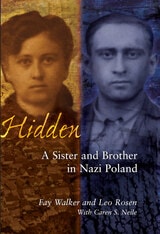
Hidden
A Sister and Brother in Nazi PolandFay Walker
University of Wisconsin Press, 2002
Of the Rosenbluth family, only the older children, Faiga and Luzer, had gone into hiding before the SS rounded up the Jews of Kanczuga, Poland. Hidden is Faiga and Luzer’s story, a memoir whose intimate and quiet particularity makes the incomprehensible enormity of the Holocaust immediate, human, and devastatingly real.
In alternating first-person narratives, Faiga (Fay) and Luzer (Leo) take readers into their very different but inextricably linked experiences in Nazi-occupied Poland. Faiga, the once-dignified young lady from a good home with servants and a seat by the eastern wall of the synagogue, spends two years wandering the perilous countryside, hoping to be taken for a peasant. Mere miles away, knowing nothing of his sister’s fate, Luzer, the leather wholesaler’s only son, lies silent all day in the stifling dark corner of a barn, where the smell of the cows’ warm hides are a piquant reminder of his lost world. Hidden deftly summons that world, as the familiar comforts and squabbles of life in a well-to-do, religious Jewish family are slowly overwhelmed by the grim news coming out of Germany. We follow Faiga and Luzer through the early forebodings and deprivations of the war, into hiding among righteous Poles and erstwhile neighbors-turned-betrayers, and finally, at war’s end, back once more into the world—but not necessarily into safety. Told in a confident, clear, and unsentimental prose, this is a story of heroism and tragedy writ large and small, of two young people coming of age in a world in chaos and then trying to return to "normal" after experiences as unimaginable as they are unforgettable.
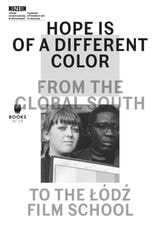
Hope Is of a Different Color
From the Global South to the Lodz Film SchoolEdited by Magda Lipska and Monika Talarczyk
Museum of Modern Art in Warsaw, 2020
As Poland’s second-largest city, Łódź was a hub for international students who studied in Poland from the mid-1960s to 1989. The Łódź Film School, a member of CILECT since 1955, was a favored destination, with students from Africa, Latin America, and the Middle East accounting for one-third of its international student body. Despite the school’s international reputation, the experience of its filmmakers from the Global South is little known beyond Poland.
Hope Is of a Different Color addresses the history of student exchanges between the Global South and the Polish People’s Republic during the Cold War. It sheds light on the experiences and careers of a generation of young filmmakers at Łódź, many of whom went on to achieve success as artists in their home countries, and provides insight into emerging areas of research and race relations in Central and Eastern Europe. The essays reflect on these issues from multiple perspectives, considering sociology, political science, art, and film history. The book also features previously unpublished photographs and film stills from private archives along with visual and written material collected at the Łódź Film School.