Results by title
100 books match the query 'Politicians' and 4 start with h
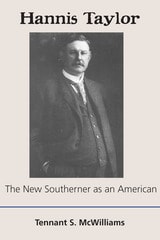
Hannis Taylor
The New Southerner as an AmericanTennant McWilliams
University of Alabama Press, 1978
During the late nineteenth and early twentieth centuries, American life took on contradictions that were later to surface with considerable poignancy. While many publicists and politicians foresaw an America of harmony and great opportunity, they also clung tenaciously to such doctrines as Anglo-Saxon racial superiority and the righteousness of liberal capitalism-notions that worked to defeat the progress they espoused. Here is a study of one of those persons, Hannis Taylor.
For a number of reasons Taylor’s life is uniquely useful for the historian interested in the paradoxes of American life at the turn of the century. Unlike many others of the era who have been examined through biography, Taylor pursued the multifaceted career of practicing attorney, constitutional historian, journalist, diplomat, and ever-aspiring politician. Hence he had occasion to write and speak on almost every intellectual and popular issue of the period. His record serves as a microcosm of many of the contradictions spanning American thought during that time. Further, Taylor was a Southerner. Before moving to Washington, D.C. in 1902, Taylor had grown up in a North Carolina torn by the Civil War and had taken an active role in Alabama affairs during the three decades following Reconstruction. His life shows how a proponent of the New South creed could move easily to advocate the nationalistic foreign and domestic policies often associated with Theodore Roosevelt. Finally, from a humanistic standpoint Taylor's life permits a study in human strivings for achievement. American historiography gravitates to the successful; here is an account of a more common stereotype, the man who worked relentlessly at becoming a noted American by supporting popular causes and who failed tragically.
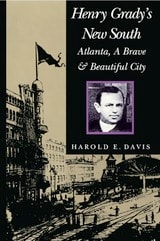
Henry Grady's New South
Atlanta, a Brave and Beautiful CityHarold E. Davis
University of Alabama Press, 1990
Reassessing the man, the movement, and the making of modern Atlanta.
The popular image of Henry W. Grady is that of a champion of the postbellum South, a region that would forgive the North for defeating it and would mobilize its own many resources for hones business and agricultural competition. Biographies and collections of Grady’s essays and speeches that appeared shortly after his death enhanced this image, and for a half-century, Grady was considered the personification of the New South Movement, a movement which promised industrialization for the South, an improved Southern agriculture, and justice and opportunity for black Southerners. As managing editor of the Atlanta Constitution, he espoused the New South throughout the nation and was in demand as a speaker for audiences in New York and Boston.
Through extensive research, focusing on the decade of the 1880s in Georgia, Davis demonstrates that although Grady said all the right things to show that he wished to industrialize the South and that he was committed to the improvement of agriculture and fairness in racial matters, in fact he spent most of his efforts on behalf of Atlanta. His major interest was in making a difference for that city, leaving the rest of the South to enjoy whatever Atlanta could not garner for itself.
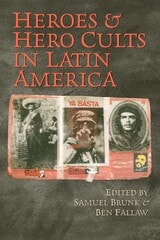
Heroes and Hero Cults in Latin America
Edited by Samuel Brunk and Ben Fallaw
University of Texas Press, 2006
Latin American history traditionally has been defined by larger-than-life heroes such as Símon Bolívar, Emiliano Zapata, and Evita Perón. Recent scholarship, however, tends to emphasize social and cultural factors rather than great leaders. In this new collection, Samuel Brunk and Ben Fallaw bring heroes back to the center of the debate, arguing that heroes not only shape history, they also "tell us a great deal about the places from which they come."
The original essays in this collection examine ten modern Latin American heroes whose charisma derived from the quality of their relationships with admirers, rather than their innate personal qualities. The rise of mass media, for instance, helped pave the way for populists such as radio actress-turned-hero Evita Perón. On the other hand, heroes who become president often watch their images crumble, as policies replace personality in the eyes of citizens. In the end, the editors argue, there is no formula for Latin American heroes, who both forge, and are forged by, unique national events. The conclusion points toward Mexico, where the peasant revolutions that elevated Miguel Hidalgo and, later, Emiliano Zapata are so revered that today's would-be heroes, such as the EZLN's Subcomandante Marcos, must link themselves to peasant mythology even when their personal roots are far from native ground. The enduring (or, in some cases, fading) influence of those discussed in this volume validates the central placement of heroes in Latin American history.
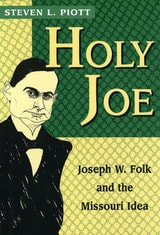
Holy Joe
Joseph W. Folk and the Missouri IdeaSteven L. Piott
University of Missouri Press, 1997
One of Missouri's best-known leaders of the Progressive Era, Joseph W. Folk epitomized the moral reformer in politics. As a crusading district attorney in St. Louis, Folk won national acclaim for his investigations of wrongdoing in municipal government. With the help of muckraking journalist Lincoln Steffens, Folk revealed for the first time the extent of political corruption then plaguing America's cities and helped bring about a popular demand for the regeneration of municipal government nationwide.
A firm believer that the law was a weapon with which to check political corruption and restrain powerful special interests, Folk popularized the "Missouri Idea," the doctrine that public office is a public trust, not merely an opportunity for private gain. Elected as governor of Missouri in 1904, Folk orchestrated a remarkable record of legislative accomplishment. He established himself as one of Missouri's outstanding governors and one of the nation's leading progressive reformers.
In asserting that traditional moral values could be applied to politics, Folk became known among friends and enemies as Holy Joe. His refusal to make any distinction between public and private morality, however, alienated some Missourians, while his disregard for party organization angered politicians. His idealism cost him political advancement and ultimately a place in national politics.
Whereas some studies of the Progressive Era have minimized the moral dimension of Progressivism and downplayed the importance of reformers like Joseph W. Folk, Holy Joe establishes him as a major leader of the Progressive movement. This biography will be a welcome addition to the literature on the subject.