262 books match the query 'Public health' and 21 start with h
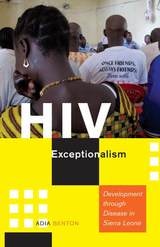
cover of HIV Exceptionalism: Development through Disease in Sierra Leone

HIV Exceptionalism

Development through Disease in Sierra Leone

Adia Benton

University of Minnesota Press, 2015

WINNER, 2017 RACHEL CARSON PRIZE, SOCIETY FOR THE SOCIAL STUDIES OF SCIENCE

In 2002, Sierra Leone emerged from a decadelong civil war. Seeking international attention and development aid, its government faced a dilemma. Though devastated by conflict, Sierra Leone had a low prevalence of HIV. However, like most African countries, it stood to benefit from a large influx of foreign funds specifically targeted at HIV/AIDS prevention and care.

What Adia Benton chronicles in this ethnographically rich and often moving book is how one war-ravaged nation reoriented itself as a country suffering from HIV at the expense of other, more pressing health concerns. During her fieldwork in the capital, Freetown, a city of one million people, at least thirty NGOs administered internationally funded programs that included HIV/AIDS prevention and care. Benton probes why HIV exceptionalism—the idea that HIV is an exceptional disease requiring an exceptional response—continues to guide approaches to the epidemic worldwide and especially in Africa, even in low-prevalence settings.

In the fourth decade since the emergence of HIV/AIDS, many today are questioning whether the effort and money spent on this health crisis has in fact helped or exacerbated the problem. HIV Exceptionalism does this and more, asking, what are the unanticipated consequences that HIV/AIDS development programs engender?
[more]
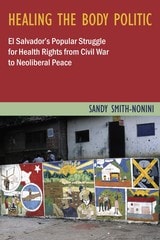
cover of Healing the Body Politic: El Salvador's Popular Struggle for Health Rights from Civil War to Neoliberal Peace

Healing the Body Politic

El Salvador's Popular Struggle for Health Rights from Civil War to Neoliberal Peace

Smith-Nonini, Sandy

Rutgers University Press, 2010
Incorporating investigative journalism and drawing on interviews with participants and leaders, Sandy Smith-Nonini examines the contested place of health and development in El Salvador over the last two decades. Healing the Body Politic recounts the dramatic story of radical health activism from its origins in liberation theology and guerrilla medicine during the third-world country's twelve-year civil war, through development of a remarkable "popular health system," administered by lay providers in a former war zone controlled by leftist rebels. This ethnography casts light on the conflicts between the conservative Ministry of Health and primary health advocates during the 1990s peace process--a time when the government sought to dismantle the effective peasant-run rural system. It offers a rare analysis of the White Marches of 2002û2003, when radicalized physicians rose to national leadership in a successful campaign against privatization of the social security health system. Healing the Body Politic contributes to the productive integration of medical and political anthropology by bringing the semiotics of health and the body to bear on cultural understandings of warfare, the state, and globalization.
[more]
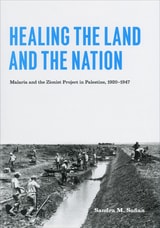
cover of Healing the Land and the Nation: Malaria and the Zionist Project in Palestine, 1920-1947

Healing the Land and the Nation

Malaria and the Zionist Project in Palestine, 1920-1947

Sandra M. Sufian

University of Chicago Press, 2007

A novel inquiry into the sociopolitical dimensions of public medicine, Healing the Land and the Nation traces the relationships between disease, hygiene, politics, geography, and nationalism in British Mandatory Palestine between the world wars. Taking up the case of malaria control in Jewish-held lands, Sandra Sufian illustrates how efforts to thwart the disease were intimately tied to the project of Zionist nation-building, especially the movement’s efforts to repurpose and improve its lands. The project of eradicating malaria also took on a metaphorical dimension—erasing anti-Semitic stereotypes of the “parasitic” Diaspora Jew and creating strong, healthy Jews in Palestine. Sufian shows that, in reclaiming the land and the health of its people in Palestine, Zionists expressed key ideological and political elements of their nation-building project.

Taking its title from a Jewish public health mantra, Healing the Land and the Nation situates antimalarial medicine and politics within larger colonial histories. By analyzing the science alongside the politics of Jewish settlement, Sufian addresses contested questions of social organization and the effects of land reclamation upon the indigenous Palestinian population in a decidedly innovative way. The book will be of great interest to scholars of the Middle East, Jewish studies, and environmental history, as well as to those studying colonialism, nationalism, and public health and medicine.
[more]
cover of Health Care and Gender

Health Care and Gender

Charlotte Muller

Russell Sage Foundation, 1990
Health and medical services should meet individuals' needs regardless of gender, but in both subtle and overt ways this is very often not the case. Gender biases result not only in flawed access to care but also in insufficient medical research, uninformed diagnoses, and gaps in covering critical needs. In Health Care and Gender, Charlotte Muller provides a contemporary assessment of the forces that sustain gender biases in the health and medical professions. Beginning with an analysis of gender comparisons in health care usage and adequacy of treatment, Muller discusses the experiences of many different women: working women with insurance coverage, the poor dependent on Medicaid, and the elderly. She also focuses on the issues facing women of reproductive age and shows how poverty or extremely volatile political and ethical controversy may impede their search for basic maternity and family planning services. Drawing on a large body of evidence from medical, health, and behavioral literature and from national statistics, Health Care and Gender probes a timely and crucial topic. For scholars, analysts, and policy makers interested in women's studies, health and medical care, gerontology, consumer and labor economics, and social justice. Muller's thorough analysis looks to the future by presenting agendas for reform, research, and evaluation.
[more]
cover of Health Issues in Latino Males: A Social and Structural Approach

Health Issues in Latino Males

A Social and Structural Approach

Aguirre-Molina, Marilyn

Rutgers University Press, 2010
It is estimated that more than 50 million Latinos live in the United States. This is projected to more than double by 2050. In Health Issues in Latino Males experts from public health, medicine, and sociology examine the issues affecting Latino men's health and recommend policies to overcome inequities and better serve this population. The book addresses sexual and reproductive health; alcohol, tobacco, and drug use; mental and physical health among those in the juvenile justice or prison systems; chronic diseases; HIV/AIDS; Alzheimer's and dementia; and health issues among war veterans. It discusses utilization, insurance coverage, and research programs, and includes an extensive appendix charting epidemiological data on Latino health.
[more]
cover of Health and Hygiene in Chinese East Asia: Policies and Publics in the Long Twentieth Century

Health and Hygiene in Chinese East Asia

Policies and Publics in the Long Twentieth Century

Angela Ki Che Leung and Charlotte Furth, eds.

Duke University Press, 2010

This collection expands the history of colonial medicine and public health by exploring efforts to overcome disease and improve human health in Chinese regions of East Asia from the late nineteenth century to the present. The contributors consider the science and politics of public health policymaking and implementation in Taiwan, Manchuria, Hong Kong, and the Yangzi River delta, focusing mostly on towns and villages rather than cities. Whether discussing the resistance of lay midwives in colonial Taiwan to the Japanese campaign to replace them with experts in “scientific motherhood” or the reaction of British colonists in Shanghai to Chinese diet and health regimes, they illuminate the effects of foreign interventions and influences on particular situations and localities. They discuss responses to epidemics from the plague in early-twentieth-century Manchuria to SARS in southern China, Singapore, and Taiwan, but they also emphasize that public health is not just about epidemic crises. As essays on marsh drainage in Taiwan, the enforcement of sanitary ordinances in Shanghai, and vaccination drives in Manchuria show, throughout the twentieth century public health bureaucracies have primarily been engaged in the mundane activities of education, prevention, and monitoring.

Contributors. Warwick Anderson, Charlotte Furth, Marta E. Hanson, Sean Hsiang-lin Lei, Angela Ki Che Leung, Shang-Jen Li, Yushang Li, Yi-Ping Lin, Shiyung Liu, Ruth Rogaski, Yen-Fen Tseng, Chia-ling Wu, Xinzhong Yu

[more]
cover of Health and Welfare during Industrialization

Health and Welfare during Industrialization

Edited by Richard H. Steckel and Roderick Floud

University of Chicago Press, 1997

In this unique anthology, Steckel and Floud coordinate ten essays that bring a new perspective to inquiry about standard of living in modern times. These papers are arranged for international comparison, and they individually examine evidence of health and welfare during and after industrialization in eight countries: the United States, Britain, Sweden, the Netherlands, France, Germany, Japan, and Australia.
The essays incorporate several indicators of quality of life, especially real per capita income and health, but also real wages, education, and inequality. And while the authors use traditional measures of health such as life expectancy and mortality rates, this volume stands alone in its extensive use of new "anthropometric" data—information about height, weight and body mass index that indicates changes in nations' well-being. Consequently, Health and Welfare during Industrialization signals a new direction in economic history, a broader and more thorough understanding of what constitutes standard of living.
[more]
cover of Health in Ruins: The Capitalist Destruction of Medical Care at a Colombian Maternity Hospital

Health in Ruins

The Capitalist Destruction of Medical Care at a Colombian Maternity Hospital

César Ernesto Abadía-Barrero

Duke University Press, 2022

In Health in Ruins César Ernesto Abadía-Barrero chronicles the story of El Materno—Colombia’s oldest maternity and neonatal health center and teaching hospital—over several decades as it faced constant threats of government shutdown. Using team-based and collaborative ethnography to analyze the social life of neoliberal health policy, Abadía-Barrero details the everyday dynamics around teaching, learning, and working in health care before, during, and after privatization. He argues that health care privatization is not only about defunding public hospitals; it also ruins rich traditions of medical care by denying or destroying ways of practicing medicine that challenge Western medicine. Despite radical cuts in funding and a corrupt and malfunctioning privatized system, El Materno’s professors, staff, and students continued to find ways to provide innovative, high-quality, and noncommodified health care. By tracking the violences, conflicts, hopes, and uncertainties that characterized the struggles to keep El Materno open, Abadía-Barrero demonstrates that any study of medical care needs to be embedded in larger political histories.
[more]
cover of Health in a Fragile State: Science, Sorcery, and Spirit in the Lower Congo

Health in a Fragile State

Science, Sorcery, and Spirit in the Lower Congo

John M. Janzen

University of Wisconsin Press, 2019

Based on extensive field research in the Manianga region of the Lower Congo, Health in a Fragile State is an anthropological account of public health and health care after the collapse of the Congolese state in the 1980s and 1990s. This work brings into focus John M. Janzen's earlier books on African health and healing, revealing the collaborative effort by local, national, and international agencies to create viable alternative institutions to those that represented the centralized state. This book documents and analyzes the realignment of existing institutions and the creation of new ones that shape health and healing.
Janzen explores the manner in which power and information, including science, are legitimized in the preservation and improvement of health. Institutional validity and knowledge empower citizens and health practitioners to gain the upper hand over the region's principal diseases, including malaria, tuberculosis, typhoid, and HIV/AIDS.
[more]
cover of Health, Culture, and Community

Health, Culture, and Community

Benjamin D. Paul

Russell Sage Foundation, 1955

This casebook documents public reactions to health programs and health situations in sixteen widely differing communities of the world. Some of the studies record successes, others failures. Of interest to anyone concerned with preventive medicine, public health, community betterment, or cultural problems involving peoples of different backgrounds and beliefs.
[more]
cover of Health, Hygiene and Eugenics in Southeastern Europe to 1945

Health, Hygiene and Eugenics in Southeastern Europe to 1945

Christian Promitzer

Central European University Press, 2011
This volume is a collection of chapters that deal with issues of health, hygiene and eugenics in Southeastern Europe to 1945, specifically, in Bosnia-Herzegovina, Bulgaria, Croatia, Greece and Romania. Its major concern is to examine the transfer of medical ideas to society via local, national and international agencies and to show in how far developments in public health, preventive medicine, social hygiene, welfare, gender relations and eugenics followed a regional pattern. This volume provides insights into a region that has to date been marginal to scholarship of the social history of medicine.
[more]
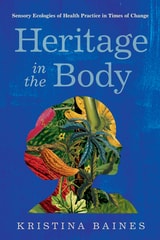
cover of Heritage in the Body: Sensory Ecologies of Health Practice in Times of Change

Heritage in the Body

Sensory Ecologies of Health Practice in Times of Change

Kristina Baines

University of Arizona Press, 2024

Through storytelling, ethnography, and interviews, Heritage in the Body examines the links between health and heritage in times of change. Using a series of case studies, anthropologist Kristina Baines tells the intimate stories of how Indigenous Maya and Garifuna Belizeans—both in Belize and in the United States—navigate macro-level processes such as economic development, climate change, political shifts, and global health crises in the context of changes in their own lives.

Employing an embodied ecological heritage (EEH) framework, Baines explores the links between health and heritage as a fluid series of ecological practices. Health and wellness are holistically defined and approached from a phenomenological perspective. Baines focuses on how sensory experiences change the body through practice and provides insights into community-driven alternatives as a means to maintain and support happy, healthy lives.

[more]
cover of Hidden Arguments: Political Ideology and Disease Prevention Policy

Hidden Arguments

Political Ideology and Disease Prevention Policy

Sylvia Noble Tesh

Rutgers University Press, 1988

In this provocative book, Sylvia Tesh shows how "politics masquerades as science" in the debates over the causes and prevention of disease. Tesh argues that ideas about the causes of disease which dominate policy at any given time or place are rarely determined by scientific criteria alone. The more critical factors are beliefs about how much government can control industry, who should take risks when scientists are uncertain, and whether the individual or society has the ultimate responsibility for health. Tesh argues that instead of lamenting the presence of this extra-scientific reasoning, it should be brought out of hiding and welcomed. She illustrates her position by analyzing five different theories of disease causality that have vied for dominance during the nineteenth and twentieth centuries, and discusses in detail the political implications of each theory. Tesh also devotes specific chapters to the multicausal theory of disease, to health education policy in Cuba, to the 1981 air traffic controller's strike, to the debate over Agent Orange, and to an analysis of science as a belief system.

Along the way she makes these principal points: She criticizes as politically conservative the idea that diseases result from a multifactorial web of causes. Placing responsibility for disease prevention on "society" is ideological, she argues. In connection with the air traffic controllers she questions whether it is in a union's best interests to claim that workers' jobs are stressful. She shows why there are no entirely neutral answers to questions about the toxicity of environmental pollutants. In a final chapter, Tesh urges scientists to incorporate egalitarian values into their search for the truth, rather than pretending science can be divorced from that political ideology.
[more]
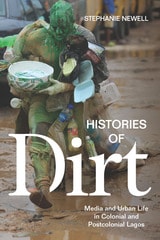
cover of Histories of Dirt: Media and Urban Life in Colonial and Postcolonial Lagos

Histories of Dirt

Media and Urban Life in Colonial and Postcolonial Lagos

Stephanie Newell

Duke University Press, 2020
In Histories of Dirt Stephanie Newell traces the ways in which urban spaces and urban dwellers come to be regarded as dirty, as exemplified in colonial and postcolonial Lagos. Newell conceives dirt as an interpretive category that facilitates moral, sanitary, economic, and aesthetic evaluations of other cultures under the rubric of uncleanliness. She examines a number of texts ranging from newspaper articles by elite Lagosians to colonial travel writing, public health films, and urban planning to show how understandings of dirt came to structure colonial governance. Seeing Lagosians as sources of contagion and dirt, British colonizers used racist ideologies and discourses of dirt to justify racial segregation and public health policies. Newell also explores possibilities for non-Eurocentric methods for identifying African urbanites’ own values and opinions by foregrounding the voices of contemporary Lagosians through interviews and focus groups in which their responses to public health issues reflect local aesthetic tastes and values. In excavating the shifting role of dirt in structuring social and political life in Lagos, Newell provides new understandings of colonial and postcolonial urban history in West Africa.
[more]
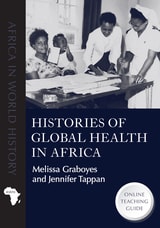
cover of Histories of Global Health in Africa

Histories of Global Health in Africa

Melissa Graboyes and Jennifer Tappan

Ohio University Press, 0

Histories of Global Health in Africa offers a concise and compelling introduction to the development and practice of global health on the African continent over the past century. Rather than centering institutions, the book foregrounds the people whose lives and labor have shaped global health—including African communities receiving care and the practitioners and experts who have long driven biomedical work across the region. 

Drawing on cutting-edge scholarship, the book traces the colonial roots of global health and examines how these legacies continue to influence contemporary interventions, from vaccination campaigns and disease eradication efforts to epidemic responses. Its accessible thematic chapters explore key topics, including data collection, demography, ethics, and equity. 

Designed for classroom use and ideal for nonspecialists, Histories of Global Health in Africa provides a flexible structure and a rich suite of teaching materials, including online multimedia components. It is an essential resource for students and readers seeking to understand how global health has evolved—and why its future depends on confronting its past.
[more]
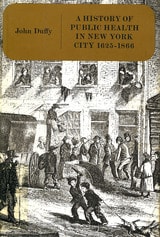
cover of History of Public Health in New York City, 1625-1866: Volume 1

History of Public Health in New York City, 1625-1866

Volume 1

John Duffy

Russell Sage Foundation, 1968
Traces the development of the sanitary and health problems of New York City from earliest Dutch times to the culmination of a nineteenth-century reform movement that produced the Metropolitan Health Act of 1866, the forerunner of the present New York City Department of Health. Professor Duffy shows the city's transition from a clean and healthy colonial settlement to an epidemic-ridden community in the eighteenth century, as the city outgrew its health and sanitation facilities. He describes the slow growth of a demand for adequate health laws in the mid-nineteenth century, leading to the establishment of the first permanent health agency in 1866.
[more]
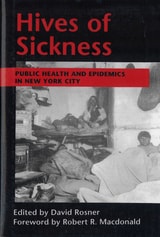
cover of Hives of Sickness: Public Health and Epidemics in New York City

Hives of Sickness

Public Health and Epidemics in New York City

Rosner, David

Rutgers University Press, 1995

An 1865 report on public health in New York painted a grim picture of "high brick blocks and closely-packed houses . . . literally hives of sickness" propagating epidemics of cholera, smallpox, typhoid, typhus, and yellow fever, which swept through the whole city. In this stimulating collection of essays, nine historians of American medicine explore New York's responses to its public health crises from colonial times to the present. The essays illustrate the relationship between the disease environment of New York and changes in housing, population, social conditions, and the success of medical science, linking such factors to New York's experiences with smallpox, polio, and AIDS.

The volume is essential reading for anyone interested in American public health and the social history of New York.

The contributors are Ronald Bayer, Elizabeth Blackmar, Gretchen A. Condran, Elizabeth Fee, Daniel M. Fox, Evelynn M. Hammonds, Alan M. Kraut, Judith Walzer Leavitt, and Naomi Rogers. David Rosner is a professor of history at Baruch College and The Graduate School of the City University of New York. Robert R. Macdonald is the director of the Museum of the City of New York.

A publication of the Museum of the City of New York


Choice Reviews 1995 November

This is one of a series of books focusing on the impact of disease intended to enhance the understanding of both past and present regarding reactions to periodic epidemics. Robert B. Macdonald, director of the Museum of the City of New York, which supports this series, states: "The individual and collective responses to widespread sickness are mirrors to the cultural, religious, economic, political, and social histories of cities and nations." Rosner selected eight renowned and respected individuals to describe the reactions and responses to smallpox, polio, and AIDS epidemics in New York City since 1860, and the efforts of officials and professionals to deal with the impact of disease. Essayists present disease broadly from economic, social, political, and health perspectives. Causes of epidemics include the expected and usual: thousands of immigrants pouring into the city, inadequate water and food supplies, lack of sewage disposal, unemployment leading to poverty. An unexpected cause was the avarice of real estate investors, inexorably driving up housing costs.

Highly recommended for all students of history, public health, health policy, and sociology. Upper-division undergraduate through professional. Copyright 1999 American Library Association

[more]
cover of Hot Spot: A Doctor's Diary From the Pandemic

Hot Spot

A Doctor's Diary From the Pandemic

Dr. Alex Jahangir

Vanderbilt University Press, 2022

When Nashville identified its first case of coronavirus in March 2020, the city was between Public Health Department directors and as unprepared as the rest of the world for what was to come. Dr. Alex Jahangir, a trauma surgeon acting at that time as chair of the Metro Nashville Board of Health, unexpectedly found himself head of the city's COVID-19 Task Force and responsible for leading it through uncharted waters.

What followed was a year of unprecedented challenge and scrutiny. Jahangir, who immigrated to the US from Iran at age six, grew up in Nashville. He thought he knew the city well. But the pandemic laid bare ethnic, racial, and cultural tensions that daily threatened to derail what should have been a collective effort to keep residents healthy and safe.

Hot Spot is Jahangir's narrative of the first year of COVID, derived from his op notes (the journal-like entries surgeons often keep following operations) and expanded to include his personal reflections and a glimpse into the inner sanctums of city and state governance in crisis.
[more]
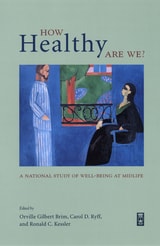
cover of How Healthy Are We?: A National Study of Well-Being at Midlife

How Healthy Are We?

A National Study of Well-Being at Midlife

Edited by Orville Gilbert Brim, Carol D. Ryff, and Ronald C. Kessler

University of Chicago Press, 2003

Childhood, adolescence, even the "twilight years" have been extensively researched and documented. But the vast terrain known as midlife—the longest segment of the life course—has remained uncharted. How physically and psychologically healthy are Americans at midlife? And why do some experience greater well-being than others?

The MacArthur Foundation addressed these questions head-on by funding a landmark study known as "Midlife in the U.S.," or MIDUS. For the first time in a single study, researchers were able to integrate epidemiological, sociological, and psychological assessments, as well as innovative new measures to evaluate how work and family life influence each other.

How Healthy Are We? presents the key findings from the survey in three sections: physical health, quality of life and psychological well-being, and the contexts (family, work) of the midlife. The topics covered by almost forty scholars in a wide variety of fields are vast, including everything from how health and well-being vary with socioeconomic standing, gender, race, or region of the country to how middle-aged people differ from younger or older adults in their emotional experience and quality of life. This health—the study measures not only health-the absence of illness—but also reports on the presence of wellness in middle-aged Americans.

The culmination of a decade and a half of research by leading scholars, How Healthy Are We? will dramatically alter the way we think about health in middle age and the factors that influence it. Researchers, policymakers, and others concerned about the quality of midlife in contemporary America will welcome its insights.

* Having a good life means having good relationships with others to almost 70% of those surveyed. Less than 40% mentioned their careers.

* Reports of disruptive daily stressors vary by age, with young adults and those in midlife experiencing more than those in later adulthood.

* Men have higher assessments of their physical and mental health than woman until the age of 60.

[more]
cover of How to Respond Better to the Next Pandemic: Remedying Institutional Failures

How to Respond Better to the Next Pandemic

Remedying Institutional Failures

Allen Buchanan, with contributions by Cécile Fabre and Sir Paul Tucker

University of Utah Press, 2024

There is no shortage of criticisms of U.S. COVID-19 policy. This book argues that officials at the highest levels lied to the public or deliberately suppressed relevant information, shamelessly over-sold the efficacy of masks and vaccines, and enacted lock-down policies of unproven value that caused massive economic, educational, and psycho-social damage.

In How to Respond Better to the Next Pandemic Allen Buchanan argues that, contrary to widespread opinion, the primary cause of flawed COVID-19 policy was not defective leadership, but rather institutional failure. Decisions were made through processes that lacked the most basic safeguards against the large-institution “yes-man” and group-think phenomena and included virtually no provisions for holding decision makers accountable. More fundamentally, policy makers did not fulfill the crucial duty to provide plausible public justifications for their decisions. They disguised the fact that scientific opinion was divided on the appropriateness of the policies they endorsed and labeled those who disagreed with them as anti-scientific. In some cases, they responded to criticism, not by engaging it on the issues, but by branding their critics as quacks.
[more]