Results by title
391 books match the query 'Public opinion' and 9 start with h

Hagia Sophia, 1850-1950
Holy Wisdom Modern MonumentRobert S. Nelson
University of Chicago Press, 2004
Built from 532 to 537 as the Cathedral of Constantinople, Hagia Sophia was little studied and seldom recognized as a great monument of world art until the nineteenth century, and Nelson examines the causes and consequences of the building's newly elevated status during that time. He chronicles the grand dome's modern history through a vibrant cast of characters—emperors, sultans, critics, poets, archaeologists, architects, philanthropists, and religious congregations—some of whom spent years studying it, others never visiting the building. But as Nelson shows, they all had a hand in the recreation of Hagia Sophia as a modern architectural icon. By many means and for its own purposes, the West has conceptually transformed Hagia Sophia into the international symbol that it is today.
While other books have covered the architectural history of the structure, this is the first study to address its status as a modern monument. With his narrative of the building's rebirth, Nelson captures its importance for the diverse communities that shape and find meaning in Hagia Sophia. His book will resonate with cultural, architectural, and art historians as well as with those seeking to acquaint themselves with the modern life of an inspired and inspiring building.
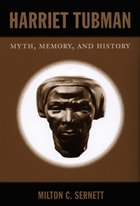
Harriet Tubman
Myth, Memory, and HistoryMilton C. Sernett
Duke University Press, 2007
Three biographies of Harriet Tubman were published within months of each other in 2003–04; they were the first book-length studies of the “Queen of the Underground Railroad” to appear in almost sixty years. Sernett examines the accuracy and reception of these three books as well as two earlier biographies first published in 1869 and 1943. He finds that the three recent studies come closer to capturing the “real” Tubman than did the earlier two. Arguing that the mythical Tubman is most clearly enshrined in stories told to and written for children, Sernett scrutinizes visual and textual representations of “Aunt Harriet” in children’s literature. He looks at how Tubman has been portrayed in film, painting, music, and theater; in her Maryland birthplace; in Auburn, New York, where she lived out her final years; and in the naming of schools, streets, and other public venues. He also investigates how the legendary Tubman was embraced and represented by different groups during her lifetime and at her death in 1913. Ultimately, Sernett contends that Harriet Tubman may be America’s most malleable and resilient icon.

Heaven Has a Wall
Religion, Borders, and the Global United StatesElizabeth Shakman Hurd
University of Chicago Press, 2025
Our national conversation about the border has taken a religious turn. When televangelists declare, “Heaven has a wall,” activists shout back, “Jesus was a refugee.” For Elizabeth Shakman Hurd, the standoff makes explicit a longstanding truth: borders are religious as well as political objects.
In this book, Hurd argues that Americans share a bipartisan border religion, complete with an array of beliefs and practices, including a reverence for national security, a liturgy for immigration, and an eschatological foreign policy. Through an analysis of the many ways the United States creates, enforces, and ignores borders at home and abroad, Hurd offers a bold new perspective on the ties that bind American religion, politics, and public life.
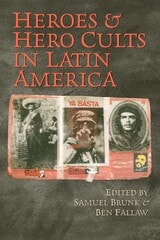
Heroes and Hero Cults in Latin America
Edited by Samuel Brunk and Ben Fallaw
University of Texas Press, 2006
Latin American history traditionally has been defined by larger-than-life heroes such as Símon Bolívar, Emiliano Zapata, and Evita Perón. Recent scholarship, however, tends to emphasize social and cultural factors rather than great leaders. In this new collection, Samuel Brunk and Ben Fallaw bring heroes back to the center of the debate, arguing that heroes not only shape history, they also "tell us a great deal about the places from which they come."
The original essays in this collection examine ten modern Latin American heroes whose charisma derived from the quality of their relationships with admirers, rather than their innate personal qualities. The rise of mass media, for instance, helped pave the way for populists such as radio actress-turned-hero Evita Perón. On the other hand, heroes who become president often watch their images crumble, as policies replace personality in the eyes of citizens. In the end, the editors argue, there is no formula for Latin American heroes, who both forge, and are forged by, unique national events. The conclusion points toward Mexico, where the peasant revolutions that elevated Miguel Hidalgo and, later, Emiliano Zapata are so revered that today's would-be heroes, such as the EZLN's Subcomandante Marcos, must link themselves to peasant mythology even when their personal roots are far from native ground. The enduring (or, in some cases, fading) influence of those discussed in this volume validates the central placement of heroes in Latin American history.
High-Profile Crimes
When Legal Cases Become Social CausesLynn S. Chancer
University of Chicago Press, 2005
An astute and incisive chronicle of some of the most polarizing cases of the 1980s and 1990s, High-Profile Crimes shows that their landmark status results from the overlapping interaction of diverse participants. The merging of legal cases and social causes, Chancer argues, has wrought ambivalent effects on both social movements and the law. On the one hand, high-profile crimes offer important opportunities for emotional expression and raise awareness of social issues. But on the other hand, social problems cannot be resolved through the either/or determinations that are the goals of the legal system, creating frustration for those who look to the outcome of these cases for social progress. Guilt or innocence through the lens of the media leads to either defeat or victory for a social cause-a confounding situation that made the O. J. Simpson case, for example, unable to resolve the issues of domestic violence and police racism that it had come to symbolize.
Based on nearly two hundred interviews, Chancer's discussions of the infamous Central Park jogger and Bensonhurst cases-as well as the rape trials of William Kennedy Smith and Mike Tyson, the assault cases of Rodney King and Reginald Denny, and, finally, the O. J. Simpson murder trial-provide a convincing, multidimensional and innovative analysis of the most charged public dramas of the last two decades.
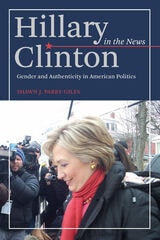
Hillary Clinton in the News
Gender and Authenticity in American PoliticsShawn J. Parry-Giles
University of Illinois Press, 2014
The charge of inauthenticity has trailed Hillary Clinton from the moment she entered the national spotlight and stood in front of television cameras. Hillary Clinton in the News: Gender and Authenticity in American Politics shows how the U.S. news media created their own news frames of Clinton's political authenticity and image-making, from her participation in Bill Clinton's 1992 presidential campaign through her own 2008 presidential bid.
Using theories of nationalism, feminism, and authenticity, Parry-Giles tracks the evolving ways the major networks and cable news programs framed Clinton's image as she assumed roles ranging from surrogate campaigner, legislative advocate, and financial investor to international emissary, scorned wife, and political candidate. This study magnifies how the coverage that preceded Clinton's entry into electoral politics was grounded in her earliest presence in the national spotlight, and in long-standing nationalistic beliefs about the boundaries of authentic womanhood and first lady comportment. Once Clinton dared to cross those gender boundaries and vie for office in her own right, the news exuded a rhetoric of sexual violence. These portrayals served as a warning to other women who dared to enter the political arena and violate the protocols of authentic womanhood.
Holocaust
An American UnderstandingLipstadt, Deborah E
Rutgers University Press, 2016
How the Workers Became Muslims
Immigration, Culture, and Hegemonic Transformation in EuropeFerruh Yilmaz
University of Michigan Press, 2016
Yilmaz’s primary case study is Danish immigration discourse, but his argument contextualizes his study in terms of questions of current concern across Europe, where right-wing groups that were long on the fringes of “legitimate” politics have managed to make significant gains with populations traditionally aligned with the Left. Specifically, Yilmaz argues that sociopolitical space has been transformed in the last three decades such that group classification has been destabilized to emphasize cultural rather than economic attributes.
According to this point-of-view, traditional European social and political splits are jettisoned for new “cultural” alliances pulling the political spectrum to the right, against the “corrosive” presence of Muslim immigrants, whose own social and political variety is flattened into an illusion of alien sameness.
Human Rights In Camera
Sharon Sliwinski
University of Chicago Press, 2011
From the fundamental rights proclaimed in the American and French declarations of independence to the 1948 Universal Declaration of Human Rights and Hannah Arendt’s furious critiques, the definition of what it means to be human has been hotly debated. But the history of human rights—and their abuses—is also a richly illustrated one. Following this picture trail, Human Rights In Camera takes an innovative approach by examining the visual images that have accompanied human rights struggles and the passionate responses people have had to them.