Results by title
53 books match the query 'Rap & Hip Hop' and 6 start with h

Hip Hop Desis
South Asian Americans, Blackness, and a Global Race ConsciousnessNitasha Tamar Sharma
Duke University Press, 2010
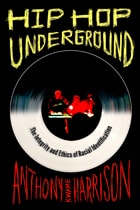
Hip Hop Underground
The Integrity and Ethics of Racial IdentificationAnthony Kwame Harrison
Temple University Press, 2009
Hip Hop Underground is a vivid ethnography of the author's observations and experiences in the multiracial world of the San Francisco underground hip hop scene. While Anthony Kwame Harrison interviewed area hip hop artists for this entertaining and informative book, he also performed as the emcee "Mad Squirrel." His immersion in the subculture provides him with unique insights into this dynamic and racially diverse but close-knit community.
Hip Hop Underground examines the changing nature of race among young Americans, and examines the issues of ethnic and racial identification, interaction, and understanding. Critiquing the notion that the Bay Area underground music scene is genuinely "colorblind," Harrison focuses on the issue of race to show how various ethnic groups engage hip hop in remarkably divergent ways—as a means to both claim subcultural legitimacy and establish their racial authenticity.

Hip-Hop Archives
The Politics and Poetics of Knowledge ProductionMark V. Campbell and Murray Forman
Intellect Books, 2025
Despite the vast popularity and cultural influence of hip-hop, efforts to archive its history are still in fairly early stages. This book focuses on the cultural and political aspects of those undertakings. It addresses practical aspects, including methods of collection, curation, preservation, and digitization, and critically analyzes institutional power, community engagement, urban economics, public access, and the ideological implications of hip-hop culture’s enduring tensions with dominant social values. A wide swath of hip-hop culture is covered by the contributors, including dance, graffiti, clothing, and battle rap.

Hip-Hop Japan
Rap and the Paths of Cultural GlobalizationIan Condry
Duke University Press, 2006
Condry attended more than 120 hip-hop performances in clubs in and around Tokyo, sat in on dozens of studio recording sessions, and interviewed rappers, music company executives, music store owners, and journalists. Situating the voices of Japanese artists in the specific nightclubs where hip-hop is performed—what musicians and fans call the genba (actual site) of the scene—he draws attention to the collaborative, improvisatory character of cultural globalization. He contends that it was the pull of grassroots connections and individual performers rather than the push of big media corporations that initially energized and popularized hip-hop in Japan. Zeebra, DJ Krush, Crazy-A, Rhymester, and a host of other artists created Japanese rap, one performance at a time.

Hip-Hop in Africa
Prophets of the City and Dustyfoot PhilosophersMsia Kibona Clark
Ohio University Press, 2018
Throughout Africa, artists use hip-hop both to describe their lives and to create shared spaces for uncensored social commentary, feminist challenges to patriarchy, and resistance against state institutions, while at the same time engaging with the global hip-hop community. In Hip-Hop in Africa, Msia Kibona Clark examines some of Africa’s biggest hip-hop scenes and shows how hip-hop helps us understand specifically African narratives of social, political, and economic realities.
Clark looks at the use of hip-hop in protest, both as a means of articulating social problems and as a tool for mobilizing listeners around those problems. She also details the spread of hip-hop culture in Africa following its emergence in the United States, assessing the impact of urbanization and demographics on the spread of hip-hop culture.
Hip-Hop in Africa is a tribute to a genre and its artists as well as a timely examination that pushes the study of music and diaspora in critical new directions. Accessibly written by one of the foremost experts on African hip-hop, this book will easily find its place in the classroom.
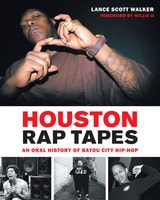
Houston Rap Tapes
An Oral History of Bayou City Hip-HopBy Lance Scott Walker, Foreword by Willie D
University of Texas Press, 2018
The neighborhoods of Fifth Ward, Fourth Ward, Third Ward, and the Southside of Houston, Texas, gave birth to Houston rap, a vibrant music scene that has produced globally recognized artists such as Geto Boys, DJ Screw, Pimp C and Bun B of UGK, Fat Pat, Big Moe, Z-Ro, Lil’ Troy, and Paul Wall. Lance Scott Walker and photographer Peter Beste spent a decade documenting Houston’s scene, interviewing and photographing the people—rappers, DJs, producers, promoters, record label owners—and places that give rap music from the Bayou City its distinctive character. Their collaboration produced the books Houston Rap and Houston Rap Tapes.
This second edition of Houston Rap Tapes amplifies the city’s hip-hop history through new interviews with Scarface, Slim Thug, Lez Moné, B L A C K I E, Lil’ Keke, and Sire Jukebox of the original Ghetto Boys. Walker groups the interviews into sections that track the different eras and movements in Houston rap, with new photographs and album art that reveal the evolution of the scene from the 1970s to today’s hip-hop generation. The interviews range from the specifics of making music to the passions, regrets, memories, and hopes that give it life. While offering a view from some of Houston’s most marginalized areas, these intimate conversations lay out universal struggles and feelings. As Willie D of Geto Boys writes in the foreword, “Houston Rap Tapes flows more like a bunch of fellows who haven’t seen each other for ages, hanging out on the block reminiscing, rather than a calculated literary guide to Houston’s history.”