Results by title
145 books match the query 'Refugees' and 5 start with h
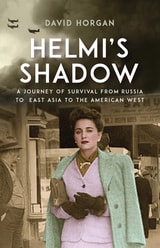
Helmi's Shadow
A Journey of Survival From Russia to East Asia to the American WestDavid Horgan
University of Nevada Press, 2021
Rachel Koskin was a middle-class Russian Jew born in Odessa, Ukraine, in 1896. Ten years later, her family fled from the murderous pogroms against Jews in the Russian Empire eastward to Harbin, a Russian-controlled city within China’s borders on the harsh plain of Manchuria. Full of lively detail and the struggles of being stateless in a time of war, the narrative follows Rachel through her life in Harbin, which became a center of Russian culture in the Far East; the birth of her daughter, Helmi, in Kobe, Japan; their life together in the slums of Shanghai and back in Japan during World War II, where they endured many more hardships; and their subsequent immigration to the United States.
This remarkable account uncovers a history of refugees living in war-torn China and Japan, a history that to this day remains largely unknown. It is also a story of survival during a long period of upheaval and war—from the Russian Revolution to the Holocaust—and an intimate portrait of an American immigrant family. David reveals both the joys and tragedies he experienced growing up in a multicultural household in post\-Second World War America with a Jewish mother, a live-in Russian grandmother, and a devout Irish Catholic American father.
As David develops a clearer awareness of the mysterious past lives of his mother and grandmother—and the impact of these events on his own understanding of the long-term effects of fear, trauma, and loss—he shows us that, even in times of peace and security, we are all shadows of our past, marked by our experiences, whether we choose to reveal them to others or not.
History on the Run
Secrecy, Fugitivity, and Hmong Refugee EpistemologiesMa Vang
Duke University Press, 2021
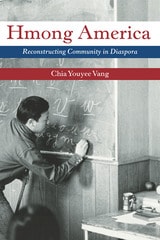
Hmong America
Reconstructing Community in DiasporaChia Youyee Vang
University of Illinois Press, 2010
Vang depicts Hmong experiences in Asia and examines aspects of community building in America to reveal how new Hmong identities have been formed and how they have challenged popular assumptions about race and ethnicity in multicultural America. Combining participant observation and archival research with personal experience, Vang constructs a nuanced and complex portrait of the more than 130,000 Hmong people who came to the United States as political refugees beginning in the mid-1970s. Her critique of previous representations of the Hmong community provides the sociological underpinnings for a bold reassessment of Hmong history in the greater context of globalization. This new understanding redefines concepts of Hmong homogeneity and characterizes ordinary Hmong migrants not as passive victims but as dynamic actors who have exercised much power over their political and social destinies.
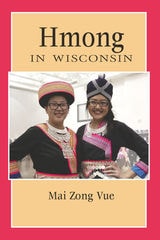
Hmong in Wisconsin
Mai Zong Vue
Wisconsin Historical Society Press, 2020
Many of these families found homes in Wisconsin, which now has the third largest Hmong population in the country, following California and Minnesota. As one of the most recent cultural groups to arrive in the Badger State, the Hmong have worked hard to establish a new life here, building support systems to preserve traditions and to help one another as they enrolled in schools, started businesses, and strived for independence.
Told with a mixture of scholarly research, interviews, and personal experience of the author, this latest addition to the popular People of Wisconsin series shares the Hmong’s varied stories of survival and hope as they have become an important part of Wisconsin communities.
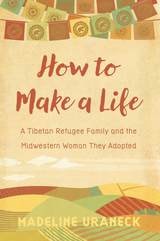
How to Make a Life
A Tibetan Refugee Family and the Midwestern Woman They AdoptedMadeline Uraneck
Wisconsin Historical Society Press, 2018
When Madeline Uraneck said hello to the Tibetan woman cleaning her office cubicle, she never imagined the moment would change her life. After learning that Tenzin Kalsang had left her husband and four children behind in a Tibetan refugee settlement in India to try to forge a better life for them, Madeline took on the task of helping her apply for US visas. When the family reunited in their new Midwestern home, Madeline became swept up in their lives, from homework and soccer games to family dinners and shared holiday traditions. By reaching out, she found more than she bargained for—a family who welcomed her as their own and taught her more than she offered them.
An evocative blend of immersion journalism and memoir, How to Make a Life shares the immigration story of a Tibetan refugee family who crossed real and cultural bridges to make a life in Madison, Wisconsin, with the assistance of the Midwestern woman they befriended. From tales of escaping Tibet over the Himalayas, to striking a balance between old traditions with new, to bridging divides one friendly gesture at a time, readers will expand their understanding of family, culture, and belonging.