Results by title
70 books match the query 'Rehabilitation' and 4 start with h

Handbook for Management of Human Service Agencies
T.F. Riggar and R.E. Matkin
Southern Illinois University Press, 1986
A basic guide for individuals responsible for developing and/or operating comprehensive or specialized human service programs.
Drawing on more than a decade of classroom experience and development and incorporating standards from the Commission on Accreditation of Rehabilitation Facilities (1985 Edition), Riggar and Matkin have created a management tool that is as practical for human service providers as it is for students. Here is the fundamental management knowledge required to establish or manage all types of human service programs and facilities.
The text is organized into 23 sections that describe tasks ranging from constructing mission statements and admission criteria to developing start-up budgets and allocating space for both direct and indirect services. Each section provides definitions and guidelines, practical examples, exercises, and selected references. While the focus is on the practices of the private not-for-profit sector, those working in a profit-oriented setting will find many of the sections and exercises to be valuable aids for developing, operating, and maintaining successful programs.
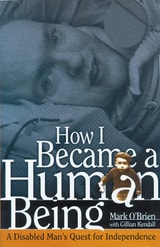
How I Became a Human Being
A Disabled Man’s Quest for IndependenceMark O’Brien, with Gillian Kendall
University of Wisconsin Press, 2003
For the first time in paperback, How I Became a Human Being is O’Brien’s account of his struggles to lead an independent life despite a lifelong disability. In 1955 he contracted polio and became permanently paralyzed from the neck down. O’Brien describes growing up without the use of his limbs, his adolescence struggling with physical rehabilitation and suffering the bureaucracy of hospitals and institutions, and his adult life as an independent student and writer. Despite his physical limitations, O’Brien crafts a narrative that is as rich and vivid as the life he led.
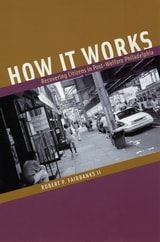
How It Works
Recovering Citizens in Post-Welfare PhiladelphiaRobert P. Fairbanks II
University of Chicago Press, 2009
Of the some sixty thousand vacant properties in Philadelphia, half of them are abandoned row houses. Taken as a whole, these derelict homes symbolize the city’s plight in the wake of industrial decline. But a closer look reveals a remarkable new phenomenon—street-level entrepreneurs repurposing hundreds of these empty houses as facilities for recovering addicts and alcoholics. How It Works is a compelling study of this recovery house movement and its place in the new urban order wrought by welfare reform.
To find out what life is like in these recovery houses, Robert P. Fairbanks II goes inside one particular home in the Kensington neighborhood. Operating without a license and unregulated by any government office, the recovery house provides food, shelter, company, and a bracing self-help philosophy to addicts in an area saturated with drugs and devastated by poverty. From this starkly vivid close-up, Fairbanks widens his lens to reveal the intricate relationships the recovery houses have forged with public welfare, the formal drug treatment sector, criminal justice institutions, and the local government.
Hunted
Predation and Pentecostalism in GuatemalaKevin Lewis O'Neill
University of Chicago Press, 2019
Hunted is based on more than ten years of fieldwork among these centers and the drug users that populate them. Over time, as Kevin Lewis O’Neill engaged both those in treatment and those who surveilled them, he grew increasingly concerned that he, too, had become a hunter, albeit one snatching up information. This thoughtful, intense book will reframe the arc of redemption we so often associate with drug rehabilitation, painting instead a seemingly endless cycle of hunt, capture, and release.