Results by title
436 books match the query 'Renaissance' and 11 start with h
Hagiography in Marguerite de Navarre’s Heptaméron
Saints and Debates in Renaissance FranceLeanna Bridge Rezvani
University of Delaware Press, 2026
Historians and Historiography in the Italian Renaissance
Eric Cochrane
University of Chicago Press, 1981
Historical Milton
Manuscript, Print, and Political Culture in Revolutionary EnglandThomas Fulton
University of Massachusetts Press, 2010

History of Old Age
From Antiquity to the RenaissanceGeorges Minois
University of Chicago Press, 1990
Minois shows how, in ancient Greece, the cult of youth and beauty on the one hand, and the reverence for the figure of the Homeric sage, on the other, created an ambivalent attitude toward the aged. This ambiguity appears again in the contrast between the active role that older citizens played in Roman politics and their depiction in satirical literature of the period. Christian literature in the Middle Ages also played a large part in defining society's perception of the old, both in the image of the revered holy sage and in the total condemnation of the aged sinner.
Drawing on literary texts throughout, Minois considers the interrelation of literary, religious, medical, and political factors in determining the social fate of the elderly and their relationship to society. This book will be of great interest to social and cultural historians, as well as to general readers interested in the subject of the aged in society today.
History of Political Ideas, Volume 4 (CW22)
Renaissance and ReformationEric Voegelin, Edited & Intro by David L. Morse & William M. Thompson
University of Missouri Press, 1998
By closely examining the sources, movements, and persons of the Renaissance and the Reformation, Voegelin reveals the roots of today's political ideologies in this fourth volume of his History of Political Ideas. This insightful study lays the groundwork for Voegelin's critique of the modern period and is essential to an understanding of his later analysis.
Voegelin identifies not one but two distinct beginnings of the movement toward modern political consciousness: the Renaissance and the Reformation. Historically, however, the powerful effects of the second have overshadowed the first. In this book, Voegelin carefully examines both periods and their presence in modern thought.
The Renaissance, represented by the works of Niccolò Machiavelli, Desiderius Erasmus, and Thomas More, is characterized by a struggle for balance. Machiavelli and Erasmus both looked to a virtuous prince to achieve order, one calling for brute force and the other for Christian spirituality to reach their goal. Also a participant in the first beginning of modernity, More was a complex thinker identified as a saint both of the church and of the communist movement. The issues he explored in Utopia, as Voegelin demonstrates, indirectly gave rise to concepts that have profoundly affected Western history: colonization, imperialism, national socialism, and communism.
Exploring the transition from the Renaissance to the Reformation is a brilliant chapter, "The People of God," which examines the sectarian movement. These pages contain the rich historical background that led to Voegelin's later conclusions about Gnosticism and its modern influences.
Voegelin offers a controversial view of the Reformation as well as the political and religious situation directly preceding it. Yet he sheds light on the strengths and inadequacies of its key figures, Martin Luther and John Calvin. The driving force behind the Reformation stemmed solely from the powerful personality of Luther. What began as an abstract, purely technical discussion developed into a full-blown revolt. Later in the period, Calvin confronted the problems left behind by Luther and endeavored to create his own universal church to supplant the Catholic Church. His theory of a new elite would have a distinct impact on history.
By examining the political ideas that first emerged during the Renaissance and Reformation, this fascinating volume provides a foundation for understanding the events of centuries to follow.
History, Medicine, and the Traditions of Renaissance Learning
Nancy G. Siraisi
University of Michigan Press, 2007
A path-breaking work at last available in paper, History, Medicine, and the Traditions of Renaissance Learning is Nancy G. Siraisi’s examination of the intersections of medically trained authors and history from 1450 to 1650. Rather than studying medicine and history as separate traditions, Siraisi calls attention to their mutual interaction in the rapidly changing world of Renaissance erudition. With remarkably detailed scholarship, Siraisi investigates doctors’ efforts to explore the legacies handed down to them from ancient medical and anatomical writings.
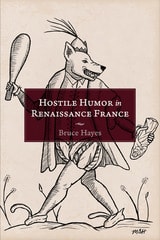
Hostile Humor in Renaissance France
Bruce Hayes
University of Delaware Press, 2020
This book is also freely available online as an open access digital edition here: https://bibliopen.org/9781644531792. The open access edition is funded by the National Endowment for the Humanities.
In sixteenth-century France, the level of jokes, irony, and ridicule found in pamphlets and plays became aggressively hostile. In Hostile Humor in Renaissance France, Bruce Hayes investigates this period leading up to the French Wars of Religion, when a deliberately harmful and destructive form of satire appeared.
This study examines both pamphlets and plays to show how this new form of humor emerged that attacked religious practices and people in ways that forever changed the nature of satire and religious debate in France. Hayes explores this phenomenon in the context of the Catholic and Protestant conflict to reveal new insights about the society that both exploited and vilified this kind of satire.
How to Do It
Guides to Good Living for Renaissance ItaliansRudolph M. Bell
University of Chicago Press, 1999
"Lively and curious reading, particularly in its cascade of anecdote, offered in a breezy, cozy, journalistic style." —Lauro Martines, Times Literary Supplement
"[Bell's] fascinating book is a window on a lost world far nearer to our own than we might imagine. . . . How pleasant to read his delightful, informative and often hilarious book." —Kate Saunders, The Independent
"An extraordinary work which blends the learned with the frankly bizarre." —The Economist
"Professor Bell has a sly sense of humor and an enviably strong stomach. . . . He wants to know how people actually behaved, not how the Church or philosophers or earnest humanists thought they should behave. I loved this book." —Christopher Stace, Daily Telegraph
Humanist Poetics
Thought, Rhetoric, and Fiction in Sixteenth-Century EnglandArthur F. Kinney
University of Massachusetts Press, 1986
By tracing classical resources and the intertextuality of major English works from More's Utopia to Lodge's Rosalynde and Nashe's Unfortunate Traveller, Kinney not only locates basic Elizabethan habits of mind but also shows where the roots of the English novel may ultimately lie.
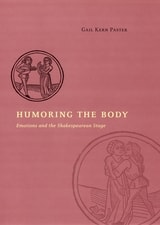
Humoring the Body
Emotions and the Shakespearean StageGail Kern Paster
University of Chicago Press, 2004
Using notions drawn from humoral medical theory to untangle passages from important moral treatises, medical texts, natural histories, and major plays of Shakespeare and his contemporaries, Paster identifies a historical phenomenology in the language of affect by reconciling the significance of the four humors as the language of embodied emotion. She urges modern readers to resist the influence of post-Cartesian abstraction and the disembodiment of human psychology lest they miss the body-mind connection that still existed for Shakespeare and his contemporaries and constrained them to think differently about how their emotions were embodied in a premodern world.
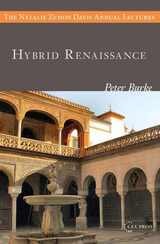
Hybrid Renaissance
Culture, Language, ArchitecturePeter Burke
Central European University Press, 2016
Hybrid Renaissance introduces the idea that the Renaissance in Italy, elsewhere in Europe, and in the world beyond Europe is an example of cultural hybridization.
The two key concepts used in this book are “hybridization” and “Renaissance”. Roughly speaking, hybridity refers to something new that emerges from the combination of diverse older elements. (The term “hybridization” is preferable to “hybridity” because it refers to a process rather than to a state, and also because it encourages the writer and the readers alike to think in terms of degree: where there is more or less, rather than presence versus absence.)
The book begins with a discussion of the concept of cultural hybridization and a cluster of other concepts related to it. Then comes a geography of cultural hybridization focusing on three locales: courts, major cities (whether ports or capitals) and frontiers. The following seven chapters describe the hybridity of the Renaissance in different fields: architecture, painting and sculpture, languages, literature, music, philosophy and law and finally religion. The essay concludes with a brief account of attempts to resist hybridization or to purify cultures or domains from what was already hybridized.