Results by title
135 books match the query 'Self-help' and 9 start with h
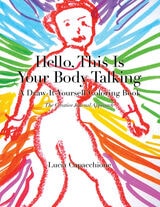
Hello, This Is Your Body Talking
A Draw-It-Yourself Coloring BookLucia Capacchione
Ohio University Press, 2017
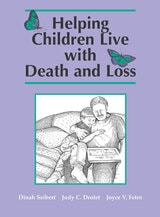
Helping Children Live With Death and Loss
Dinah Seibert, Judy C. Drolet, and Joyce V. Fetro. Illustrations by Christine I. Stetter
Southern Illinois University Press, 2003
Helping Children Live with Death and Loss is a practical guide for parents, caregivers, teachers, clergy, funeral directors, and other adults who may interact with young children between the ages of two and ten. Utilizing a developmental approach that is critical for understanding the unique characteristics and needs among children under ten, the volume is enhanced by an accessible style and format, numerous illustrations, and the positive attitude that make it possible for any reader to comprehend and apply the concepts when discussing death and loss with young children.
The scope of concepts ranges from adult self-assessment to knowledge of children’s developmental stages in learning. Building on that foundation, the book provides four basic content areas for teaching, supplies sample questions and answers, and suggests strategies for teaching general death education as well as strategies for responding to a current death or loss. The resource concludes with print and internet sources for adults and children. Helping Children Live with Death and Loss also aids adults and children in improving their communication and coping skills, which are critical for managing loss and preparing for a healthier future.
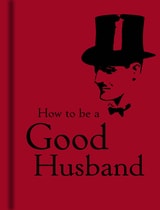
How to Be a Good Husband
Edited by the Bodleian Library
Bodleian Library Publishing, 2008
Don’t forget that very true remark that while face powder may catch a man, baking powder is the stuff to hold him.
Marriage can be a series of humorous miscommunications, a power struggle, or a diplomatic nightmare. Men and women have long struggled to figure each other out—and the misunderstandings can continue well after they’ve been joined in matrimony. But long before Men Are From Mars, Women Are From Venus, couples turned to self-help booklets such as How to Be a GoodHusband and How to Be a Good Wife, two historic advice books that are now delightfully reproduced by the Bodleian Library.
The books, originally published in the 1930s for middle-class British couples, are filled with witty and charming aphorisms on how wives and husbands should treat each other. Some advice is unquestionably outdated—“It is a wife’s duty to look her best. If you don’t tidy yourself up, don’t be surprised if your husband begins to compare you unfavorably with the typist at the office”—but many other pieces of advice are wholly applicable today. They include such insightful sayings as: “Don’t tell your wife terminological inexactitudes, which are, in plain English, lies. A woman has wonderful intuition for spotting even minor departures from the truth”; “After all is said and done, husbands are not terribly difficult to manage”; or “Don’t squeeze the tube of toothpaste from the top instead of from the bottom. This is one of the small things of life that always irritates a careful wife.”
Entertaining and charmingly illustrated, How to Be a Good Husband and How to Be a Good Wife offer enduringly useful advice for all couples, from the newly engaged to those celebrating their golden anniversary.
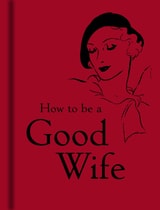
How to Be a Good Wife
Edited by the Bodleian Library
Bodleian Library Publishing, 2008
Don’t forget that very true remark that while face powder may catch a man, baking powder is the stuff to hold him.
Marriage can be a series of humorous miscommunications, a power struggle, or a diplomatic nightmare. Men and women have long struggled to figure each other out—and the misunderstandings can continue well after they’ve been joined in matrimony. But long before Men Are From Mars, Women Are From Venus, couples turned to self-help booklets such as How to Be a GoodHusband and How to Be a Good Wife, two historic advice books that are now delightfully reproduced by the Bodleian Library.
The books, originally published in the 1930s for middle-class British couples, are filled with witty and charming aphorisms on how wives and husbands should treat each other. Some advice is unquestionably outdated—“It is a wife’s duty to look her best. If you don’t tidy yourself up, don’t be surprised if your husband begins to compare you unfavorably with the typist at the office”—but many other pieces of advice are wholly applicable today. They include such insightful sayings as: “Don’t tell your wife terminological inexactitudes, which are, in plain English, lies. A woman has wonderful intuition for spotting even minor departures from the truth”; “After all is said and done, husbands are not terribly difficult to manage”; or “Don’t squeeze the tube of toothpaste from the top instead of from the bottom. This is one of the small things of life that always irritates a careful wife.”
Entertaining and charmingly illustrated, How to Be a Good Husband and How to Be a Good Wife offer enduringly useful advice for all couples, from the newly engaged to those celebrating their golden anniversary.
How to be a Good Lover
Edited by the Bodleian Library
Bodleian Library Publishing, 2012
Across the centuries, few experiences in life rival the excitement and emotional intensity of falling in love. Yet from the moment we set eyes on a special someone, the path to their heart seems strewn with devastating pitfalls. What if the object of our affection hates the way we wear our hair, finds our kisses lacking, or resents our talk of former loves?How does one go about successfully wooing a future husband or wife? Fortunately, there are time-honored strategies to avoid these pitfalls and help us attract and keep the paramour of our dreams.
How to be a Good Mother-in-Law
Edited by the Bodleian Library
Bodleian Library Publishing, 2013
Originally published in the 1930s, How to be a Good Mother-in-Law offers advice that ranges from the amusingly old-fashioned to the surprisingly still relevant today. Among the topics discussed are how not to behave on your son or daughter’s wedding day, how to visit the couple in their new home, how to interact with the grandchildren, and what degree of independence should be granted to married sons. For mothers-in-law considering living with the married couple, a chapter presents suggestions for how to negotiate this famously fraught situation. In another chapter called “Are They as Bad as They are Painted?,” the book reproduces a selection of tabloid tragedies, including the story of a mother-in-law that surprised a hapless couple by accompanying them on their honeymoon.
Whether you’re a new mother-in-law, a veteran to this much-maligned role, or a long-suffering spouse whose partner’s parent seems impossible to please—the pithy advice on-hand in How to be a Good Mother-in-Law will be warmly welcomed.
How to be a Good Parent
Compiled by Jaqueline Mitchell
Bodleian Library Publishing, 2015
The mere provision of the vegetable is not sufficient; it must be actually eaten.
If there is room enough for somersaults, the child can be satisfied.
These are just a few of the words of wisdom on offer in How to be a Good Parent, the latest in a series of delightful advice books from the Bodleian Library that also includes How to be a Good Husband and How to be a Good Wife. As developmental psychology began to show promise, beleaguered parents were drawn to the nascent discipline with the sorts of questions that will be familiar to any parent: How does one tell a toddler “no” without triggering a tantrum? Are there circumstances in which it’s acceptable to extract good behavior with bribery?
How to be a Good Parent brings together bits from the best of advice books of the 1920s and ’30s, taking readers through all the challenges involved in raising a child. Among the topics discussed are good—and bad—behavior, how to dress one’s dear son or darling daughter, mealtime, and the dreaded morning and bedtime routines. A section on taking medicine offers sage advice: “Gargling is a useful accomplishment” (while perhaps not appropriate for the dinner table). In a section on playtime, parents tasked with planning their child’s birthday will warmly welcome the book’s advice to “let the children give their own parties!”
By turns humorously old-fashioned and timeless, How to be a Good Parent is a charmingly illustrated guide to what any parent can tell you is the world's most difficult job.
Humility
The Quiet VirtueEverett L. Worthington
Templeton Press, 2007
Humility is a virtue that can be difficult to describe because of its paradoxical nature: claiming authority about humility and claiming that one is humble both suggest a lack of humility. In Humility, Everett L.Worthington Jr. seeks a way around this paradox by looking to people who are considered by others to be humble. He suggests people as examples: Jesus, Siddhartha, Gandhi, Mother Teresa, and Martin Luther King Jr. He looks, too, at people whom he admires. He examines the characteristics of humility they share, and, in doing so, formulates a working understanding of humility.
Science has made few attempts to measure humility, Worthington points out, but those few studies do give a different, but complementary, perspective on humility than the wisdom of the ages. Humility may not be a skill we can learn, but people can be inspired to be humble. "Great people—and ordinary people acting nobly—can inspire us," Worthington writes. "When we catch the spirit, we can transfer that spirit from ourselves to others." Quotations interspersed throughout the book reinforce the message that the unassuming virtue of humility transforms lives.
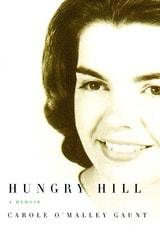
Hungry Hill
A MemoirCarole O'Malley Gaunt
University of Massachusetts Press, 2007
On a sweltering June night in 1959, Betty O'Malley died from lymphatic cancer, leaving behind an alcoholic husband and eight shell-shocked children—seven sons and one daughter, ranging in age from two to fifteen years. The daughter, Carole, was thirteen at the time. In this poignant memoir, she recalls in vivid detail the chaotic course of her family life over the next four years.
The setting for the story is Hungry Hill, an Irish-Catholic working-class neighborhood in Springfield, Massachusetts. The author recounts her sad and turbulent story with remarkable clarity, humor, and insight, punctuating the narrative with occasional fictional scenes that allow the adult Carole to comment on her teenage experiences and to probe the impact of her mother's death and her father's alcoholism.