Results by title
254 books match the query 'Sex' and 3 start with h

Hanoi Jane
War, Sex, and Fantasies of BetrayalJerry Lembcke
University of Massachusetts Press, 2010
From Aristophanes' Lysistrata to the notorious Mata Hari and the legendary Tokyo Rose, stories of female betrayal during wartime have recurred throughout human history. The myth of Hanoi Jane, Jerry Lembcke argues, is simply the latest variation on this enduring theme. Like most of the iconic femmes fatales who came before, it is based on a real person, Jane Fonda. And also like its predecessors, it combines traces of fact with heavy doses of fiction to create a potent symbol of feminine perfidy—part erotic warrior-woman Barbarella, part savvy antiwar activist, and part powerful entrepreneur.
Hanoi Jane, the book, deconstructs Hanoi Jane, the myth, to locate its origins in the need of Americans to explain defeat in Vietnam through fantasies of home-front betrayal and the emasculation of the national will-to-war. Lembcke shows that the expression “Hanoi Jane” did not reach the eyes and ears of most Americans until five or six years after the end of the war in Vietnam. By then, anxieties about America's declining global status and deteriorating economy were fueling a populist reaction that pointed to the loss of the war as the taproot of those problems. Blaming the antiwar movement for undermining the military's resolve, many found in the imaginary Hanoi Jane the personification of their stab-in-the- back theories.
Ground zero of the myth was the city of Hanoi itself, which Jane Fonda had visited as a peace activist in July 1972. Rumors surrounding Fonda's visits with U.S. POWs and radio broadcasts to troops combined to conjure allegations of treason that had cost American lives. That such tales were more imagined than real did not prevent them from insinuating themselves into public memory, where they have continued to infect American politics and culture.
Hanoi Jane is a book about the making of Hanoi Jane by those who saw a formidable threat in the Jane Fonda who supported soldiers and veterans opposed to the war they fought, in the postcolonial struggle of the Vietnamese people to make their own future, and in the movements of women everywhere for gender equality.

Heiress of All the Ages
Sex and Sentiment in the Genteel TraditionWilliam Wasserstrom
University of Minnesota Press, 1959
Heiress of All the Ages was first published in 1959. Minnesota Archive Editions uses digital technology to make long-unavailable books once again accessible, and are published unaltered from the original University of Minnesota Press editions.
In a provocative study of American literature, Professor Wasserstrom reappraises the genteel tradition and its place in social and intellectual history. He shows that our image of this tradition has been inadequate, that most of our writers and critics have failed to recognize its profound effects.
Basing his discussion primarily on a study of the major novelists of the period from 1830 to the present, the author examines the role of women in fiction and defines some of our national attitudes toward love. He discusses especially the world of Henry James (from whose phrase "heir of all the ages" the title of this book is derived), William Dean Howells, Nathaniel Hawthorne, James Fenimore Cooper, Edith Wharton, and Robert Penn Warren. He also considers such well known novelists of their day as Bret Harte, Edgar Fawcett, Robert Herrick, Henry B. Fuller, Hamlin Garland, and Gertrude Atherton. In addition, his study is based on source material of the period: diaries, recipe books, family magazines, early issues of sociology and psychology journals, and travel books.
This book will interest not only students of literature and history but also those in the general field of American civilization and sociologists and psychologists concerned with the relation of American literature to our mores.
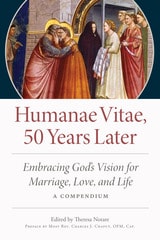
Humanae Vitae, 50 Years Later
Embracing God's Vision for Marriage, Love, and Life; A CompendiumPreface by Most. Rev. Charles J. Chaput, OFM, Cap.
Catholic University of America Press, 2019