Results by title
101 books match the query 'Social Activists' and 3 start with h
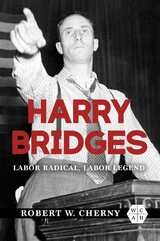
Harry Bridges
Labor Radical, Labor LegendRobert W. Cherny
University of Illinois Press, 2023
- Winner of a Silver Medal from the Independent Publisher Book Awards
- Won Honorable Mention for 2023 ILHA Book of the Year (International Labor History Association)
The iconic leader of one of America’s most powerful unions, Harry Bridges put an indelible stamp on the twentieth century labor movement. Robert Cherny’s monumental biography tells the life story of the figure who built the International Longshore and Warehouse Union (ILWU) into a labor powerhouse that still represents almost 30,000 workers.
An Australian immigrant, Bridges worked the Pacific Coast docks. His militant unionism placed him at the center of the 1934 West Coast Waterfront Strike and spurred him to expand his organizing activities to warehouse laborers and Hawaiian sugar and pineapple workers. Cherny examines the overall effectiveness of Bridges as a union leader and the decisions and traits that made him effective. Cherny also details the price paid by Bridges as the US government repeatedly prosecuted him for his left-wing politics.
Drawing on personal interviews with Bridges and years of exhaustive research, Harry Bridges places an extraordinary individual and the ILWU within the epic history of twentieth-century labor radicalism.

Here I Stand
The Life and Legacy of John BeecherAngela J. Smith
University of Alabama Press, 2017
Biography of a forgotten poet who used his name and influence to speak up for those on the margins of society.
Few surnames resonate in American history more than Beecher. The family’s abolitionist ministers, educators, and writers are central figures in the historical narrative of the United States. The Beechers’ influence was greatest in the nineteenth century, but the family story continued—albeit with less public attention—with a descendant who grew up in Birmingham, Alabama, during the early twentieth century.
John Beecher (1904–1980) never had the public prominence of his famous ancestors, but as a poet, professor, sociologist, New Deal administrator, journalist, and civil rights activist, he spent his life fighting for the voiceless and oppressed with a distinct moral sensibility that reflected his self-identification as the twentieth-century torchbearer for his famous family. While John Beecher had many vocations in his lifetime, he always considered himself a poet and a teacher. Some critics have compared the populist elements of Beecher’s poetry to the work of Walt Whitman and Carl Sandburg, but his writing never gained a broad audience or critical acclaim during his lifetime.
In Here I Stand: The Life and Legacy of John Beecher, Angela J. Smith examines Beecher’s writing and activism and places them in the broader context of American culture at pivotal points in the twentieth century. Employing his extensive letters, articles, unpublished poetry and prose, and audio interviews in addition to his numerous published books, Smith uncovers a record of public concerns in American history ranging from the plight of workers in 1920s steel mills to sharecroppers’ struggles during the Depression to the civil rights movement of the 1960s.
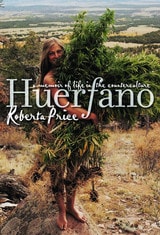
Huerfano
A Memoir of Life in the CountercultureRoberta M. Price
University of Massachusetts Press, 2004
In the late 1960s, new age communes began springing up in the American Southwest with names like Drop City, New Buffalo, Lama Foundation, Morning Star, Reality Construction Company, and the Hog Farm. In the summer of 1969, Roberta Price, a recent college graduate, secured a grant to visit these communities and photograph them. When she and her lover David arrived at Libre in the Huerfano Valley of southern Colorado, they were so taken with what they found that they wanted to participate instead of observe. The following spring they married, dropped out of graduate school in upstate New York, packed their belongings into a 1947 Chrysler Windsor Coupe, and moved to Libre, leaving family and academia behind.
Huerfano is Price's captivating memoir of the seven years she spent in the Huerfano ("Orphan") Valley when it was a petri dish of countercultural experiments. She and David joined with fellow baby boomers in learning to mix cement, strip logs, weave rugs, tan leather, grow marijuana, build houses, fix cars, give birth, and make cheese, beer, and furniture as well as poetry, art, music, and love. They built a house around a boulder high on a ridge overlooking the valley and made ends meet by growing their own food, selling homemade goods, and hiring themselves out as day laborers. Over time their collective ranks swelled to more than three hundred, only to diminish again as, for many participants, the dream of a life of unbridled possibility gradually yielded to the hard realities of a life of voluntary poverty.
Price tells her story with a clear, distinctive voice, documenting her experiences with photos as well as words. Placing her story in the larger context of the times, she describes her participation in the antiwar movement, the advent of the women's movement, and her encounters with such icons as Ken Kesey, Gary Snyder, Abbie Hoffman, Stewart Brand, Allen Ginsberg, and Baba Ram Dass.
At once comic, poignant, and above all honest, Huerfano recaptures the sense of affirmation and experimentation that fueled the counterculture without lapsing into nostalgic sentimentality on the one hand or cynicism on the other.