Results by title
322 books match the query 'Social Policy' and 12 start with h

Handbook of Medical Sociology, Sixth Edition
Chloe E. Bird
Vanderbilt University Press, 2010
• social networks, neighborhoods, and social capital
• disability
• dying and "the right to die"
• health disparities
• the growing influence of the pharmaceutical industry
• the Internet
• evidence-based medicine and quality of care
• health social movements
• genetics
• religion, spirituality, and health

Health, Hygiene and Eugenics in Southeastern Europe to 1945
Christian Promitzer
Central European University Press, 2011
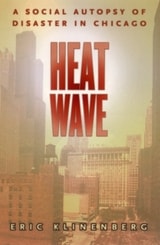
Heat Wave
A Social Autopsy of Disaster in ChicagoEric Klinenberg
University of Chicago Press, 2002
Heat waves in the United States kill more people during a typical year than all other natural disasters combined. Until now, no one could explain either the overwhelming number or the heartbreaking manner of the deaths resulting from the 1995 Chicago heat wave. Meteorologists and medical scientists have been unable to account for the scale of the trauma, and political officials have puzzled over the sources of the city's vulnerability. In Heat Wave, Eric Klinenberg takes us inside the anatomy of the metropolis to conduct what he calls a "social autopsy," examining the social, political, and institutional organs of the city that made this urban disaster so much worse than it ought to have been.
Starting with the question of why so many people died at home alone, Klinenberg investigates why some neighborhoods experienced greater mortality than others, how the city government responded to the crisis, and how journalists, scientists, and public officials reported on and explained these events. Through a combination of years of fieldwork, extensive interviews, and archival research, Klinenberg uncovers how a number of surprising and unsettling forms of social breakdown—including the literal and social isolation of seniors, the institutional abandonment of poor neighborhoods, and the retrenchment of public assistance programs—contributed to the high fatality rates. The human catastrophe, he argues, cannot simply be blamed on the failures of any particular individuals or organizations. For when hundreds of people die behind locked doors and sealed windows, out of contact with friends, family, community groups, and public agencies, everyone is implicated in their demise.
As Klinenberg demonstrates in this incisive and gripping account of the contemporary urban condition, the widening cracks in the social foundations of American cities that the 1995 Chicago heat wave made visible have by no means subsided as the temperatures returned to normal. The forces that affected Chicago so disastrously remain in play in America's cities, and we ignore them at our peril.
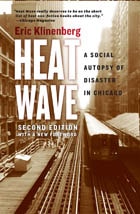
Heat Wave
A Social Autopsy of Disaster in ChicagoEric Klinenberg
University of Chicago Press, 2015
On Thursday, July 13, 1995, Chicagoans awoke to a blistering day in which the temperature would reach 106 degrees. The heat index, which measures how the temperature actually feels on the body, would hit 126 degrees by the time the day was over. Meteorologists had been warning residents about a two-day heat wave, but these temperatures did not end that soon. When the heat wave broke a week later, city streets had buckled; the records for electrical use were shattered; and power grids had failed, leaving residents without electricity for up to two days. And by July 20, over seven hundred people had perished-more than twice the number that died in the Chicago Fire of 1871, twenty times the number of those struck by Hurricane Andrew in 1992—in the great Chicago heat wave, one of the deadliest in American history.
Heat waves in the United States kill more people during a typical year than all other natural disasters combined. Until now, no one could explain either the overwhelming number or the heartbreaking manner of the deaths resulting from the 1995 Chicago heat wave. Meteorologists and medical scientists have been unable to account for the scale of the trauma, and political officials have puzzled over the sources of the city's vulnerability. In Heat Wave, Eric Klinenberg takes us inside the anatomy of the metropolis to conduct what he calls a "social autopsy," examining the social, political, and institutional organs of the city that made this urban disaster so much worse than it ought to have been.
Starting with the question of why so many people died at home alone, Klinenberg investigates why some neighborhoods experienced greater mortality than others, how the city government responded to the crisis, and how journalists, scientists, and public officials reported on and explained these events. Through a combination of years of fieldwork, extensive interviews, and archival research, Klinenberg uncovers how a number of surprising and unsettling forms of social breakdown—including the literal and social isolation of seniors, the institutional abandonment of poor neighborhoods, and the retrenchment of public assistance programs—contributed to the high fatality rates. The human catastrophe, he argues, cannot simply be blamed on the failures of any particular individuals or organizations. For when hundreds of people die behind locked doors and sealed windows, out of contact with friends, family, community groups, and public agencies, everyone is implicated in their demise.
As Klinenberg demonstrates in this incisive and gripping account of the contemporary urban condition, the widening cracks in the social foundations of American cities that the 1995 Chicago heat wave made visible have by no means subsided as the temperatures returned to normal. The forces that affected Chicago so disastrously remain in play in America's cities, and we ignore them at our peril.
For the Second Edition Klinenberg has added a new Preface showing how climate change has made extreme weather events in urban centers a major challenge for cities and nations across our planet, one that will require commitment to climate-proofing changes to infrastructure rather than just relief responses.

Higher Education and the American Dream
Success and Its DiscontentsMarvin Lazerson
Central European University Press, 2007
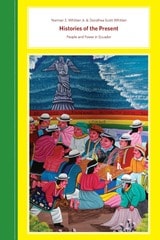
Histories of the Present
People and Power in EcuadorNorman E. Whitten Jr. and Dorothea Scott Whitten
University of Illinois Press, 2011
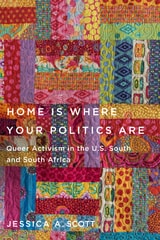
Home Is Where Your Politics Are
Queer Activism in the U.S. South and South AfricaJessica A. Scott
Rutgers University Press, 2024

Home Safe Home
Housing Solutions for Survivors of Intimate Partner ViolenceBotein, Hilary
Rutgers University Press, 2016

How COVID-19 Took Over the World
Lessons for the FutureEdited by Christine Loh
Hong Kong University Press, 2023
The pandemic left disorder and crises in its wake everywhere it struck. Drawing on disciplines including public health, politics, and socioeconomics, this book tracks the spread of COVID-19 to weave a coherent picture that explains how scientists learned about the virus, how authorities reacted around the world, and how different societies coped.
Written by a leading team of public health, policy, and economics experts, How COVID-19 Took Over the World provides an in-depth analysis of various countries’ responses to the pandemic, as well as suggestions to increase the capability to fight future pandemics. The first part of the book provides an overview of global governance and international cooperation, the economic and social consequences of the outbreak, and breakthroughs in mathematical modeling and COVID-19 vaccines. The second part of the book examines and compares specific countries and regions through the lens of good governance, social contract, and political trust.
How COVID-19 Took Over the World is essential for anyone seeking to learn from the impact of COVID-19, particularly professionals and policymakers, as well as those with a general interest in governance and pandemics.
How Many Is Too Many?
The Progressive Argument for Reducing Immigration into the United StatesPhilip Cafaro
University of Chicago Press, 2015
Cafaro roots his argument in human rights, equality, economic security, and environmental sustainability—hallmark progressive values. He shows us the undeniable realities of mass migration to which we have turned a blind eye: how flooded labor markets in sectors such as meatpacking and construction have driven down workers’ wages and driven up inequality; how excessive immigration has fostered unsafe working conditions and political disempowerment; how it has stalled our economic maturity by keeping us ever-focused on increasing consumption and growth; and how it has caused our cities and suburbs to sprawl far and wide, destroying natural habitats, driving other species from the landscape, and cutting us off from nature.
In response to these hard-hitting truths, Cafaro lays out a comprehensive plan for immigration reform that is squarely in line with progressive political goals. He suggests that we shift enforcement efforts away from border control and toward the employers who knowingly hire illegal workers. He proposes aid and foreign policies that will help people create better lives where they are. And indeed he supports amnesty for those who have, at tremendous risk, already built their lives here. Above all, Cafaro attacks our obsession with endless material growth, offering in its place a mature vision of America, not brimming but balanced, where all the different people who constitute this great nation of immigrants can live sustainably and well, sheltered by a prudence currently in short supply in American politics.
How The Rural Poor Got Power
Narrative Of A Grass-Roots OrganizerPaul Wellstone
University of Minnesota Press, 2003
The gripping story behind Paul Wellstone’s progressive legacy
Before he was a senator, before he was a nationally known advocate for the disenfranchised and a tireless supporter of public policies to alleviate poverty, Paul Wellstone devoted his time and legendary energy to grassroots organizing. How the Rural Poor Got Power describes Wellstone’s experiences as a political activist in rural Minnesota. Working with senior citizens, struggling farmers, and single mothers, Wellstone created a coalition to address transportation, access to health care, and welfare benefits issues. This narrative features interviews with citizens and shows Wellstone observing and participating in the ideals to which he devoted his life: helping poor people gain a political voice.

Human Capital versus Basic Income
Ideology and Models for Anti-Poverty Programs in Latin AmericaFabián A. Borges
University of Michigan Press, 2022
There were two distinct models of CCTs: a “human capital” model based on means-tested targeting and strict enforcement of program conditions, exemplified by the program launched by Mexico’s right, and a more universalistic “basic income” model with more permissive enforcement of conditionality, exemplified by Brazil’s program under Lula. These two models then spread across the region. Whereas right and center governments, with assistance from international financial institutions, enacted CCTs based on the human capital model, the left, with assistance from Brazil, enacted CCTs based on the basic income model.
The existence of two distinct types of CCTs and their relation to ideology is supported by quantitative analyses covering the entire region and in-depth case studies based on field research in three countries. Left-wing governments operate CCTs that cover more people and spend more on those programs than their center or right-wing counterparts. Beyond coverage, a subsequent analysis of the 10 national programs adopted after Lula’s embrace of CCTs confirms that program design—evaluated in terms of scope of the target population, strictness of conditionality enforcement, and stipend structure—is shaped by government ideology. This finding is then fleshed out through case studies of the political processes that culminated in the adoption of basic income CCTs by left-wing governments in Argentina and Bolivia and a human capital CCT by a centrist president in Costa Rica.