Results by title
107 books match the query 'Socialism' and 3 start with h
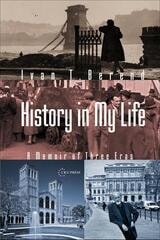
History in My Life
A Memoir of Three ErasIvan T. Berend is Distinguished Research Professor at the History Department of the University of California Los Angeles.
Central European University Press, 2009
Ivan T. Berend is Distinguished Professor at the University of California Los Angeles, Director of the European Studies Program. He was one of the masterminds of regime change in Hungary. He made a career in Hungary as a university professor, Rector of the University of Economics (1973–79), and President of the Hungarian Academy of Sciences (1985–90). He was President of the International Committee of Historical Sciences (1995–2000), and Vice-President of the International Economic History Association (1986–1994). His research interests are the complex economic, social, ideological, and cultural history of Central and Eastern Europe in the 19th–20th century; economic modernization; problems of European backwardness; transition from state socialism to capitalism. He published and 26 books and more than 120 studies.
Before he became a professor at UCLA, Ivan Berend had survived five regime changes and two revolutions in Hungary, had been in prison and German concentration camp in 1944–45.
His memoir offers an interesting case study, a subjective addition to the “objective” historical works on Central and Eastern European state socialism. It describes the hard choices of intellectuals in a dictatorial state: 1. remain in isolation, concentrate on scholarly works, and exclude politics in your personal life; 2. be in opposition, criticize and unveil the regime, accept discrimination and exclusion; 3. remain within the establishment and work for reforming the country using legal possibilities to criticize the regime and to achieve changes from within.
Berend’s book raises basic historical questions and debates, compares East European and American higher education systems, and presents an eyewitness’ insights on life in the United States.
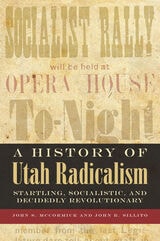
History of Utah Radicalism
Startling, Socialistic, and Decidedly RevolutionaryJohn S. McCormick and John R. Sillito
Utah State University Press, 2023
Utah, now one of the most conservative states, has a long tradition of left-wing radicalism. Early Mormon settlers set a precedent with the United Order and other experiments with a socialistic economy. The tradition continued into the more recent past with New Left, anti-apartheid, and other radicals. Throughout, Utah radicalism usually reflected national and international developments. Recounting its long history, McCormick and Sillito focus especially on the Socialist Party of America, which reached a peak of political influence in the first two decades of the twentieth century—in Utah and across the nation.
At least 115 Socialists in over two dozen Utah towns and cities were elected to office in that period, and on seven occasions they controlled governments of five different municipalities. This is a little-known story worth a closer look. Histories of Socialism in the United States have tended to forsake attention to specific, local cases and situations in favor of broader overviews of the movement. By looking closely at Utah's experience, this book helps unravel how American Socialism briefly flowered before rapidly withering in the early twentieth century. It also broadens the conventional understanding of Utah history.
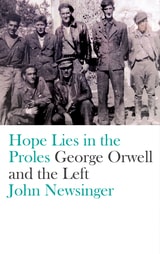
Hope Lies in the Proles
George Orwell and the LeftJohn Newsinger
Pluto Press, 2018