Results by title
87 books match the query 'Sound' and 3 start with h
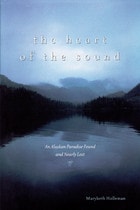
Heart Of The Sound
Marybeth Holleman
University of Utah Press, 2004
"You can’t step in the same river twice—although I once believed I could. I believed that the pieces of my life I had chosen, those I held close to my heart, would, once chosen and held, remain the same."—from the book
How does one recover from disaster? That question is at the heart of Marybeth Holleman’s lyrical, elegiac response to the repercussions of the Exxon Valdez oil spill that devastated Alaska’s Prince William Sound in 1989. Twining together the destruction of an ecosystem and the disintegration of her marriage, Holleman explores the resiliency of nature—both wild and human—and the ways in which that resiliency is tested. Like the oil that remains pooled beneath rocks years after the tanker spill, the emotional wounds of the past lie just below the surface. Recovery and restoration from the pain wrought by human hands does not come easily.
If much of nature writing is about the heart’s search for an unspoiled, perfect landscape, The Heart of the Sound is about what happens when the return-to-paradise fantasy is over and paradise is lost. In language rich with passion and hard-won insight, Holleman creates a captivating picture of a woman who found her Eden in the sweeping fjords of Alaska only to lose it to ecological tragedy. But somewhere within that loss, she finds herself.
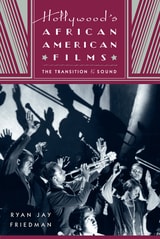
Hollywood's African American Films
The Transition to SoundRyan Friedman
Rutgers University Press, 2011
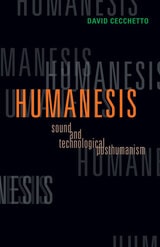
Humanesis
Sound and Technological PosthumanismDavid Cecchetto
University of Minnesota Press, 2013
Humanesis critically examines central strains of posthumanism, searching out biases in the ways that human–technology coupling is explained. Specifically, it interrogates three approaches taken by posthumanist discourse: scientific, humanist, and organismic. David Cecchetto’s investigations reveal how each perspective continues to hold on to elements of the humanist tradition that it is ostensibly mobilized against. His study frontally desublimates the previously unseen presumptions that underlie each of the three thought lines and offers incisive appraisals of the work of three prominent thinkers: Ollivier Dyens, Katherine Hayles, and Mark Hansen.
To materially ground the problematic of posthumanism, Humanesis interweaves its theoretical chapters with discussions of artworks. These highlight the topos of sound, demonstrating how aurality might produce new insights in a field that has been dominated by visualization. Cecchetto, a media artist, scrutinizes his own collaborative artistic practice in which he elucidates the variegated causal chains that compose human–technological coupling.
Humanesis advances the posthumanist conversation in several important ways. It proposes the term “technological posthumanism” to focus on the discourse as it relates to technology without neglecting its other disciplinary histories. It suggests that deconstruction remains relevant to the enterprise, especially with respect to the performative dimension of language. It analyzes artworks not yet considered in the light of posthumanism, with a particular emphasis on the role of aurality. And the form of the text introduces a reflexive component that exemplifies how the dialogue of posthumanism might progress without resorting to the types of unilateral narratives that the book critiques.