Results by title
661 books match the query 'South America' and 15 start with h

Hans Staden's True History
An Account of Cannibal Captivity in BrazilHans Staden
Duke University Press, 2008
Staden’s narrative is a foundational text in the history and European “discovery” of Brazil, the earliest European account of the Tupi Indians, and a touchstone in the debates on cannibalism. Yet the last English-language edition of Staden’s True History was published in 1929. This new critical edition features a new translation from the sixteenth-century German along with annotations and an extensive introduction. It restores to the text the fifty-six woodcut illustrations of Staden’s adventures and final escape that appeared in the original 1557 edition.
In the introduction, Neil L. Whitehead discusses the circumstances surrounding the production of Staden’s narrative and its ethnological significance, paying particular attention to contemporary debates about cannibalism. Whitehead illuminates the value of Staden’s True History as an eyewitness account of Tupi society on the eve before its collapse, of ritual war and sacrifice among Native peoples, and of colonial rivalries in the region of Rio de Janeiro. He chronicles the history of the various editions of Staden’s narrative and their reception from 1557 until the present. Staden’s work continues to engage a wide range of readers, not least within Brazil, where it has recently been the subject of two films and a graphic novel.
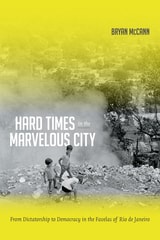
Hard Times in the Marvelous City
From Dictatorship to Democracy in the Favelas of Rio de JaneiroBryan McCann
Duke University Press, 2013
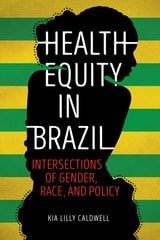
Health Equity in Brazil
Intersections of Gender, Race, and PolicyKia Lilly Caldwell
University of Illinois Press, 2017

Health in Ruins
The Capitalist Destruction of Medical Care at a Colombian Maternity HospitalCésar Ernesto Abadía-Barrero
Duke University Press, 2022

Hiding in Plain Sight
Black Women, the Law, and the Making of a White Argentine RepublicErika Denise Edwards
University of Alabama Press, 2020
WINNER OF THE ASSOCIATION OF BLACK WOMEN HISTORIANS 2020 LETITIA WOODS-BROWN AWARD FOR THE BEST BOOK IN AFRICAN AMERICAN WOMEN'S HISTORY
WINNER OF THE WESTERN ASSOCIATION OF WOMEN HISTORIAN'S BARBARA “PENNY” KANNER AWARD
2021 FINALIST FOR THE HARRIET TUBMAN BOOK PRIZE
2020 FINALIST BERSHIRE CONFERENCE OF WOMEN HISTORIANS BOOK PRIZE
Uncovering the Afro-Argentine women behind the myth of a white nation.
Argentina promotes itself as a country of European immigrants. This makes it an exception to other Latin American countries, which embrace a more mixed—African, Indian, European—heritage. Hiding in Plain Sight: Black Women, the Law, and the Making of a White Argentine Republic traces the origins of what some white Argentines mischaracterize as a “black disappearance” by delving into the intimate lives of black women and explaining how they contributed to the making of a “white” Argentina. Erika Denise Edwards has produced the first comprehensive study in English of the history of African descendants outside of Buenos Aires in the late colonial and early republican periods, with a focus on how these women sought whiteness to better their lives and that of their children.
Edwards argues that attempts by black women to escape the stigma of blackness by recategorizing themselves and their descendants as white began as early as the late eighteenth century, challenging scholars who assert that the black population drastically declined at the end of the nineteenth century because of the whitening or modernization process. She further contends that in Córdoba, Argentina, women of African descent (such as wives, mothers, daughters, and concubines) were instrumental in shaping their own racial reclassifications and destinies.
This volume makes use of a wealth of sources to relate these women’s choices. The sources consulted include city censuses and notarial and probate records that deal with free and enslaved African descendants; criminal, ecclesiastical, and civil court cases; marriages and baptisms records and newsletters. These varied sources provide information about the day-to-day activities of cordobés society and how women of African descent lived, formed relationships, thrived, and partook in the transformation of racial identities in Argentina.
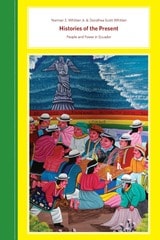
Histories of the Present
People and Power in EcuadorNorman E. Whitten Jr. and Dorothea Scott Whitten
University of Illinois Press, 2011
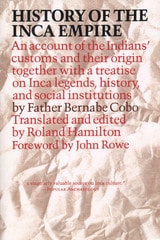
History of the Inca Empire
An Account of the Indians' Customs and Their Origin, Together with a Treatise on Inca Legends, History, and Social InstitutionsBy Bernabe Cobo
University of Texas Press, 1979
The Historia del Nuevo Mundo, set down by Father Bernabe Cobo during the first half of the seventeenth century, represents a singulary valuable source on Inca culture. Working directly frorn the original document, Roland Hamilton has translated that part of Cobo's massive manuscripts that focuses on the history of the kingdom of Peru. The volume includes a general account of the aspect, character, and dress of the Indians as well as a superb treatise on the Incas—their legends, history, and social institutions.
Hotel Trópico
Brazil and the Challenge of African Decolonization, 1950–1980Jerry Dávila
Duke University Press, 2010
House and Street
The Domestic World of Servants and Masters in Nineteenth-Century Rio de JaneiroBy Sandra Lauderdale Graham
University of Texas Press, 1992
During the later half of the nineteenth century, a majority of Brazilian women worked, most as domestic servants, either slave or free. House and Street re-creates the working and personal lives of these women, drawing on a wealth of documentation from archival, court, and church records.
Lauderdale Graham traces the intricate and ambivalent relations that existed between masters and servants. She shows how for servants the house could be a place of protection—as well as oppression—while the street could be dangerous—but also more autonomous. She integrates her discoveries with larger events taking place in Rio de Janeiro during the period, including the epidemics of the 1850s, the abolition of slavery, the demolition of slums, and major improvements in sanitation during the first decade of the 1900s.
How Difficult It Is to Be God
Shining Path’s Politics of War in Peru, 1980–1999Carlos Iván Degregori; Edited and with an introduction by Steve J. Stern; Translated by Nancy Appelbaum, Joanna Drzewieniecki, Héctor Flores, Eric Hershberg, Judy Rein, Steve J. Stern, and Kimberly Theidon
University of Wisconsin Press, 2012
In How Difficult It Is to Be God, Carlos Iván Degregori—the world’s leading expert on Shining Path and the intellectual architect for Peru’s highly regarded Truth and Reconciliation Commission—elucidates the movement’s dynamics. An anthropologist who witnessed Shining Path’s recruitment of militants in the 1970s, Degregori grounds his findings in deep research and fieldwork. He explains not only the ideology and culture of revolution among the insurgents, but also their capacity to extend their influence to university youths, Indian communities, and competing social and political movements.
Making Degregori’s most important work available to English-language readers for the first time, this translation includes a new introduction by historian Steve J. Stern, who analyzes the author’s achievement, why it matters, and the debates it sparked. For anyone interested in Peru and Latin America’s age of “dirty war,” or in the comparative study of revolutions, Maoism, and human rights, this book will provide arresting new insights.
How the Military Remembers
Human Rights and Countermemories in Latin AmericaEdited by Cynthia E. Milton and Michael J. Lazzara
University of Wisconsin Press, 2025
With attention to the distinct cultural, political, and historical contexts across Latin America, the essays reveal how military figures and institutions appropriate mechanisms of truth-telling and accountability to reframe the past, blur the lines between perpetrator and victim, and weaponize memory itself.
Contributors: Mariana Achugar, Gabriela Fried Amilivia, Rebecca Atencio, Jo-Marie Burt, Rachel Hatcher, Nicolás Rodríguez Idárraga, Michael J. Lazzara, Cynthia E. Milton, Carla Granados Moya, María Emma Wills Obregón, Leith Passmore, Valentina Salvi, Gladys Vásquez Zevallos

How to Read Donald Duck
Imperialist Ideology in the Disney ComicAriel Dorfman
Pluto Press, 2020
First published in 1971, How to Read Donald Duck shocked readers by revealing how capitalist ideology operates in our most beloved cartoons. Having survived bonfires, impounding and being dumped into the ocean by the Chilean army, this controversial book is once again back on our shelves.
Written and published during the blossoming of Salvador Allende's revolutionary socialism in Chile, the book examines how Disney products reflect capitalist ideology, and are active agents working in this ideology’s favor. Focusing on the hapless mice and ducks of Disney, curiously parentless, marginalized and always short of cash, Ariel Dorfman and Armand Mattelart expose how these characters established hegemonic ideas about capital, race, gender and the relationship between developed countries and the Third World.
A devastating indictment of a media giant, a document of twentieth-century political upheaval, and a reminder of the dark undercurrent of pop culture, How to Read Donald Duck is once again available, together with a new introduction by Ariel Dorfman in which he writes.
"It is that joy in liberation, that alegria, that spirit of resistance, that I wish to share with America, as the book that Pinochet’s soldiers could not liquidate or Disney’s lawyers stop from entering the United States finally finds its way to its new home, deep into the land that invented Donald Duck and Donald Trump. Is the same country that gave me such a warm welcome as a child, and perhaps may now equally greet with open arms this critique of oppression and it certainty that we don’t have to leave the world as it was when we first encountered it."
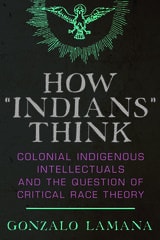
How “Indians” Think
Colonial Indigenous Intellectuals and the Question of Critical Race TheoryGonzalo Lamana
University of Arizona Press, 2019
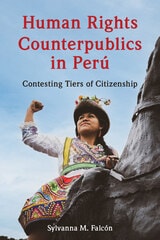
Human Rights Counterpublics in Perú
Sylvanna M. Falcón
University of Illinois Press, 2024
Engaging and intimate, Human Rights Counterpublics in Perú illuminates the power of human rights and memory work.
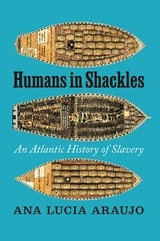
Humans in Shackles
An Atlantic History of SlaveryAna Lucia Araujo
University of Chicago Press, 2024
During the era of the Atlantic slave trade, more than twelve million enslaved Africans were forcibly transported to the Americas in cramped, inhumane conditions. Many of them died on the way, and those who survived had to endure further suffering in the violent conditions that met them onshore. Covering more than three hundred years, Humans in Shackles grapples with this history by foregrounding the lived experience of enslaved people in tracing the long, complex history of slavery in the Americas.
Based on twenty years of research, this book not only serves as a comprehensive history; it also expands that history by providing a truly transnational account that emphasizes the central role of Brazil in the Atlantic slave trade. Additionally, it is deeply informed by African history and shows how African practices and traditions survived and persisted in the Americas among communities of enslaved people. Drawing on primary sources including travel accounts, pamphlets, newspaper articles, slave narratives, and visual sources such as artworks and artifacts, Araujo illuminates the social, cultural, and religious lives of enslaved people working in plantations and urban areas, building families and cultivating affective ties, congregating and re-creating their cultures, and organizing rebellions.
Humans in Shackles puts the lived experiences of enslaved peoples at the center of the story and investigates the heavy impact these atrocities have had on the current wealth disparity of the Americas and rampant anti-Black racism.