Results by title
323 books match the query 'Southeast Asia' and 6 start with h
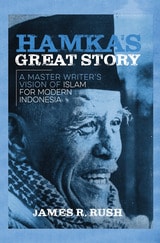
Hamka’s Great Story
A Master Writer’s Vision of Islam for Modern IndonesiaJames R. Rush
University of Wisconsin Press, 2016
Hamka’s Great Story presents Indonesia through the eyes of an impassioned, popular thinker who believed that Indonesians and Muslims everywhere should embrace the thrilling promises of modern life, and navigate its dangers, with Islam as their compass.
Hamka (Haji Abdul Malik Karim Amrullah) was born when Indonesia was still a Dutch colony and came of age as the nation itself was emerging through tumultuous periods of Japanese occupation, revolution, and early independence. He became a prominent author and controversial public figure. In his lifetime of prodigious writing, Hamka advanced Islam as a liberating, enlightened, and hopeful body of beliefs around which the new nation could form and prosper. He embraced science, human agency, social justice, and democracy, arguing that these modern concepts comported with Islam’s true teachings. Hamka unfolded this big idea—his Great Story—decade by decade in a vast outpouring of writing that included novels and poems and chatty newspaper columns, biographies, memoirs, and histories, and lengthy studies of theology including a thirty-volume commentary on the Holy Qur’an. In introducing this influential figure and his ideas to a wider audience, this sweeping biography also illustrates a profound global process: how public debates about religion are shaping national societies in the postcolonial world.
Hamka (Haji Abdul Malik Karim Amrullah) was born when Indonesia was still a Dutch colony and came of age as the nation itself was emerging through tumultuous periods of Japanese occupation, revolution, and early independence. He became a prominent author and controversial public figure. In his lifetime of prodigious writing, Hamka advanced Islam as a liberating, enlightened, and hopeful body of beliefs around which the new nation could form and prosper. He embraced science, human agency, social justice, and democracy, arguing that these modern concepts comported with Islam’s true teachings. Hamka unfolded this big idea—his Great Story—decade by decade in a vast outpouring of writing that included novels and poems and chatty newspaper columns, biographies, memoirs, and histories, and lengthy studies of theology including a thirty-volume commentary on the Holy Qur’an. In introducing this influential figure and his ideas to a wider audience, this sweeping biography also illustrates a profound global process: how public debates about religion are shaping national societies in the postcolonial world.
[more]

Heartwood
The First Generation of Theravada Buddhism in AmericaWendy Cadge
University of Chicago Press, 2004
Theravada is one of the three main branches of Buddhism. In Asia it is practiced widely in Thailand, Laos, Burma, Sri Lanka, and Cambodia. This fascinating ethnography opens a window onto two communities of Theravada Buddhists in contemporary America: one outside Philadelphia that is composed largely of Thai immigrants and one outside Boston that consists mainly of white converts.
Wendy Cadge first provides a historical overview of Theravada Buddhism and considers its specific origins here in the United States. She then brings her findings to bear on issues of personal identity, immigration, cultural assimilation, and the nature of religion in everyday life. Her work is the first systematic comparison of the ways in which immigrant and convert Buddhists understand, practice, and adapt the Buddhist tradition in America. The men and women whom Cadge meets and observes speak directly to us in this work, both in their personal testimonials and as they meditate, pray, and practice Buddhism.
Creative and insightful, Heartwood will be of enormous value to sociologists of religion and anyone wishing to understand the rise of Buddhism in the Western world.
[more]

History of the Malay Kingdom of Patani
Mis Sea#68Ibrahim Syukri
Ohio University Press, 1985
This translation of Ibrahim Syukri’s Sejarah Kerajaan Melayu Patani (SKMP) makes available a little known but important manuscript published privately ca. 1950 and printed in jawi (Malay written in a modified Arabic script). Shortly after its publication, the book was banned in both Thailand and Malaysia. It appears that a few copies of the original printing survived.
The SKMP represents a valuable contribution to the limited literature available on the Malay population of present-day southern Thailand. While the account of Patani’s history is based on a distinctively Malay interpretation of the record, the SKMP is more important as a political statement of the strong sense of ethnic identity shared by Patani’s Malay population. The SKMP will be of particular interest to those seeking to understand the persistence of conflict in southern Thailand.
The SKMP represents a valuable contribution to the limited literature available on the Malay population of present-day southern Thailand. While the account of Patani’s history is based on a distinctively Malay interpretation of the record, the SKMP is more important as a political statement of the strong sense of ethnic identity shared by Patani’s Malay population. The SKMP will be of particular interest to those seeking to understand the persistence of conflict in southern Thailand.
[more]
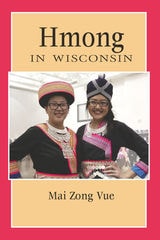
Hmong in Wisconsin
Mai Zong Vue
Wisconsin Historical Society Press, 2020
Unknown to many Americans at the time, the Hmong helped the US government fight Communists in Laos during the Secret War of the 1960s and 1970s, a parallel conflict to the Vietnam War. When Saigon fell and allies withdrew, the surviving Hmong fled for their lives, spending years in Thai refugee camps before being relocated to the United States and other countries.
Many of these families found homes in Wisconsin, which now has the third largest Hmong population in the country, following California and Minnesota. As one of the most recent cultural groups to arrive in the Badger State, the Hmong have worked hard to establish a new life here, building support systems to preserve traditions and to help one another as they enrolled in schools, started businesses, and strived for independence.
Told with a mixture of scholarly research, interviews, and personal experience of the author, this latest addition to the popular People of Wisconsin series shares the Hmong’s varied stories of survival and hope as they have become an important part of Wisconsin communities.
[more]

Home Is Not Here
Wang Gungwu
National University of Singapore Press, 2018
A fascinating reflection on family, identity, and belonging.
As someone who has studied history for much of my life, I have found the past fascinating. But it has always been some grand and even intimidating universe that I wanted to unpick and explain to myself.
Wang Gungwu is one of Asia’s most important public intellectuals. He is best known for his explorations of Chinese history in the long view and for his writings on the Chinese diaspora. With Home is Not Here, the historian of grand themes turns to a single life history: his own.
Wang writes about his multicultural upbringing and life under British rule. He was born in Surabaya, Java, but his parents’ orientation was always to China. Wang grew up in the plural, multi-ethnic town of Ipoh, Malaya (now Malaysia). He learned English in colonial schools and was taught the Confucian classics at home. After the end of WWII and the Japanese occupation, he left for the National Central University in Nanjing to study alongside some of the finest of his generation of Chinese undergraduates. The victory of Mao Zedong’s Communist Party interrupted his education, and he ends this volume with his return to Malaya.
Wise and moving, Home Is Not Here speaks to the ability of the individual to find a place amid the historical currents that have shaped Asia and the world.
[more]
Home and Hegemony
Domestic Service and Identity Politics in South and Southeast AsiaKathleen M. Adams and Sara Dickey, Editors
University of Michigan Press, 2000
In the intimate context of domestic service, power relations take on one of their most personalized forms. Domestic servants and their employers must formulate their political identities in relationship to each other, sometimes reinforcing and sometimes challenging broader social hierarchies such as those based on class, caste or rank, gender, race and ethnicity, nationality, sexual orientation, and kinship relations.
This pathbreaking collection builds on recent examinations of identity in the postcolonial states of South and Southeast Asia by investigating the ways in which domestic workers and their employers come to know and depict one another and themselves through their interactions inside and outside of the home. This setting provides a particularly apt arena for examining the daily negotiations of power and hegemony.
Contributors to the volume, all anthropologists, provide rich ethnographic analyses that avoid a narrow focus on either workers or employers. Rather, they examine systems of power through specific topics that range from the notion of "nurture for sale" to the roles of morality and humor in the negotiation of hierarchy and the dilemmas faced by foreign employers who find themselves in life-and-death dependence on their servants.
With its provocative theoretical and ethnographic contributions to current debates, this collection will be of interest to scholars in Asian studies, women's studies, anthropology, sociology, and cultural studies.
Kathleen M. Adams is Associate Professor of Anthropology, Loyola University of Chicago. Sara Dickey is Associate Professor of Anthropology, Bowdoin College.
[more]