Results by title
149 books match the query 'Spanish & Portuguese' and 3 start with h
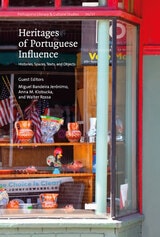
Heritages of Portuguese Influence
Histories, Spaces, Texts, and ObjectsGuest edited by Miguel Bandeira Jerónimo, Anna M. Klobucka, and Walter Rossa
Tagus Press, 2022
Situated in the interdisciplinary field of Critical Heritage Studies, this special issue gathers articles originating in diverse areas of scholarship (and in many cases fostering productive cross-fertilizations among them) that deal with the multifaceted postcolonial and globalized heritages of the Portuguese empire and Lusophone diasporas. The contributors discuss “heritage” and “influence” critically, as cultural and political arguments and practices, and as historical manifestations entailing diverse perspectives, motivations, and consequences, formed in colonial and postcolonial situations, imagining the past, the present, and the future.
[more]
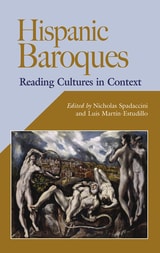
Hispanic Baroques
Reading Cultures in ContextNicholas Spadaccini
Vanderbilt University Press, 2005
Essays focus on Baroque as a concept and category of analysis which has been central to an understanding of Hispanic cultures during the last several hundred years
[more]
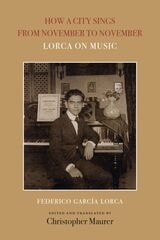
How a City Sings from November to November
Lorca on MusicFederico García Lorca
Swan Isle Press, 2026
Illuminates the place of music in the life and poetry of Federico García Lorca.
“Yo ante todo, soy músico,” Federico García Lorca once remarked: “Before all else, I am a musician.” Whether seated at the piano, collecting folksongs on his travels through Spain, or composing music for his plays, few poets have lived music so deeply. For Lorca, songs were “living creatures.” How a City Sings from November to November: Lorca on Music brings together for the first time in English the poet’s writing on music and musicians. In these pages, through lectures, letters, and interviews, Lorca celebrates the musical seasons of Granada, “a city enclosed by mountains and made for music”; the sources of cante jondo (flamenco deep song); the haunting melodies of Spanish cradle songs; and the dance of La Argentina. He describes learning the guitar, staging Spanish ballads in Buenos Aires, and listening to spirituals in New York. In bed with a fever, he compares it to a “delicate tempo rubato of Chopin.” Based on recent archival research, edited and newly translated by noted Lorca scholar Christopher Maurer, this collection offers an intricate and enjoyable counterpoint to Lorca’s poetry and theater.
“Yo ante todo, soy músico,” Federico García Lorca once remarked: “Before all else, I am a musician.” Whether seated at the piano, collecting folksongs on his travels through Spain, or composing music for his plays, few poets have lived music so deeply. For Lorca, songs were “living creatures.” How a City Sings from November to November: Lorca on Music brings together for the first time in English the poet’s writing on music and musicians. In these pages, through lectures, letters, and interviews, Lorca celebrates the musical seasons of Granada, “a city enclosed by mountains and made for music”; the sources of cante jondo (flamenco deep song); the haunting melodies of Spanish cradle songs; and the dance of La Argentina. He describes learning the guitar, staging Spanish ballads in Buenos Aires, and listening to spirituals in New York. In bed with a fever, he compares it to a “delicate tempo rubato of Chopin.” Based on recent archival research, edited and newly translated by noted Lorca scholar Christopher Maurer, this collection offers an intricate and enjoyable counterpoint to Lorca’s poetry and theater.
[more]