Results by title
129 books match the query 'Technique' and 4 start with h
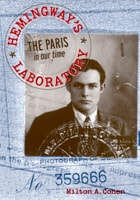
Hemingway's Laboratory
The Paris in our timeMilton A. Cohen
University of Alabama Press, 2005
In 1924 Ernest Hemingway published a small book of eighteen vignettes, each little more than one page long, with a small press in Paris. Titled in our time, the volume was later absorbed into Hemingway’s story collection In Our Time. Those vignettes, as Milton Cohen demonstrates in Hemingway’s Laboratory, reveal a range of voices, narrative strategies, and fictional interests more wide-ranging and experimental than any other extant work of Hemingway’s. Further, they provide a vivid view of his earliest tendencies and influences, first manifestations of the style that would become his hallmark, and daring departures into narrative forms that he would forever leave behind.
Many of the chapters are pointillistic glimpses of violence--bullfights, a botched execution, the fleeting thoughts of the wounded on the battlefield. Others reach back into childhood. Still others adopt the wry, mannered voice of English aristocracy. Though critics have often read these chapters as secondary asides to the longer stories that constitute the commercial collection, Cohen argues that not only do the vignettes merit consideration as a unit unto themselves, but that they exhibit a plethora of styles and narrative gambits that show Hemingway at his most versatile.
The final section examines in detail the individual chapters of in our time, their historical origins, their drafts, themes, and styles. The result is an account of what is arguably Hemingway’s most crucial formative period.
Homeric Questions
By Gregory Nagy
University of Texas Press, 1996
A Choice Outstanding Academic Book
The "Homeric Question" has vexed Classicists for generations. Was the author of the Iliad and the Odyssey a single individual who created the poems at a particular moment in history? Or does the name "Homer" hide the shaping influence of the epic tradition during a long period of oral composition and transmission?
In this innovative investigation, Gregory Nagy applies the insights of comparative linguistics and anthropology to offer a new historical model for understanding how, when, where, and why the Iliad and the Odyssey were ultimately preserved as written texts that could be handed down over two millennia. His model draws on the comparative evidence provided by living oral epic traditions, in which each performance of a song often involves a recomposition of the narrative.
This evidence suggests that the written texts emerged from an evolutionary process in which composition, performance, and diffusion interacted to create the epics we know as the Iliad and the Odyssey. Sure to challenge orthodox views and provoke lively debate, Nagy's book will be essential reading for all students of oral traditions.
Homeric Responses
By Gregory Nagy
University of Texas Press, 2003
The Homeric Iliad and Odyssey are among the world's foremost epics. Yet, millennia after their composition, basic questions remain about them. Who was Homer—a real or an ideal poet? When were the poems composed—at a single point in time, or over centuries of composition and performance? And how were the poems committed to writing? These uncertainties have been known as The Homeric Question, and many scholars, including Gregory Nagy, have sought to solve it.
In Homeric Responses, Nagy presents a series of essays that further elaborate his theories regarding the oral composition and evolution of the Homeric epics. Building on his previous work in Homeric Questions and Poetry as Performance: Homer and Beyond and responding to some of his critics, he examines such issues as the importance of performance and the interaction between audience and poet in shaping the poetry; the role of the rhapsode (the performer of the poems) in the composition and transmission of the poetry; the "irreversible mistakes" and cross-references in the Iliad and Odyssey as evidences of artistic creativity; and the Iliadic description of the shield of Achilles as a pointer to the world outside the poem, the polis of the audience.
How Scripts are Made
Inga Karetnikova
Southern Illinois University Press, 1990
Inga Karetnikova’s method is that of the art teacher: she asks students to study great works in detail, to analyze them, and then to create their own. She stresses that her examination is "interested only in how the scripts are written and what makes them work, not in a cultural or scholarly examination of them." Karetnikova analyzes eight screenplays—TheGodfather, Rashomon, La Strada, Bicycle Thief, Nosferatu, The Servant, Viridiana, Notorious—anda novel written in screenplay form, Kiss of the Spider Woman. Each serves as an example of a particular aspect of screenplay writing: composing scripts, developing characters, constructing suspense, adapting literature to cinematic space and time, and weaving details and motifs within a script.
Karetnikova urges film students to work on their own screenplays while studying her book, reading the suggested scripts and viewing the films based on them to get the most from her method. She provides a series of exercises for each chapter to help students master the skills of composing and writing film treatments, developing screen stories and their characters, organizing scenes, and writing dialogue. Each of the exercises has worked successfully in her own screenplay-writing classes.