Results by title
1927 books match the query 'Technology & Engineering' and 65 start with h
HF Filter Design and Computer Simulation
Randall W. Rhea
The Institution of Engineering and Technology, 1994
HF Radio Systems and Circuits
William E. Sabin
The Institution of Engineering and Technology, 1998
Hand-Based Biometrics
Methods and technologyMartin Drahanský
The Institution of Engineering and Technology, 2018

Handbook of Antenna Design, Volume 1
A.W. Rudge
The Institution of Engineering and Technology, 1982
- Authored by a multi-national group of antenna experts of international standing.
- Presents the principles and applications of antenna design, with emphasis upon key developments in the last 15 years.
- Fundamental background theory and analytical techniques explained in detail where appropriate.
- Includes extensive design data and numerous examples of practical application.
- Deals with a very wide range of antenna types, operating from very low frequencies to millimetre waves.
- New measurement techniques described in detail.
- Covers associated topics such as radomes, array signal processing and coaxial components.
- Includes design data for antennas for satellite and terrestrial communications, radar, mobile communications and broadcasting.
Handbook of Antenna Design, Volume 2
A.W. Rudge
The Institution of Engineering and Technology, 1983
- Authored by a multi-national group of antenna experts of international standing.
- Presents the principles and applications of antenna design, with emphasis upon key developments in the last 15 years.
- Fundamental background theory and analytical techniques explained in detail where appropriate.
- Includes extensive design data and numerous examples of practical application.
- Deals with a very wide range of antenna types, operating from very low frequencies to millimetre waves.
- New measurement techniques described in detail.
- Covers associated topics such as radomes, array signal processing and coaxial components.
- Includes design data for antennas for satellite and terrestrial communications, radar, mobile communications and broadcasting.
Handbook of Microstrip Antennas, Volume 1
J.R. James
The Institution of Engineering and Technology, 1989
Handbook of Microstrip Antennas, Volume 2
J.R. James
The Institution of Engineering and Technology, 1989

Handbook of Speckle Filtering and Tracking in Cardiovascular Ultrasound Imaging and Video
Christos P. Loizou
The Institution of Engineering and Technology, 2018

Handbook of Vehicle Suspension Control Systems
Honghai Liu
The Institution of Engineering and Technology, 2013

Handbook of Ventilation Technology for the Built Environment
Design, control and testingShi-Jie Cao
The Institution of Engineering and Technology, 2022

Hawker Hunter
the story of a thoroughbredSreco Bradic
Amsterdam University Press, 2023

Haydn’s Sunrise, Beethoven’s Shadow
Audiovisual Culture and the Emergence of Musical RomanticismDeirdre Loughridge
University of Chicago Press, 2016
Deirdre Loughridge reveals that allusions in musical writings to optical technologies reflect their spread from fairgrounds and laboratories into public consciousness and a range of discourses, including that of music. She demonstrates how concrete points of intersection—composers’ treatments of telescopes and peepshows in opera, for instance, or a shadow-play performance of a ballad—could then fuel new modes of listening that aimed to extend the senses. An illuminating look at romantic musical practices and aesthetics, this book yields surprising relations between the past and present and offers insight into our own contemporary audiovisual culture.
Haywire
Discord in Maine's Logging Woods and the Unraveling of an IndustryAndrew Egan
University of Massachusetts Press, 2022
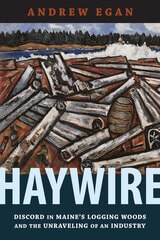
Logging in the northern forest has been romanticized, with images of log drives, plaid shirts, and bunkhouses in wide circulation. Increasingly dismissed as a quaint, rural pastime, logging remains one of the most dangerous jobs in the United States, with loggers occupying a precarious position amid unstable markets, expanding global competition, and growing labor discord. Examining a time of transition and decline in Maine’s forest economy, Andrew Egan traces pathways for understanding the challenges that have faced Maine’s logging community and, by extension, the state’s forestry sector, from the postwar period through today.
Seeking greater profits, logging companies turned their crews loose at midcentury, creating a workforce of independent contractors who were forced to purchase expensive equipment and compete for contracts with the mills. Drawing on his own experience with the region’s forest products industry, interviews with Maine loggers, media coverage, and court documents, Egan follows the troubled recent history of the industry and its battle for survival.

Health Informatics
Technologies and applicationsGaurav Gupta
The Institution of Engineering and Technology, 2025

Healthcare Monitoring and Data Analysis using IoT
Technologies and applicationsVishal Jain
The Institution of Engineering and Technology, 2022

Hearing Happiness
Deafness Cures in HistoryJaipreet Virdi
University of Chicago Press, 2020
At the age of four, Jaipreet Virdi’s world went silent. A severe case of meningitis left her alive but deaf, suddenly treated differently by everyone. Her deafness downplayed by society and doctors, she struggled to “pass” as hearing for most of her life. Countless cures, treatments, and technologies led to dead ends. Never quite deaf enough for the Deaf community or quite hearing enough for the “normal” majority, Virdi was stuck in aural limbo for years. It wasn’t until her thirties, exasperated by problems with new digital hearing aids, that she began to actively assert her deafness and reexamine society’s—and her own—perception of life as a deaf person in America.
Through lyrical history and personal memoir, Hearing Happiness raises pivotal questions about deafness in American society and the endless quest for a cure. Taking us from the 1860s up to the present, Virdi combs archives and museums in order to understand the long history of curious cures: ear trumpets, violet ray apparatuses, vibrating massagers, electrotherapy machines, airplane diving, bloodletting, skull hammering, and many more. Hundreds of procedures and products have promised grand miracles but always failed to deliver a universal cure—a harmful legacy that is still present in contemporary biomedicine.
Weaving Virdi’s own experiences together with her exploration into the fascinating history of deafness cures, Hearing Happiness is a powerful story that America needs to hear.

Hearing Happiness
Deafness Cures in HistoryJaipreet Virdi
University of Chicago Press, 2020
This is an auto-narrated audiobook edition of this book.
Weaving together lyrical history and personal memoir, Virdi powerfully examines society’s—and her own—perception of life as a deaf person in America.
At the age of four, Jaipreet Virdi’s world went silent. A severe case of meningitis left her alive but deaf, suddenly treated differently by everyone. Her deafness downplayed by society and doctors, she struggled to “pass” as hearing for most of her life. Countless cures, treatments, and technologies led to dead ends. Never quite deaf enough for the Deaf community or quite hearing enough for the “normal” majority, Virdi was stuck in aural limbo for years. It wasn’t until her thirties, exasperated by problems with new digital hearing aids, that she began to actively assert her deafness and reexamine society’s—and her own—perception of life as a deaf person in America.
Through lyrical history and personal memoir, Hearing Happiness raises pivotal questions about deafness in American society and the endless quest for a cure. Taking us from the 1860s up to the present, Virdi combs archives and museums in order to understand the long history of curious cures: ear trumpets, violet ray apparatuses, vibrating massagers, electrotherapy machines, airplane diving, bloodletting, skull hammering, and many more. Hundreds of procedures and products have promised grand miracles but always failed to deliver a universal cure—a harmful legacy that is still present in contemporary biomedicine.
Weaving Virdi’s own experiences together with her exploration into the fascinating history of deafness cures, Hearing Happiness is a powerful story that America needs to hear.

Heat Management in Integrated Circuits
On-chip and system-level monitoring and coolingSeda Ogrenci-Memik
The Institution of Engineering and Technology, 2016
Heavy Ground
William Mulholland and the St. Francis Dam DisasterNorris Hundley
University of Nevada Press, 2020
Heredity under the Microscope
Chromosomes and the Study of the Human GenomeSoraya de Chadarevian
University of Chicago Press, 2020
Telling this history in full for the first time, Soraya de Chadarevian argues that the often bewildering variety of observations made under the microscope were central to the study of human genetics. Making space for microscope-based practices alongside molecular approaches, de Chadarevian analyzes the close connections between genetics and an array of scientific, medical, ethical, legal, and policy concerns in the atomic age. By exploring the visual evidence provided by chromosome research in the context of postwar biology and medicine, Heredity under the Microscope sheds new light on the cultural history of the human genome.
Hermogenes and Hellenistic-Roman Temple Building
Edited by Mantha Zarmakoupi
University of Wisconsin Press, 2026
Hermogenes remains one of the most influential and famous designers of the Hellenistic world, although he is known primarily via the first-century BCE Roman architect Vitruvius, who credited his Greek predecessor with major accomplishments. Despite his comparative fame, the paucity of sources has nevertheless obscured Hermogenes’ legacy. This volume updates the evidence, reevaluates this highly significant figure, and reintroduces crucial innovations in the ancient Greek world—innovations that continue to be influential today.
Hidden Forest, The
The Biography of an EcosystemJon R. Luoma
Oregon State University Press, 2006
The tallest species of spruce, hemlock, fir, cedar, and pine trees on earth coexist in the old growth of the H. J. Andrews Experimental Forest in Oregon’s Cascade Range. Set aside as a living laboratory by the U.S. Forest Service in 1948, the 16,000 acres represent a vital scientific endeavor: the long-term study of a single contained ecosystem. Here, for the first time, researchers from an enormous range of disciplines—forest scientists, botanists, entomologists, wildlife ecologists, soil biologists, and others—have assembled to examine the role of every working element in the life of a forest.
In The Hidden Forest, veteran science writer Jon Luoma offers an absorbing account of how these scientists came to recognize the importance of natural forest ecosystems and how their research is revolutionizing forest management.
Luoma takes readers into the hidden forest where researchers have discovered a host of species previously unknown to science, and interactions in the forest ecosystem that no one previously imagined. He describes projects dealing with the forest canopy, rotting logs, insects, fungi, wildlife, streams, and the effects of flood, fire, clear cutting, and volcanic eruption. And he tells the human story behind the research, capturing the shared excitement and wonder of scientific discovery. Along the way, Luoma provides a short course in such complex issues as forest succession, biodiversity, and the politics of forestry.
In a new foreword, Jerry Franklin discusses the importance of dedicated, long-term research sites and comments on new discoveries that have emerged from forest ecosystem research since The Hidden Forest was first published.

High Frequency MOSFET Gate Drivers
Technologies and applicationsZhiLiang Zhang
The Institution of Engineering and Technology, 2017

High Quality Liquid Crystal Displays and Smart Devices
Development, display applications and components, Volume 1Shoichi Ishihara
The Institution of Engineering and Technology, 2019

High Quality Liquid Crystal Displays and Smart Devices
Surface alignment, new technologies and smart device applications, Volume 2Shoichi Ishihara
The Institution of Engineering and Technology, 2019

High Speed Data Converters
Ahmed M.A. Ali
The Institution of Engineering and Technology, 2016
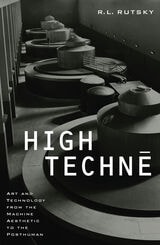
High Techne
Art and Technology from the Machine Aesthetic to the PosthumanR.L. Rutsky
University of Minnesota Press, 1999
Explores our changing cultural perceptions of the relations between technology and art.
In an age of high tech, our experience of technology has changed tremendously, yet the definition of technology has remained largely unquestioned. High Techne redresses this gap in thinking about technology, examining the shifting relations of technology, art, and culture from the beginnings of modernity to contemporary technocultures.
Drawing on the Greek root of technology, (techne, generally translated as “art, skill, or craft”), R. L. Rutsky challenges both the modernist notion of technology as an instrument or tool and the conventional idea of a noninstrumental aesthetics. Today, technology and aesthetics have again begun to come together: even basketball shoes are said to exhibit a “high-tech style” and the most advanced technology is called “state of the art.” Rutsky charts the history and vicissitudes of this new high-tech techne up to our day—from Fritz Lang to Octavia Butler, Thomas Edison to Japanese Anime, constructivism to cyberspace.Progressing from the major art movements of modernism to contemporary science fiction and cultural theory, Rutsky provides clear and compelling evidence of a shift in the cultural conceptions of technology and art and demonstrates the centrality of technology to modernism and postmodernism.
High Voltage Direct Current Transmission
Jos Arrillaga
The Institution of Engineering and Technology, 1998
High Voltage Engineering and Testing
Hugh M. Ryan
The Institution of Engineering and Technology, 2001

High Voltage Power Network Construction
Keith Harker
The Institution of Engineering and Technology, 2018

High Voltage Power Transformers
State of the art and technological innovationsStefano Zunino
The Institution of Engineering and Technology, 2024

High-Level Synthesis Hardware Trojan Attacks and Countermeasures
Anirban Sengupta
The Institution of Engineering and Technology, 2026

High-Voltage Engineering and Testing
Hugh M. Ryan
The Institution of Engineering and Technology, 2013
High-frequency Circuit Engineering
F. Nibler
The Institution of Engineering and Technology, 1996

Higher-Order Techniques in Computational Electromagnetics
Roberto D. Graglia
The Institution of Engineering and Technology, 2016

Historic Watermills of North America
A Visual PreservationKen Boyd
University of Alabama Press, 2021
112 full-color artistic photographs of watermills still standing on the North American landscape
The scenic beauty of the watermill is undeniable. The iconic waterwheel has inspired romantics for generations with their warmth and charm. Watermills were once ubiquitous landmarks along brooks, creeks, and rivers across North America. Today, only a scattering of the old watermills grace the countryside, but through these mills, and the turning of their wheels and the whirling of their stones, a small but spectacular part of history lives on.
Through stunningly beautiful images, Historic Watermills of North America: A Visual Preservation presents 112 watermills still standing on the North American landscape. With idealized full-color photographs, Ken Boyd nostalgically hearkens back to a time after European settlement when these structures were the very heart of the communities whose livelihoods they made possible. These mills turned the power of flowing water into mechanical energy to grind corn and wheat into meal and flour, saw timber, loom wool and cotton cloth, and more for the benefit of their operators and communities.
At one time vital to their surrounding regions, most of these surviving mills are in rural areas that have been passed over by modern development. Their designs are as individual as their makers, and their settings are as varied as the landscape. Some have been converted into homes or museums or are part of local tourist attractions. Others have been abandoned but give witness to the significance of their heydays, and others are still in use, doing the same work they have done for generations.
Boyd’s beautifully rendered photographs preserve these extant structures and represent a variety of watermills across the United States and Canada. Each mill photograph is accompanied by a description providing the name of the mill, its location, date of construction, and brief comments highlighting its most noteworthy features. Additional photographs and commentary in the afterword explore the inner workings of watermills.
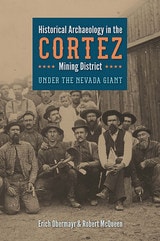
Historical Archaeology in the Cortez Mining District
Under the Nevada GiantErich Obermayr
University of Nevada Press, 2025
Readers interested in the archaeology of the West, mining history, and the history of Nevada will find this book fascinating.

Historical Atlases
The First Three Hundred Years, 1570-1870Walter Goffart
University of Chicago Press, 2003
Beginning in the sixteenth century, and continuing down to the late nineteenth, Walter Goffart discusses milestones in the origins of historical atlases as well as individual maps illustrating historical events in alternating, paired chapters. He focuses on maps of the medieval period because the development of maps for history hinged particularly on portrayals of this segment of the postclassical, "modern" past. Goffart concludes the book with a detailed catalogue of more than 700 historical maps and atlases produced from 1570 to 1870.
Historical Atlases will immediately take its place as the single most important reference on its subject. Historians of cartography, medievalists, and anyone seriously interested in the role of maps in portraying history will find it invaluable.
History of International Broadcasting, Volume 1
James Wood
The Institution of Engineering and Technology, 1994
History of International Broadcasting, Volume 2
James Wood
The Institution of Engineering and Technology, 2000

History of Telegraphy
Ken Beauchamp
The Institution of Engineering and Technology, 2001
Holding On to Reality
The Nature of Information at the Turn of the MillenniumAlbert Borgmann
University of Chicago Press, 1999
"[Borgmann] has offered a stunningly clear definition of information in Holding On to Reality. . . . He leaves room for little argument, unless one wants to pose the now vogue objection: I guess it depends on what you mean by nothing."—Paul Bennett, Wired
"A superb anecdotal analysis of information for a hype-addled age."—New Scientist
"This insightful and poetic reflection on the changing nature of information is a wonderful antidote to much of the current hype about the 'information revolution.' Borgmann reminds us that whatever the reality of our time, we need 'a balance of signs and things' in our lives."—Margaret Wertheim, LA Weekly
Hollywood Outsiders
The Adaptation of the Film Industry, 1913-1934Anne Morey
University of Minnesota Press, 2003
An innovative approach to the relationship between filmmaking and society during Hollywood’s golden age
The 1910s and 1920s witnessed the inception of a particular brand of negotiation between filmdom and its public in the United States. Hollywood, its proponents, and its critics sought to establish new connections between audience and industry, suggesting means by which Hollywood outsiders could become insiders. Hollywood Outsiders looks at how four disparate entities—the Palmer Photoplay correspondence school of screenwriting, juvenile series fiction about youngsters involved in the film industry, film appreciation and character education programs for high school students, and Catholic and Protestant efforts to use and influence filmmaking—conceived of these connections, and thus of the relationship of Hollywood to the individual and society. Anne Morey’s exploration of the diverse discourses generated by these different conjunctions leads to a fresh and compelling interpretation of Hollywood’s place in American cultural history.
In its analysis of how four distinct groups, each addressing constituencies of various ages and degrees of social authority, defined their interest in the film industry, Hollywood Outsiders combines concrete discussions of cultural politics with a broader argument about how outsiders viewed the film industry as a vehicle of self-validation and of democratic ideals.
Holographic Staring Radar
Gordon Oswald
The Institution of Engineering and Technology, 2022

How Color Became a Technology
The Making of Chromatic CapitalismLida Zeitlin-Wu
Duke University Press, 2027

How Knowledge Moves
Writing the Transnational History of Science and TechnologyEdited by John Krige
University of Chicago Press, 2019
This specialized knowledge is located at multiple sites and moves across borders via a dazzling array of channels, embedded in heads and hands, in artifacts, and in texts. In the United States, it shapes policies for visas, export controls, and nuclear weapons proliferation; in Algeria, it enhances the production of oranges by colonial settlers; in Vietnam, it facilitates the exploitation of a river delta. In India it transforms modes of agricultural production. It implants American values in Latin America. By concentrating on the conditions that allow for knowledge movement, these essays explore travel and exchange in face-to-face encounters and show how border-crossings mobilize extensive bureaucratic technologies.

How Oceans Become
Histories and Futures of the High Seas and Deep OceansThomas Brandt, Knut Ove Eliassen, Mats Ingulstad, Gard Paulsen
University of Chicago Press, 0
An anthology grounded in the idea that oceans are human realities, shaped by human interests, interactions, and technologies.
Historically and geographically diverse, oceans exist in the plural. Oceans become oceans through how they are represented, what resources they are deemed to hold, and the regulatory governance to which they are subjected. These are the three key components of “ocean making” this volume employs to shed light on the complex issues facing ocean governance today.
The anthology reaches back to the oceans of the early modern European expansion and up to the current concerns of anthropogenic changes and resource depletion. Chapters address activities and regulatory concerns regarding maritime transport, fisheries, deep-sea mining, wave energy, and whaling, and span from the southern oceans around Antarctica to the current shedding of the icy mantle of the Arctic Ocean. By drawing together scholars from a wide range of disciplines—including history, comparative literature, media studies, political science, law, and anthropology—How Oceans Become opens a multi-layered, interdisciplinary approach to studying the oceans’ entanglements with human cultures and societies.
How Reason Almost Lost Its Mind
The Strange Career of Cold War RationalityPaul Erickson, Judy L. Klein, Lorraine Daston, Rebecca Lemov, Thomas Sturm, and Michael D. Gordin
University of Chicago Press, 2013
How We Think
Digital Media and Contemporary TechnogenesisN. Katherine Hayles
University of Chicago Press, 2012
“How do we think?” N. Katherine Hayles poses this question at the beginning of this bracing exploration of the idea that we think through, with, and alongside media. As the age of print passes and new technologies appear every day, this proposition has become far more complicated, particularly for the traditionally print-based disciplines in the humanities and qualitative social sciences. With a rift growing between digital scholarship and its print-based counterpart, Hayles argues for contemporary technogenesis—the belief that humans and technics are coevolving—and advocates for what she calls comparative media studies, a new approach to locating digital work within print traditions and vice versa.

How to Build Successful Business Relationships
Frances Kay
The Institution of Engineering and Technology, 2009