Results by title
224 books match the query 'Theory, etc' and 5 start with h
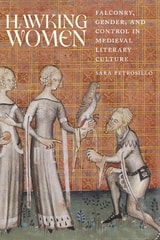
Hawking Women
Falconry, Gender, and Control in Medieval Literary CultureSara Petrosillo
The Ohio State University Press, 2023
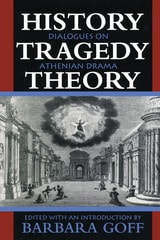
History, Tragedy, Theory
Dialogues on Athenian DramaEdited and with an introduction by Barbara Goff
University of Texas Press, 1995
Greek tragedy has held sway over the imagination of audiences for well over two millennia. This collection of essays on Athenian drama, the proceedings of a conference held at the University of Texas at Austin in 1992, demonstrates that Greek tragedy still retains its power to provoke debate and to engage the interest of specialists and non-classicists alike.
The book includes essays by seven of the foremost scholars of Greek drama—Helene Foley, Michelle Gellrich, Peter W. Rose, David Rosenbloom, Richard Seaford, Bernd Seidensticker, and Froma I. Zeitlin. These writers explore the work of all three great tragedians, Aeschylus, Sophocles, and Euripides, and approach them from a variety of perspectives on history and theory, including poststructuralism and Marxism. They investigate the possibilities for coordinating theoretically informed readings of tragedy with a renewed attention to the pressure of material history within those texts. The collection thus represents a response within classics to "New Historicism" and the debates it has generated within related literary disciplines.
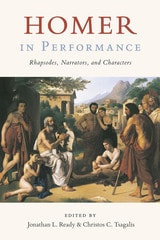
Homer in Performance
Rhapsodes, Narrators, and CharactersEdited by Jonathan L. Ready and Christos C. Tsagalis
University of Texas Press, 2018
Before they were written down, the poems attributed to Homer were performed orally, usually by rhapsodes (singers/reciters) who might have traveled from city to city or enjoyed a position in a wealthy household. Even after the Iliad and the Odyssey were committed to writing, rhapsodes performed the poems at festivals, often competing against each other. As they recited the epics, the rhapsodes spoke as both the narrator and the characters. These different acts—performing the poem and narrating and speaking in character within it—are seldom studied in tandem. Homer in Performance breaks new ground by bringing together all of the speakers involved in the performance of Homeric poetry: rhapsodes, narrators, and characters.
The first part of the book presents a detailed history of the rhapsodic performance of Homeric epic from the Archaic to the Roman Imperial periods and explores how performers might have shaped the poems. The second part investigates the Homeric narrators and characters as speakers and illuminates their interactions. The contributors include scholars versed in epigraphy, the history of art, linguistics, and performance studies, as well as those capable of working with sources from the ancient Near East and from modern Russia. This interdisciplinary approach makes the volume useful to a spectrum of readers, from undergraduates to veteran professors, in disciplines ranging from classical studies to folklore.
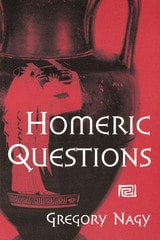
Homeric Questions
By Gregory Nagy
University of Texas Press, 1996
A Choice Outstanding Academic Book
The "Homeric Question" has vexed Classicists for generations. Was the author of the Iliad and the Odyssey a single individual who created the poems at a particular moment in history? Or does the name "Homer" hide the shaping influence of the epic tradition during a long period of oral composition and transmission?
In this innovative investigation, Gregory Nagy applies the insights of comparative linguistics and anthropology to offer a new historical model for understanding how, when, where, and why the Iliad and the Odyssey were ultimately preserved as written texts that could be handed down over two millennia. His model draws on the comparative evidence provided by living oral epic traditions, in which each performance of a song often involves a recomposition of the narrative.
This evidence suggests that the written texts emerged from an evolutionary process in which composition, performance, and diffusion interacted to create the epics we know as the Iliad and the Odyssey. Sure to challenge orthodox views and provoke lively debate, Nagy's book will be essential reading for all students of oral traditions.
Homeric Responses
By Gregory Nagy
University of Texas Press, 2003
The Homeric Iliad and Odyssey are among the world's foremost epics. Yet, millennia after their composition, basic questions remain about them. Who was Homer—a real or an ideal poet? When were the poems composed—at a single point in time, or over centuries of composition and performance? And how were the poems committed to writing? These uncertainties have been known as The Homeric Question, and many scholars, including Gregory Nagy, have sought to solve it.
In Homeric Responses, Nagy presents a series of essays that further elaborate his theories regarding the oral composition and evolution of the Homeric epics. Building on his previous work in Homeric Questions and Poetry as Performance: Homer and Beyond and responding to some of his critics, he examines such issues as the importance of performance and the interaction between audience and poet in shaping the poetry; the role of the rhapsode (the performer of the poems) in the composition and transmission of the poetry; the "irreversible mistakes" and cross-references in the Iliad and Odyssey as evidences of artistic creativity; and the Iliadic description of the shield of Achilles as a pointer to the world outside the poem, the polis of the audience.