Results by title
155 books match the query 'Toward' and 2 start with h
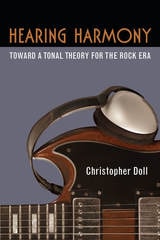
Hearing Harmony
Toward a Tonal Theory for the Rock EraChristopher Doll
University of Michigan Press, 2017
Hearing Harmony offers a listener-based, philosophical-psychological theory of harmonic effects for Anglophone popular music since the 1950s. It begins with chords, their functions and characteristic hierarchies, then identifies the most common and salient harmonic-progression classes, or harmonic schemas. The identification of these schemas, as well as the historical contextualization of many of them, allows for systematic exploration of the repertory’s typical harmonic transformations (such as chord substitution) and harmonic ambiguities. Doll provides readers with a novel explanation of the assorted aural qualities of chords, and how certain harmonic effects result from the interaction of various melodic, rhythmic, textural, timbral, and extra-musical contexts, and how these interactions can determine whether a chordal riff is tonally centered or tonally ambiguous, whether it sounds aggressive or playful or sad, whether it seems to evoke an earlier song using a similar series of chords, whether it sounds conventional or unfamiliar.
[more]
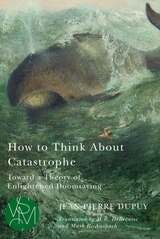
How to Think About Catastrophe
Toward a Theory of Enlightened DoomsayingJean-Pierre Dupuy
Michigan State University Press, 2022
During the last century humanity acquired the ability to destroy itself. The direct approach to destruction can be seen in such facts as the ever-present threat of nuclear war, but we have also developed the capacity to do indirect harm by altering conditions necessary for survival, including the looming cloud of climate change. How can we look forward and work past the dire position we now find ourselves in to achieve a sustainable future? This volume presents a new way of thinking about the future as it examines catastrophe and the human response. It examines different kinds of catastrophes that range from natural (e.g., earthquakes) to industrial (e.g., Chernobyl) and concludes that the traditional distinctions between them are only becoming blurrier by the day. This book aims to build a general theory of catastrophes—a new form of apocalyptic thinking that is grounded in science and philosophy. An ethics for the sake of the future is what is required, which in turn necessitates a new metaphysics of temporality. If a way out of the imminent danger in which we find ourselves is to be found, we must first look to radically alter our ethics.
[more]