Results by title
91 books match the query 'West Virginia' and 5 start with h
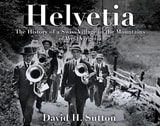
Helvetia
The History of a Swiss Village in the Mountains of West VirginiaDavid H. Sutton
West Virginia University Press, 2010
Helvetia: A Swiss Village in the Hills of West Virginia explores the unique founding and development of a community nestled within the wilderness of Appalachia. Established in 1869, this tiny Swiss settlement embodies the American immigrant experience, reflecting the steadfast desire of settlers to preserve cultural traditions and values while adapting to new and extraordinary surroundings. From ramp suppers to carnivals, traditional architecture, folk music, and cheese making, this book documents a living community by exploring the ethnic customs, farming practices, community organization, and language maintenance of Helvetia residents. Drawing upon a diverse body of resources such as Swiss and American archival documents and local oral accounts, this chronicledepicts the everyday social and economic life of this village during the past two centuries. Helvetia celebrates a small community where residents and visitors alike continue to practice a Swiss American culture that binds an international history to a local heritage.

Hillside Fields
A History of Sports in West VirginiaBob Barnett
West Virginia University Press, 2013
Hillside Fields provides a broad view of the development of sports in West Virginia, from one of the first golf clubs in America at Oakhurst Links to the Greenbrier Classic; from the first girls basketball championship in 1919 to post Title IX; from racially segregated sports to integrated teams; and from the days when West Virginia Wesleyan and Davis & Elkins beat the big boys in football to the championship teams at WVU, Marshall, West Virginia State and West Liberty.
Hillside Fields explains how major national trends and events, as well as West Virginia’s economic, political, and demographic conditions, influenced the development of sports in the state. The story of the growth of sports in West Virginia is also a story of the tribulations, hopes, values and triumphs of a proud people.
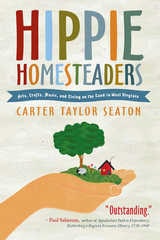
Hippie Homesteaders
Arts, Crafts, Music and Living on the Land in West VirginiaCarter Taylor Seaton
West Virginia University Press, 2014
It’s the 1960s. The Vietnam War is raging and protests are erupting across the United States. In many quarters, young people are dropping out of society, leaving their urban homes behind in an attempt to find a safe place to live on their own terms, to grow their own food, and to avoid a war they passionately decry. During this time, West Virginia becomes a haven for thousands of these homesteaders—or back-to-the-landers, as they are termed by some. Others call them hippies.
When the going got rough, many left. But a significant number remain to this day. Some were artisans when they arrived, while others adopted a craft that provided them with the cash necessary to survive. Hippie Homesteaders tells the story of this movement from the viewpoint of forty artisans and musicians who came to the state, lived on the land, and created successful careers with their craft. There’s the couple that made baskets coveted by the Smithsonian Institution’s Renwick Gallery. There’s the draft-dodger that fled to Canada and then became a premier furniture maker. There’s the Boston-born VISTA worker who started a quilting cooperative. And, there’s the immigrant Chinese potter who lived on a commune.
Along with these stories, Hippie Homesteaders examines the serendipitous timing of this influx and the community and economic support these crafters received from residents and state agencies in West Virginia. Without these young transplants, it’s possible there would be no Tamarack: The Best of West Virginia, the first statewide collection of fine arts and handcrafts in the nation, and no Mountain Stage, the weekly live musical program broadcast worldwide on National Public Radio since 1983. Forget what you know about West Virginia.
Hippie Homesteaders isn’t about coal or hillbillies or moonshine or poverty. It is the story of why West Virginia was—and still is—a kind of heaven to so many.

Historical Atlas of West Virginia
FRANK S. RIDDEL
West Virginia University Press, 2008
Few reference works are as valuable to both scholars and non-scholars as a historical atlas. Therefore, The Historical Atlas of West Virginia will be an important title for libraries, schools, and every West Virginian who wants to understand how historical forces are mapped onto the state’s terrain. This atlas also shows how the distribution of natural resources intersects with various means of distribution. Frank Riddel’s The Historical Atlas of West Virginia is copiously illustrated with maps, tables, and charts depicting everything from geological deposits and strata that have fed the state’s industries to the settlement patterns of the immigrants who settled in West Virginia. Using federal and state statistics, it also includes revelations from the national census figures since 1790.
History of the American Negro
West Virginia EditionA. B. Caldwell
West Virginia University Press, 2012