Results by title
211 books match the query 'Working class' and 8 start with h
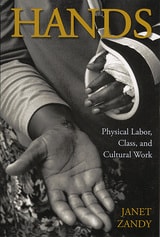
Hands
Physical Labor, Class, and Cultural WorkZandy, Janet
Rutgers University Press, 2004
In linking forms of cultural expression to labor, occupational injuries, and deaths, Hands: Physical Labor, Class, and Cultural Work centers what is usually decentered--the complex culture of working-class people. Janet Zandy begins by examining the literal loss of lives to unsafe jobs and occupational hazards. She asks critical and timely questions about worker representation--who speaks for employees when the mills, mines, factories, and even white-collar cubicles shut down? She presents the voices of working-class writers and artists, and discusses their contribution to knowledge and culture.
This innovative study reveals the flesh and bone beneath the abstractions of labor, class, and culture. It is an essential contribution to the emerging field of working-class studies, offering a hybrid model for bridging communities and non-academic workers to scholars and institutions of knowledge.
Hard Work
The Making of Labor HistoryMelvyn Dubofsky
University of Illinois Press, 2000
A career-spanning collection of writings by the legendary labor historian
One of American labor history's most prominent scholars, Melvyn Dubofsky curated an accessible style and historical reach that have long marked his work as required reading for students and scholars.
This collection juxtaposes Dubofsky's early writings with scholarship from the 1990s. Selections include work on western working-class radicalism, U.S. labor history in transnational and comparative settings, and the impact of technological change on American worker’s movements. Throughout, the writings provide an invaluable eyewitness perspective on the academic and political climate of the 1960s and 1970s while tracing the development of labor history as a discipline.
An exploration of important themes in labor history, Hard Work combines essential scholarship with the story of how past and present interact in the work of historians.
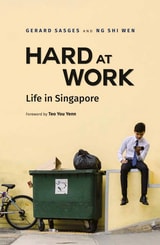
Hard at Work
Life in SingaporeGerard Sasges and Ng Shi Wen
National University of Singapore Press, 2019
Through first-person narratives based on detailed interviews, vividly augmented with color photographs, Hard at Work reminds us of the everyday labor that continually goes on around us, and that every job can reveal something interesting if we just look closely enough. It shows us too the ways inequalities of status and income are felt and internalized in this highly globalized society.
Hard-Boiled
Erin A. Smith
Temple University Press, 2000
Relying on pulp magazine advertising, the memoirs of writers and publishers, Depression-era studies of adult reading habits, social and labor history, Smith offers an innovative account of how these popular stories were generated and read. She shows that although the work of pulp fiction authors like Dashiell Hammett, Raymond Chandler, and Erle Stanley Gardner have become “classics” of popular culture, the hard-boiled genre was dominated by hack writers paid by the word, not self-styled artists. Pulp magazine editors and writers emphasized a gritty realism in the new genre. Unlike the highly rational and respectable British protagonists (Miss Marple and Hercule Poirot, for instance), tough-talking American private eyes relied as much on their fists as their brains as they made their way through tangled plotlines.
Casting working-class readers of pulp fiction as “poachers,” Smith argues that they understood these stories as parables about Taylorism, work, and manhood; as guides to navigating consumer culture; as sites for managing anxieties about working women. Engaged in re-creating white, male privilege for the modern, heterosocial world, pulp detective fiction shaped readers into consumers by selling them what they wanted to hear – stories about manly artisan-heroes who resisted encroaching commodity culture and the female consumers who came with it. Commenting on the genre’s staying power, Smith considers contemporary detective fiction by women, minority, and gay and lesbian writers.
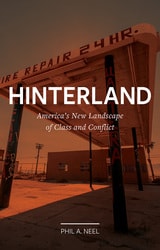
Hinterland
America's New Landscape of Class and ConflictPhil A. Neel
Reaktion Books, 2018
Urgent and unsparing, this book opens our eyes to America’s new heart of darkness. Driven by an ever-expanding socioeconomic crisis, America’s class structure is recomposing itself in new geographies of race, poverty, and production. The center has fallen. Riots ricochet from city to city led by no one in particular. Anarchists smash financial centers as a resurgent far right builds power in the countryside. Drawing on his direct experience of recent popular unrest, from the Occupy movement to the wave of riots and blockades that began in Ferguson, Missouri, Phil A. Neel provides a close-up view of this landscape in all its grim but captivating detail. Inaugurating the new Field Notes series, published in association with the Brooklyn Rail, Neel’s book tells the intimate story of a life lived within America’s hinterland.
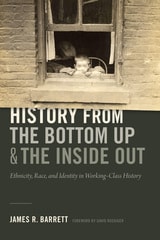
History from the Bottom Up and the Inside Out
Ethnicity, Race, and Identity in Working-Class HistoryJames R. Barrett
Duke University Press, 2017
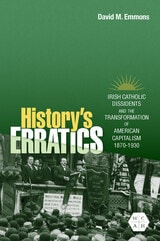
History's Erratics
Irish Catholic Dissidents and the Transformation of American Capitalism, 1870-1930David M. Emmons
University of Illinois Press, 2024
As Ice Age glaciers left behind erratics, so the external forces of history tumbled the Irish into America. Existing both out of time and out of space, a diverse range of these Roman-Catholic immigrants saw their new country in a much different way than did the Protestants who settled and claimed it. These erratics chose backward looking tradition and independence over assimilation and embraced a quintessentially Irish form of subversiveness that arose from their culture, faith, and working-class outlook. David M. Emmons draws on decades of research and thought to plumb the mismatch of values between Protestant Americans hostile to Roman Catholicism and the Catholic Irish strangers among them. Joining ethnicity and faith to social class, Emmons explores the unique form of dissidence that arose when Catholic Irish workers and their sympathizers rejected the beliefs and symbols of American capitalism.
A vibrant and original tour de force, History’s Erratics explores the ancestral roots of Irish nonconformity and defiance in America.

Housing Design and Society in Amsterdam
Reconfiguring Urban Order and Identity, 1900-1920Nancy Stieber
University of Chicago Press, 1998
Historians.
During the early 1900s, Amsterdam developed an international reputation as an urban mecca when invigorating reforms gave rise to new residential neighborhoods encircling the city's dispirited nineteenth-century districts. This new housing, built primarily with government subsidy, not only was affordable but also met rigorous standards of urban planning and architectural design. Nancy Stieber explores the social and political developments that fostered this innovation in public housing.
Drawing on government records, professional journals, and polemical writings, Stieber examines how government supported large-scale housing projects, how architects like Berlage redefined their role as architects in service to society, and how the housing occupants were affected by public debates about working-class life, the cultural value of housing, and the role of art in society.
Stieber emphasizes the tensions involved in making architectural design a social practice while she demonstrates the success of this collective enterprise in bringing about effective social policy and aesthetic progress.